
 By
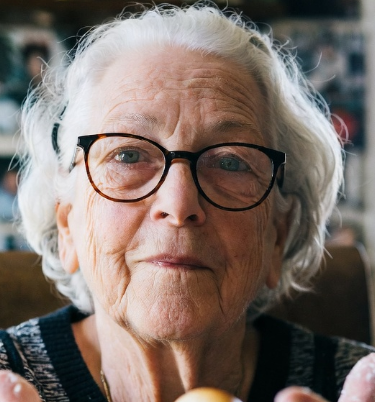
By Two weeks until publication. The publisher has arranged a few events — a reading at a bookstore in Manhattan, a conversation at the 92nd Street Y, a piece in the New York Times food section. The arrangements are both thrilling and terrifying, because I am a woman who has stood in front of people for forty-three years but who has always stood in front of teenagers, and the standing in front of adults who have chosen to listen is a different kind of standing, a more exposed standing, because adults have expectations that teenagers do not, and the expectations are: be good. Be as good as the book. Be the woman who wrote the sentences that made them cry on the subway.
I am not nervous. I am Ruth Feldman. I have faced two thousand teenagers with bad attitudes and worse essay skills and the collective hormonal fury of the American adolescent population. A bookstore full of adults who like brisket is not going to intimidate me. I will read from the book. I will talk about Sylvia. I will talk about the chain. I will answer questions. I will not cry. (I will probably cry. But I will try not to.)
I made challah — not for an event, not for a reading, for Shabbat. Because the book is coming and the events are coming and the publicity is coming, but Shabbat comes first, and the candles come first, and the challah comes first, and the braiding of the challah is the grounding, the returning to the center, the reminder that the book is about the challah and not the other way around. The challah was here before the book. The challah will be here after the book. The challah is the point. The book is the testimony. The challah is the truth.
I didn’t make this bread instead of challah — I made it alongside it, the way you pull a second candle from the box when one doesn’t feel like enough. The honey beet bread has the same spirit: something sweet, something ancient, something that asks your hands to slow down and pay attention. With two weeks until the reading at the 92nd Street Y and my name appearing in a newspaper for reasons other than a spelling policy grievance, I needed to stand at the counter and make something that did not care about any of that. This bread doesn’t care. The yeast rises or it doesn’t. The beets are earthy and patient. The honey is always honey.
Honey Beet Bread
Prep Time: 25 min | Cook Time: 35 min | Total Time: 3 hrs (includes rising) | Servings: 16 slices
Ingredients
- 2 1/4 tsp active dry yeast (one 1/4-oz packet)
- 1/4 cup warm water (110°F)
- 1 tsp granulated sugar (to proof yeast)
- 1 cup cooked beet puree (from about 2 medium beets, roasted or boiled)
- 1/3 cup honey
- 1/4 cup unsalted butter, softened
- 1 tsp fine salt
- 2 large eggs
- 4 to 4 1/2 cups all-purpose flour, plus more for kneading
- 1 tbsp neutral oil (for greasing bowl)
- 1 egg yolk + 1 tbsp water (for egg wash)
Instructions
- Proof the yeast. Combine warm water, sugar, and yeast in a small bowl. Stir gently and let stand 5–10 minutes until foamy. If it doesn’t foam, start over with fresh yeast.
- Prepare the beet puree. Roast or boil beets until completely tender. Let cool slightly, then blend or process until very smooth. Measure out 1 cup and let cool to room temperature.
- Combine the wet ingredients. In a large bowl, whisk together the beet puree, honey, softened butter, salt, and eggs until well blended. Pour in the proofed yeast mixture and stir to combine.
- Add the flour. Add flour one cup at a time, stirring between each addition, until a shaggy dough forms that pulls away from the sides of the bowl. You may not need the full 4 1/2 cups.
- Knead the dough. Turn dough out onto a lightly floured surface and knead for 8–10 minutes until smooth, elastic, and only slightly tacky. The dough will be a deep rose or burgundy color — this is correct.
- First rise. Shape dough into a ball and place in a lightly oiled bowl, turning to coat. Cover with a clean kitchen towel or plastic wrap and let rise in a warm spot for 1 to 1 1/2 hours, until doubled in size.
- Shape the loaf. Punch down the dough and turn it out. Shape into a smooth oval loaf and place in a greased 9x5-inch loaf pan, or divide into three ropes and braid for a more ceremonial presentation.
- Second rise. Cover loosely and let rise again for 45–60 minutes, until the dough crowns visibly above the rim of the pan.
- Bake. Preheat oven to 375°F. Brush the top gently with egg wash. Bake 30–35 minutes until the top is deep golden brown and the loaf sounds hollow when tapped on the bottom. An internal temperature of 190°F confirms doneness.
- Cool. Let the bread rest in the pan for 10 minutes, then turn out onto a wire rack to cool at least 20 minutes before slicing. The crumb needs time to set.
Nutrition (per serving)
Calories: 192 | Protein: 5g | Fat: 4g | Carbs: 34g | Fiber: 1g | Sodium: 158mg