
 By
By March. Peas in on the first, tenth year of this agreement between me and the garden. I turned fifty-five in December and there have been ten years of peas since I started counting and I expect there will be ten more and I will not be surprised when there aren't, because all agreements with gardens have natural endings and the only wrong response to an ending is to have not paid attention while the agreement was running.
Caleb is nineteen months and he stood in my kitchen Friday — CJ and Shanice drove down for the long weekend — and watched me put a piece of vegetable peeling in the compost bucket and said, Loretta, what. He is at the stage where what is his primary investigative tool. I said, this is compost, Caleb. These are the peels and the pieces that don't get eaten, and we put them in the bucket, and the bucket goes in the garden, and the garden turns them back into soil, and the soil makes the vegetables, and the vegetables come in the kitchen and we make dinner and the peelings go in the bucket. He looked at me for a moment processing this. Then he pointed at the bucket and said: more. I said, yes, exactly. More. It starts again. It is always starting again.
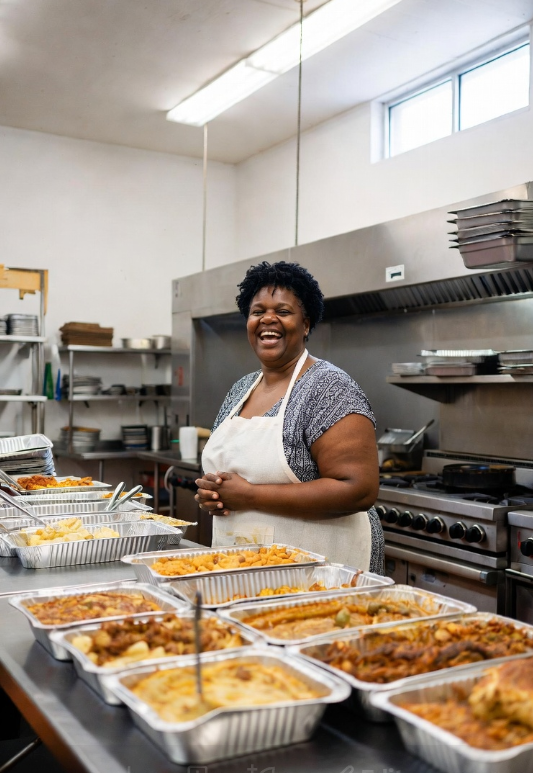
The Saturday youth class has twenty-two students this month. Rosa and Deontay are running it together with the new curriculum and I sat in the back row on Saturday and watched something I could not have imagined four years ago: a structured, documented, community-grounded cooking education program running in the church kitchen with two instructors I trained, one directly and one through example, serving students who will train others. The chain. The continuing chain. I sat in the back row and I watched it all the way to the end and then I stood up and went home and made tea and sat with it.
After I got home from sitting in that back row on Saturday, after the tea, I found myself in the kitchen with my hands in dough — which is where I go when something has moved me and I need to work it through my body instead of my head. Rosemary focaccia is one of the first breads I ever taught, because it asks something of you without demanding perfection, because you press your fingers into it and leave actual marks and that is the point, and because the smell of rosemary and olive oil in a warm kitchen is the smell of a place where people are paying attention. It felt right. The chain, the continuing chain — it starts again, it is always starting again, and this is the bread I make when I remember that.
Rosemary Focaccia
Prep Time: 20 min | Cook Time: 25 min | Total Time: 45 min (plus 1 hr rise) | Servings: 12
Ingredients
- 1 packet (2 1/4 tsp) active dry yeast
- 1 1/2 cups warm water (about 110°F)
- 1 tsp sugar
- 3 1/2 cups all-purpose flour, plus more for kneading
- 1 1/2 tsp kosher salt
- 5 tbsp olive oil, divided, plus more for pan
- 2 tbsp fresh rosemary leaves, roughly chopped
- Flaky sea salt, for finishing
Instructions
- Proof the yeast. In a large bowl, combine warm water, sugar, and yeast. Stir gently and let sit 5–10 minutes until foamy and fragrant.
- Mix the dough. Add 3 tbsp olive oil and the kosher salt to the yeast mixture. Add flour one cup at a time, stirring until a shaggy dough forms.
- Knead. Turn dough onto a lightly floured surface and knead 8–10 minutes until smooth and elastic. The dough should spring back slowly when poked.
- First rise. Drizzle 1 tbsp olive oil into a clean bowl, place the dough inside, and turn to coat. Cover with a damp towel and let rise in a warm spot for 1 hour, or until doubled in size.
- Prepare the pan. Generously coat a 9x13-inch baking pan with olive oil. Transfer the risen dough to the pan and gently stretch it toward the edges. If it resists, let it rest 5 minutes and try again.
- Dimple and top. Use your fingertips to press deep dimples all over the surface of the dough — this is the most important step, and it should feel satisfying. Drizzle the remaining 1 tbsp olive oil over the top. Scatter rosemary evenly and finish with a generous pinch of flaky sea salt.
- Second rise. Cover loosely and let rest 20–30 minutes while the oven preheats to 425°F.
- Bake. Bake 20–25 minutes until the top is deep golden and the edges pull away from the pan. The bottom should sound hollow when tapped.
- Cool and serve. Let rest at least 10 minutes before cutting. Serve warm or at room temperature, torn into pieces.
Nutrition (per serving)
Calories: 210 | Protein: 5g | Fat: 7g | Carbs: 32g | Fiber: 1g | Sodium: 280mg