
 By
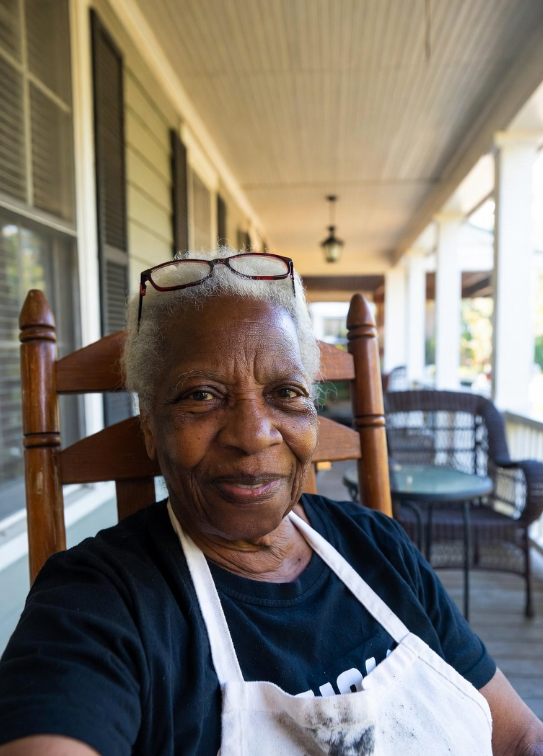
By Cooking class week four: collard greens and cornbread. The heart class. The class I've been building toward, the one that matters most, because if you understand collard greens and cornbread, you understand the Lowcountry. You understand the South. You understand every Black kitchen that ever fed a family through slavery and Reconstruction and Jim Crow and the civil rights movement and the daily, ordinary, extraordinary act of surviving in a country that didn't always want you to.
I brought a bunch of collard greens from the garden — my garden, my greens, grown in the soil that I tend with my own hands. I held them up in the class and I said, "These greens have a history. These greens came from West Africa on slave ships. The enslaved people grew them in kitchen gardens because the masters didn't want them. The masters called them scraps. The people who grew them called them survival. And they cooked them slow — with whatever they had, with the parts of the pig the masters threw away, with ham hocks and smoked neck bones and the fat that was supposed to be garbage but that became the seasoning for a cuisine that would outlast the people who tried to destroy the people who made it."
The room was very quiet.
We cooked. Three hours. I do not cook collard greens for less than three hours because anything less is salad, and salad is not what we're making. We're making history. We're making the dish that my mother made every Sunday and her mother made every Sunday and her mother's mother made every day because every day was a day that required survival and the greens were the survival.
The cornbread went in the cast iron. Not the class's cast iron — MY cast iron. Hattie Pearl's cast iron. I brought it. I put it on the burner and the butter went in and the batter went in and the sizzle filled the room and every person in that class understood, in that sizzle, what a hundred years of seasoning sounds like. The cornbread was perfect. The greens were perfect. The history was present. The teaching was complete.
Thomas — the student who made the perfect roux — Thomas ate his greens and he said, "Mrs. Henderson, my grandmother used to make greens like this." I said, "Thomas, your grandmother and my mother were probably cooking from the same memory." He nodded. The nod was the understanding. The nod was the receipt.
Now go on and feed somebody.
After three hours of collard greens and the kind of teaching that lives in your chest long after the classroom empties, I wanted to send everyone home with something they could make the very next morning — something that still had that cast-iron warmth, that sizzle, that Southern common sense. Sausage biscuits are what Southern kitchens reach for when the lesson is over and the hunger is real. Hattie Pearl’s skillet is put away, but the spirit of it belongs in your kitchen too — and it starts here, with these biscuits, on an ordinary morning that you decide to make extraordinary.
Handy Sausage Biscuits
Prep Time: 10 min | Cook Time: 18 min | Total Time: 28 min | Servings: 8 biscuits
Ingredients
- 1 lb ground pork breakfast sausage (mild or hot)
- 2 cups all-purpose flour
- 1 tablespoon baking powder
- 1/2 teaspoon salt
- 1/4 teaspoon black pepper
- 1/3 cup cold unsalted butter, cut into small cubes
- 3/4 cup whole buttermilk, cold
- 1 tablespoon butter or bacon drippings (for the skillet)
Instructions
- Cook the sausage. In a cast-iron skillet over medium heat, brown the ground sausage, breaking it into crumbles as it cooks, about 6–8 minutes. Drain on a paper towel-lined plate and set aside. Wipe the skillet clean and reserve for baking.
- Preheat the oven. Heat your oven to 425°F. Place your cast-iron skillet inside while the oven preheats so it gets good and hot.
- Make the biscuit dough. In a large bowl, whisk together the flour, baking powder, salt, and pepper. Add the cold butter cubes and work them into the flour with your fingertips until the mixture resembles coarse crumbs — do not overwork it. Gently fold in the drained sausage crumbles.
- Add buttermilk. Pour in the cold buttermilk and stir just until a shaggy dough comes together. Stop mixing the moment it holds — tough biscuits come from overworked dough.
- Shape the biscuits. Turn the dough out onto a lightly floured surface and pat it gently to about 3/4-inch thickness. Cut into 8 rounds using a 2 1/2-inch biscuit cutter or the rim of a glass, pressing straight down without twisting.
- Bake. Carefully remove the hot skillet from the oven and add the tablespoon of butter or drippings, swirling to coat. Arrange the biscuit rounds in the skillet — they can be touching for softer sides. Bake 15–18 minutes, until the tops are deep golden brown and the edges look set.
- Serve warm. Let rest 3 minutes in the skillet, then turn out and serve. These are meant to be eaten hot, at a table, with people you love.
Nutrition (per serving)
Calories: 320 | Protein: 11g | Fat: 19g | Carbs: 26g | Fiber: 1g | Sodium: 540mg