
 By
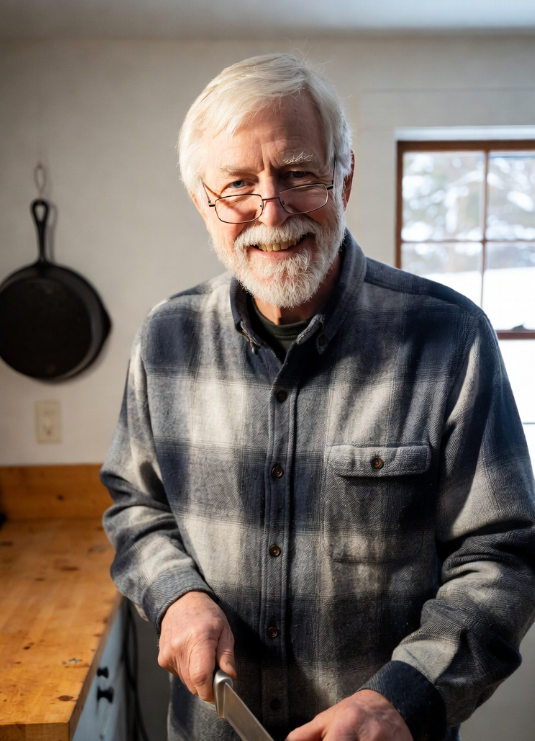
By End of February, light visibly returning, the sun setting after five-thirty for the first time since November and the morning starting to come up while I am drinking my second cup of coffee instead of my third. The shift is small but cumulative — twenty additional minutes of daylight per week, a slow tipping of the scale that the body responds to before the mind notices, the dog walking the morning route in real light instead of headlamp light, the kitchen window at supper still showing the silhouette of the maples instead of the void. Vermont winters are long but they are not infinite, and the second half of February is when the first credible evidence of spring begins to accumulate, and a man who has lived in this place for seventy-two years learns to read the evidence the way a sailor reads weather.
The maple tap inventory began Saturday. I went to the sugarhouse for the first time since November and unwrapped the buckets from their winter storage, counted them (a hundred and ten, the same as last year, the same as the year before that, the same as the year my father had when he taught me at twelve), checked the spiles and found three that need replacing, oiled the hinges on the sugarhouse door which had taken on a winter stiffness, and stood for a moment in the dim sap-sweet space and let the place exhale around me. The sugarhouse my grandfather built holds the smell of a hundred and four years of boiled sap and that smell is still in the wood and the floor and the rafters even at the end of February, when no boiling has happened in eleven months. It is the smell of the family. It is the smell of the spring. The taps will go in around the third week of March, give or take a freeze-thaw cycle, and I will be ready.
Made a beef stew Wednesday with the last of the parsnips from the root cellar — the parsnips having gone through their long sweet rest and come out tasting like the candy of root vegetables, which is what parsnips do if you trust them and let the cold develop them. The stew was the kind that fills the house with brown smell for the entire afternoon and that converts a cold day into a tolerable one through nothing more than the work of the oven and the patience of the cook. I ate it with thick slices of bread Wednesday night and again Thursday and again Friday at lunch with the rest of the bread, and by Friday night the pot was empty and the stew had served its purpose, which is to feed me through the trough between weeks.
Lucy left for Costa Rica Wednesday. Sarah texted me a photo of her at the airport — backpack, hiking boots, the calm self-possession of the youngest grandchild who has been on enough planes by now to find them unremarkable. I texted back two words: she'll be fine. Sarah replied: I know. Five hours later Lucy texted me directly from somewhere in Atlanta on a layover, a single line: see you in May, grampy. I did not answer. The grandchild who texts her grandfather from an airport on her own initiative on the way to a clinic in Central America is a grandchild who has decided what she thinks of her grandfather, and the message is its own complete thing and does not require a reply. I saved the message. I will see her in May.
The parsnips are finished now — that pot on Wednesday used the last of them — but the root cellar doesn’t go empty all at once, and the beets and carrots are still there, still patient, still doing what cold-stored vegetables do when you trust them. This ginger-brightened preparation is what I reach for when the stew pot is empty and I want something that still tastes like the earth but carries a little of the brightness that February is just beginning to promise.
Ginger Beets and Carrots
Prep Time: 15 min | Cook Time: 30 min | Total Time: 45 min | Servings: 4
Ingredients
- 4 medium beets, peeled and cut into 1-inch chunks
- 3 large carrots, peeled and cut into 1-inch pieces
- 2 tablespoons olive oil
- 1 tablespoon fresh ginger, grated
- 1 tablespoon honey
- 1 tablespoon apple cider vinegar
- 1/2 teaspoon salt
- 1/4 teaspoon black pepper
- 2 tablespoons fresh parsley, chopped (for garnish)
Instructions
- Preheat and prep. Preheat your oven to 400°F. Line a large rimmed baking sheet with parchment paper.
- Parboil the beets. Place beet chunks in a saucepan, cover with cold water, and bring to a boil. Cook for 10 minutes until just beginning to soften. Drain and pat dry.
- Make the glaze. In a large bowl, whisk together the olive oil, grated ginger, honey, apple cider vinegar, salt, and pepper.
- Toss the vegetables. Add the parboiled beets and raw carrot pieces to the bowl and toss until evenly coated with the ginger glaze.
- Roast. Spread the vegetables in a single layer on the prepared baking sheet. Roast for 20–25 minutes, turning once halfway through, until the carrots are tender and the edges of the beets are beginning to caramelize.
- Finish and serve. Transfer to a serving dish and scatter chopped parsley over the top. Serve warm or at room temperature.
Nutrition (per serving)
Calories: 140 | Protein: 2g | Fat: 7g | Carbs: 19g | Fiber: 4g | Sodium: 340mg