
 By
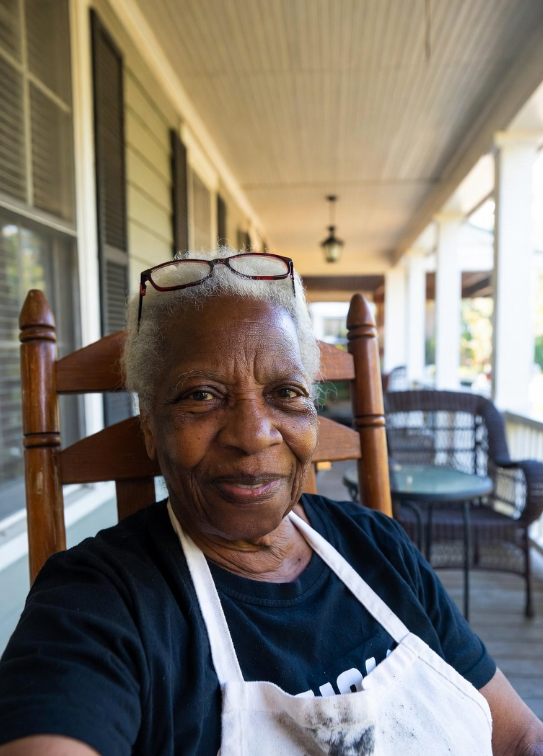
By Week two of the cooking class: she-crab soup. The dish that separates Lowcountry cooking from everything else, because she-crab soup requires one thing that you cannot get at a grocery store, that you cannot substitute, that you cannot fake: crab roe. Female crab roe. The orange, briny, intensely flavored eggs of a female blue crab, harvested from the marsh by people who know where to find them, which is not many people, because this is not a mainstream ingredient. This is a secret ingredient. This is the ingredient that makes she-crab soup what it is, and without it, you just have crab soup, which is fine but is not the same, the way a house is fine but is not a home.
Miss Vernelle provided. Because Miss Vernelle always provides. She sent me a bucket of female crabs, picked that morning from the creek behind her house, and I brought them to the class still smelling like the marsh, still smelling like the Lowcountry, still smelling like the thing the tourists don't get and the locals don't share and the cooking class is going to learn today if it's the last thing I teach.
The class was harder this week. She-crab soup is not a beginner dish. It requires a roux, which requires patience and a steady hand and the willingness to stand at the stove stirring butter and flour without looking at your phone for six minutes, which is apparently an eternity for some of these people. The roux is the test. The roux separates the cooks from the watchers. Two students — a young woman named Keisha (not my great-granddaughter-in-law, a different Keisha) and an older man named Thomas — made perfect rouxes. The others made progress. Progress is fine. Progress is the road to the roux. You don't get there in one class. You get there in one life.
The soup was excellent. Rich, creamy, briny, with the roe providing that deep, oceanic flavor that is the signature of every she-crab soup that has ever been made by a woman who knows what she's doing. The students ate it and the room was quiet again. The silence. The silence is the grade. The silence says: A plus.
Now go on and feed somebody.
That silence in the room after the soup — the one I called an A-plus — reminded me of every other time a hard dish landed right, when the work was honest and the flavor did the talking. The recipe I keep coming back to when I want to teach that same lesson on a different stove is this one: French Canadian tourtière, a spiced meat pie that has been separating the patient cooks from the restless ones for three centuries. It asks for the same things the roux asks for — your full attention, a steady hand, and the willingness to trust the process long after you want to rush it. You make this once and you understand why Miss Vernelle’s people still talk about the food the way they talk about family.
French Canadian Tourtieres
Prep Time: 35 min | Cook Time: 55 min | Total Time: 1 hr 30 min | Servings: 8
Ingredients
- 1 lb ground pork
- 1/2 lb ground beef
- 1 medium yellow onion, finely diced
- 3 cloves garlic, minced
- 1 cup russet potato, peeled and finely grated
- 1/2 cup low-sodium beef broth
- 1/2 tsp ground cinnamon
- 1/4 tsp ground cloves
- 1/4 tsp ground allspice
- 1/2 tsp dried thyme
- 1 tsp salt
- 1/2 tsp black pepper
- 2 store-bought or homemade 9-inch pie crusts (top and bottom)
- 1 egg, beaten (for egg wash)
Instructions
- Brown the meat. In a large skillet over medium-high heat, cook the ground pork and beef together, breaking it up with a wooden spoon, until no pink remains, about 8 minutes. Drain off excess fat, leaving about 1 tablespoon in the pan.
- Build the filling. Reduce heat to medium. Add the diced onion and cook, stirring occasionally, until softened and translucent, about 5 minutes. Add the garlic and cook 1 minute more until fragrant.
- Season and simmer. Stir in the grated potato, beef broth, cinnamon, cloves, allspice, thyme, salt, and pepper. Reduce heat to low and simmer uncovered, stirring frequently, for 15 minutes until the mixture is thick and the potato has absorbed most of the liquid. Taste and adjust seasoning. Remove from heat and let cool to room temperature, at least 20 minutes.
- Prepare the crust. Preheat your oven to 400°F. Press the bottom pie crust into a 9-inch pie dish. Spoon the cooled filling evenly into the crust, pressing it down gently so there are no air pockets.
- Top and seal. Lay the second crust over the filling. Trim any overhang to about 3/4 inch, fold the edges under, and crimp firmly to seal. Cut 4 small slits in the top crust to vent steam. Brush the entire surface with the beaten egg.
- Bake. Place the pie on a rimmed baking sheet and bake at 400°F for 15 minutes, then reduce heat to 375°F and bake an additional 25–30 minutes until the crust is deep golden brown. If the edges brown too quickly, tent them loosely with foil.
- Rest before slicing. Let the tourtière rest on a wire rack for at least 10 minutes before cutting. This lets the filling set and keeps it from falling apart on the plate.
Nutrition (per serving)
Calories: 490 | Protein: 22g | Fat: 28g | Carbs: 38g | Fiber: 2g | Sodium: 520mg