
 By
By The blog readership is growing. I can see it in the comments — more people, more variety, more stories. A woman in Hawaii who makes adobo with pork and pineapple (controversial, delicious). A man in the Navy stationed in Guam who reads my posts and sends them to his mother in the Philippines. A college student in Portland who's Filipino-American and doesn't know how to cook any Filipino food and is using my blog as a starting point. Each reader is a kitchen. Each kitchen is a story. I am collecting stories the way I collect recipes — carefully, gratefully, aware that each one is a gift.
The ER had a rough shift on Tuesday — I can feel the old patterns trying to re-engage, the part of my brain that wants to replay the case, wants to lie in bed and review what I could have done differently, wants to carry the patient home like a weight in my chest. But the therapy has given me tools. I do the breathing. I do the writing. I cook. The cooking is the oldest tool and the most effective — something about the physical act, the hands-busy-brain-quiet state, interrupts the replay loop and brings me back to the present, to the garlic, to the oil, to the here and now of a kitchen that is not the ER.
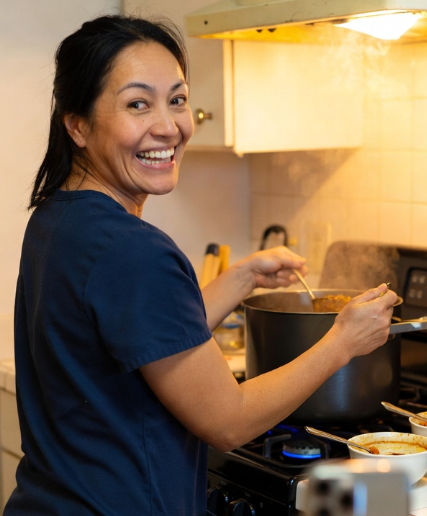
I made bistek tagalog — Filipino beef steak, which is not steak in the American sense but thin-sliced beef marinated in soy sauce and calamansi and pan-fried with onion rings. The onions are the star — thick rings, caramelized until they're sweet and soft, piled on top of the beef like a crown. The combination of salty-sour beef and sweet onions is one of the simplest and best things in Filipino cooking, a two-note harmony that doesn't need complexity because the notes are so right.
I sliced the onions thick and fried them slow, the way Lourdes does — patient, letting the sugar in the onions do the work, not rushing, not cranking the heat. The beef was thin-sliced sirloin, marinated for an hour, seared fast in a smoking-hot pan. The soy sauce caramelized on the surface, the calamansi brightened the edges, and the whole thing took thirty minutes and tasted like a meal that took much longer.
I ate the bistek at my kitchen table, the onions piled high, the rice steaming. Outside, the sun was doing its July thing — lingering, golden, generous. Inside, the beef was salty and the onions were sweet and the calamansi was sour and the combination was everything it needed to be and nothing more. Some recipes don't need to be profound. They just need to be dinner. Tonight, dinner was enough.
The bistek that night reminded me, again, that salty and sour don’t need much else to be right — and that the same logic that makes a good marinade makes a good dressing. This Everyday Asian Dressing lives in my fridge now the way good tools live on a workbench: quiet, ready, always useful. It carries the same notes I was reaching for that Tuesday evening — soy, citrus, a little depth — and it turns whatever is in the fridge into something that feels intentional. On the hard nights, that matters.
Everyday Asian Dressing
Prep Time: 5 minutes | Cook Time: 0 minutes | Total Time: 5 minutes | Servings: 8 (about 1 cup total)
Ingredients
- 3 tablespoons soy sauce (low-sodium works well)
- 3 tablespoons rice vinegar
- 2 tablespoons fresh citrus juice (calamansi, lime, or lemon)
- 2 tablespoons sesame oil (toasted)
- 2 tablespoons neutral oil (avocado or grapeseed)
- 1 tablespoon honey or maple syrup
- 1 teaspoon fresh ginger, finely grated
- 1 clove garlic, finely grated or pressed
- 1 teaspoon sesame seeds (optional, for garnish)
- Pinch of red pepper flakes (optional)
Instructions
- Combine. Add the soy sauce, rice vinegar, citrus juice, sesame oil, neutral oil, honey, ginger, and garlic to a small jar or bowl. Whisk or shake vigorously until fully combined and the honey is dissolved.
- Taste and adjust. Taste the dressing. Add more citrus juice for brightness, more soy for salt, or a touch more honey to balance. The flavor should be distinctly salty-sour with a subtle sweetness and nuttiness behind it.
- Finish. Stir in sesame seeds and red pepper flakes if using.
- Store. Transfer to a sealed jar and refrigerate for up to two weeks. The oil will solidify slightly when cold — let it sit at room temperature for a few minutes and shake well before using.
- Serve. Drizzle over green salads, grain bowls, cold noodles, steamed vegetables, or use as a quick marinade for beef, chicken, or tofu. A few tablespoons over thin-sliced beef is all you need to start a bistek.
Nutrition (per serving, approximately 2 tablespoons)
Calories: 72 | Protein: 1g | Fat: 6g | Carbs: 4g | Fiber: 0g | Sodium: 380mg