
 By
By This morning I went to Mass at St. Patrick’s Cathedral, the same as I do every Sunday, and I lit two candles before I found my pew. The first for my brother Javier, who has been gone twenty-three years and who I will light candles for until I die. The second for my mother, Rosa, who is alive but sick in Juárez, and who does not know that I light candles for the living as readily as for the dead — because some people are so necessary to the world that you cannot wait until they are gone to pray for them.
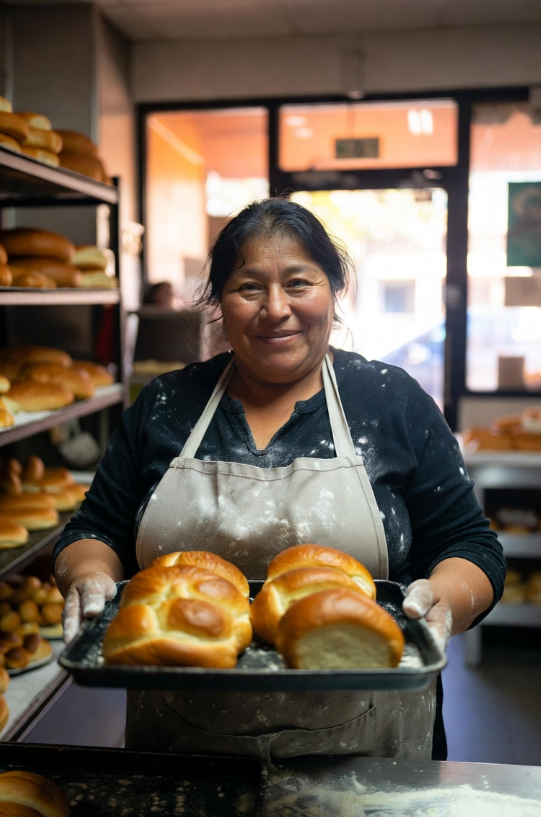
My name is Maria Elena Gutierrez. I am thirty-eight years old. I was born in Colonia Anapra, on the Mexican side of the Rio Grande, in a cinder block house with a corrugated tin roof that my father Alejandro built with his own hands. I live now in El Paso, Texas, fifteen minutes and a different world away. I have five children, a husband named Luis who has never once in sixteen years let me carry anything alone, and a small bakery on Dyer Street called Panadería Rosa. The bakery has been open one year and two weeks. It bears my mother’s name. She has never seen it. She is in Juárez, in that same cinder block house, and she is sixty-one years old, and her body is doing what bodies do when they have worked too hard for too long without enough rest or doctors or the kind of care they deserved from the beginning.
I called her on Tuesday. She said she was fine.
Rosa always says she is fine.
So today, after Mass, after I lit her candle and asked God for things I cannot control and came home to the beautiful noise of my family — Diego building something enormous out of cardboard in the living room, Camila running through the hall in a pink dress with jam on her face, Luis Jr. already at the bakery even though I told him it was Sunday and he should rest — I made chilaquiles. Rosa’s chilaquiles. The ones she made every Sunday morning of my childhood in a kitchen without hot water, before we went to Mass, so the whole house smelled like toasted chile and warm tortillas by the time we were dressed and out the door.
I want to tell you about those Sunday mornings, sweetheart, because you need to understand them before you can understand the recipe. In Colonia Anapra in the 1980s, Sunday was the only day that slowed down. My father drove buses six days a week. My mother worked the maquiladora — one of the foreign-owned factories that lined Juárez, sewing clothes for American brands at wages that wouldn’t buy lunch in the country where the clothes would be sold — five days a week, sometimes six. There were seven children in that house. The walls were thin. The noise never stopped. Money was always what you were running out of.
But on Sunday mornings, Rosa cooked.
She was up before the light. She’d toast dried chiles on the comal — anchos, guajillos, whatever she had saved from the week — pressing them flat against the hot iron with her palm until the kitchen filled with that warm, smoky smell I still associate with safety the way other people associate it with locked doors or money in the bank. She’d soak them in hot water until they went soft and dark, then blend them with garlic and onion and the tomatoes that had been sitting on the windowsill all week. The salsa went into a hot pan with a splash of oil and it would hiss and spit and settle into a deep, brick-red simmer that could fill a room with something that felt less like food and more like a promise.
Then the tortillas. Always her own — flour tortillas, because we are from Chihuahua and in Chihuahua the tortilla is flour, this is not a debate — cut into wedges and fried until they were just crisp enough to hold their shape in the salsa without dissolving completely. She’d drop them into the sauce and cook them until they were soaked through, tender all the way to the center, then top everything with crumbled cheese, sliced white onion, and a spoon of crema she made herself because store crema was for families with more money than us.
She’d set the pan on the table and we would eat straight from it, all nine of us crowded around a table built for six, elbows touching, arguing over who got the corner pieces, my brother Javier stealing food from my plate and looking completely innocent when I accused him. We ate fast the way poor children eat, because abundance is not something you trust — you eat it while it is there. And then we went to Mass, smelling of chile and tortillas, and I thought that was how everybody lived.
I didn’t know until I was older — until I crossed the bridge to El Paso and saw the other side — that it wasn’t.
I came to El Paso in 1998. I was twenty years old. I came on a tourist visa and I stayed, the way many people stay, because going back was sometimes a kind of dying and I had learned by then not to choose dying when there was another option. I washed dishes in a restaurant kitchen and shared a one-bedroom apartment with three other women from Juárez and sent half my paycheck home to Rosa every month. I was afraid every day — afraid of being sent back, afraid of the phone call from Juárez I knew would come eventually, the kind that changes everything.
What I was not afraid of was cooking.
In the small kitchen of that apartment, with a two-burner stove and one good pan, I made Rosa’s food. I made it from memory, because she had never written anything down — Rosa cooked the way she breathed, without instructions, the knowledge living in her hands instead of on paper. I made mistakes. The salsa too thin. The tortillas too soft or too brittle. I would call her and describe what went wrong and she would say, over a phone line that crackled like the comal, “You need to toast the chile longer, mija. You need to trust your nose.”
Trust your nose. That is Rosa’s entire cooking philosophy in three words.
I learned. I got better. I married Luis, who ate everything I cooked with the focused appreciation of a man who understood what it cost to make it. We had children, and the children ate Rosa’s recipes from the beginning. Chilaquiles on Sundays. Chile colorado on cold nights. Caldo de res when someone was sick. The food crossed the border the way I crossed the border — carrying everything that mattered, leaving nothing behind that could be helped.
The bakery was a dream I didn’t say out loud for years because saying it made it possible to fail at it, and I had already failed at enough things by then. But in 2015, with a small business loan and the kind of terrifying confidence that only comes from surviving worse, I opened Panadería Rosa on Dyer Street. It is eight tables and two employees and me at four in the morning, every morning, six days a week. It is the hardest and best thing I have ever done, and I named it for the woman who taught me that a kitchen is not just a place where food is made. It is a place where a family is held together. It is the warmest room in the house. It is where love becomes something you can put in your mouth.
Rosa has not seen it. I want her to see it. I am afraid she won’t.
This morning, when I came home from Mass and started toasting the guajillos and the whole kitchen filled with that smell, Sofia — my eleven-year-old, who has Rosa’s quick hands and Rosa’s impatience with anything that isn’t going exactly right — climbed up on a step stool next to me and watched without speaking. Not asking questions. Just memorizing. The way you learn things that matter: with your eyes and your hands and your silence. I watched her watch the pan the same way I used to watch Rosa, and I thought: it is passing. It is still passing. Even now, even here, it goes from hand to hand.
Diego ate two bowls and said it was the best thing he had ever eaten, which is what Diego says about everything I cook, and which I receive every time as if it were the first time, because it is a gift and you do not let gifts go ordinary. Camila got salsa in her hair. Isabella ate carefully, cutting everything into small precise pieces the way a future nurse cuts things. Luis ate standing at the counter because there was no room at the table, and because that is what husbands do in families with five children and not quite enough chairs, and he did not complain because he learned long ago that I learned from a woman who did not complain, and he loves me enough to meet me where I am.
After, washing the pan, I thought about Rosa’s hands. About how much I have not written down. About how much lives only in memory, which is not the same as written down, which is not the same as safe.
So I am writing it down now. This is where I start. With chilaquiles rojos on a Sunday morning in El Paso, made in a kitchen that smells like Anapra, cooked for children who have never crossed to the other side of the bridge but who carry that kitchen in every bite of food I put in front of them. This is Rosa’s recipe, as close as I can make it. It will never be exactly right — the missing ingredient is her hands, and those cannot be written down. But it is as close as love and thirty-eight years of watching can bring it.
I think that is close enough.
I hope you make it for someone you love. I hope it warms the room.
I could not stop thinking about what lives only in memory — and how memory is not the same as safe. So here is what I did: I wrote it all down, every step, every chile, every instruction Rosa never measured because her hands already knew. This is the recipe as I have made it every Sunday since she taught me, imperfect and beloved, and I give it to you now exactly as I give it to my children — with the hope that it becomes something you no longer need to read.
Chilaquiles Rojos — My Mother’s Sunday Morning Recipe
Prep Time: 20 minutes | Cook Time: 25 minutes | Total Time: 45 minutes | Servings: 4 to 6
Ingredients
For the salsa roja:- 3 dried guajillo chiles, stems and seeds removed
- 2 dried ancho chiles, stems and seeds removed
- 3 Roma tomatoes, quartered
- 3 cloves garlic, peeled
- 1/4 medium white onion
- 1 1/2 cups chicken broth or water
- 1/2 teaspoon dried Mexican oregano
- Salt to taste
- 1 tablespoon vegetable oil
- 12 corn tortillas, day-old if you have them (they hold up better), cut into wedges or strips — or 6 to 8 cups good tortilla chips if you are in a hurry, which some Sundays you are
- 1/2 cup vegetable oil for frying, if using fresh tortillas
- Salt to taste
- 1/2 cup crumbled queso fresco or cotija
- 1/4 white onion, sliced thin
- 1/3 cup Mexican crema or sour cream
- Fresh cilantro, if your family likes it (Luis does not, so in this house it goes on the side)
- 4 to 6 fried or scrambled eggs, for serving alongside (optional — but this is how Rosa did it)
Instructions
- Toast the chiles. Heat a dry comal or heavy skillet over medium heat. Lay each dried chile flat and press it gently against the pan with your palm or the back of a spatula for 15 to 20 seconds per side, until it darkens slightly and smells warm and smoky. Not burned — bitter is not what we are after. A burned chile will ruin your salsa and there is no coming back from it, so do not walk away. Once toasted, place the chiles in a bowl and cover them with boiling water. Let them soak 15 to 20 minutes, until fully soft.
- Build the salsa. Drain the soaked chiles and put them in the blender with the tomatoes, garlic, onion, chicken broth, and oregano. Blend until the salsa is completely smooth — at least one full minute. It should be a deep red, almost brick-colored. If it is too thick to blend, add a little more broth. Taste it. Add salt. It will need salt. Trust your nose here: if it smells right, it is right.
- Fry the tortillas. If you are starting from fresh tortillas: heat the oil in a wide skillet over medium-high heat until it shimmers. Fry the tortilla pieces in small batches, turning once, until they are golden and just crisp — about 2 minutes per batch. They should be sturdy enough to hold their shape in the salsa but not so hard they hurt your teeth. Drain on paper towels and salt them lightly while they are still hot. If you are using store-bought chips, skip this step entirely. Rosa used fresh tortillas always. I will not tell you that you have to.
- Cook the salsa. Wipe out the skillet or use a wide, deep pan. Heat one tablespoon of oil over medium-high until it shimmers. Pour in the blended salsa carefully — it will spatter, so step back. Cook it, stirring, for 3 to 4 minutes until it darkens a shade and smells deeply of chile and tomato. This step is not optional. Cooking the salsa raw out of the blender is not the same thing.
- Bring it together. Reduce the heat to medium. Add the fried tortilla pieces to the salsa and fold gently to coat everything. Cook for 2 to 3 minutes, turning carefully, until the tortillas have soaked up the sauce and gone tender all the way through but still hold their shape at the edges. Watch them the way Rosa watched them — like they are the most important thing in the room, because right now they are. One minute too long and you have mush. You will know when they are ready. Trust yourself.
- Serve immediately. Plate the chilaquiles and top with crumbled cheese, sliced onion, and a drizzle of crema. Add eggs alongside. Eat at the table with your family, elbows touching, while the food is still hot. That is how it is meant to be eaten. That is the whole point.
Nutrition (per serving)
Calories: 375 | Protein: 9g | Fat: 21g | Carbs: 40g | Fiber: 5g | Sodium: 510mg