Sophie's daughter Ingrid is one year old this season. The Kenwood kitchen has a high chair again. The high chair is a thirty-five-year-old artifact pulled from the basement and scrubbed clean and assembled at the same kitchen table where Anna and Peter and Elsa once sat in it. Ingrid sits in it now. Ingrid eats the same applesauce and the same banana bread and the same baby version of meatballs. The kitchen receives the new generation without comment, the way the kitchen has always received everyone.
Anna had a small surgery. She is fine. I drove to Minneapolis for two weeks to help. I cooked. I cleaned. I cared. Anna said: "Mom, I had forgotten you were a nurse." I said: "I haven't." The thirty-five years at St. Mary's are not the kind of thing that fades. The skills come back at the first request. The hands remember how to take a pulse. The eyes remember how to read a face for pain. The role is permanent.
Elsa and Tom came for the weekend. Tom helped me move the heavy planters in the garden — the big terracotta ones I bought at a yard sale in 1995 that I cannot lift anymore. He did not ask. He just did it. He is the quiet kind of man Paul was. I see why Elsa loves him. The quiet men are not the loudest in the room, but they are usually the most useful. Paul taught me this by example. Tom is teaching it by repetition.
I cooked Iced coffee and cardamom cookies this week. Strong cold-brew, ice, splash of cream. Cardamom cookies on the side. The kitchen on a hot afternoon.
Thursday at Damiano. I brought a tray of pepparkakor — the second batch from the Christmas freezer, brought back to crispness in a low oven. They were eaten in fifteen minutes. The cookies are not the soup. The cookies are the extra. The extra is the message: you are worth the effort of cookies. Most of the world does not give the people who come to Damiano the message that they are worth the effort of cookies. The cookies are doing political work.
I dreamed about Paul last night. The dream was specific: we were at the lake, in the canoe, fishing for trout. He was teaching me the right way to cast (he was always trying to teach me; I never quite got the rhythm; I caught fish anyway, by accident, with embarrassing regularity). In the dream he was patient and present and entirely himself. I woke up at 4 AM. I made coffee. I sat in the kitchen. The dream was a visit. I have learned to receive the visits without reaching for them. They come when they come.
It is enough. Paul is not here. Mamma is not here. Pappa is not here. Erik is not here. They are all here in the kitchen, in the smell, in the taste, in the wooden spoon and the bread pans and the marble slab. The dead are not where the body went. The dead are in the kitchen.
The seasons in Duluth are unsubtle. The winter is long and white and dark. The spring is reluctant. The summer is glorious and brief. The fall is brilliant and quick. The unsubtlety is a kind of honesty. The seasons do not pretend to be other than what they are. They give you what they give you. They take what they take. The kitchen, in response, does what it does — soup in winter, salads in summer, pies in fall, bread always.
It is enough.
That hot afternoon in the kitchen — cold-brew over ice, a splash of cream, cardamom cookies on the side — reminded me that restoration does not always arrive in a pot on the stove. Sometimes it is something cold and simple and done in five minutes, something that asks you to stop moving. The Arnold Palmer is that kind of drink: half iced tea, half lemonade, nothing complicated, the kind of thing you make when the heat is honest and you have earned the right to sit. It belongs to that same afternoon, and to the quiet that came after the dreaming, and the 4 AM coffee, and all of it.
Arnold Palmer
Prep Time: 10 min | Cook Time: 0 min | Total Time: 10 min (plus chilling) | Servings: 2
Ingredients
- 2 cups strong-brewed black tea, cooled and chilled
- 2 cups fresh or good-quality store-bought lemonade, chilled
- Ice cubes
- 2 lemon slices, for garnish
- Fresh mint sprigs, for garnish (optional)
Instructions
- Brew the tea. Brew 2 black tea bags in 1 cup of boiling water for 5 minutes, then add 1 cup of cold water to cool. Refrigerate until fully chilled, at least 30 minutes or up to overnight.
- Fill the glasses. Pack two tall glasses generously with ice cubes.
- Pour the tea. Pour 1 cup of chilled black tea over the ice in each glass.
- Add the lemonade. Pour 1 cup of chilled lemonade into each glass, pouring gently over the back of a spoon if you want a layered effect.
- Garnish and serve. Tuck a lemon slice onto the rim of each glass and add a sprig of mint if using. Serve immediately.
Nutrition (per serving)
Calories: 70 | Protein: 0g | Fat: 0g | Carbs: 19g | Fiber: 0g | Sodium: 12mg
About the cook who shared this
Linda Johansson
Week 541 of Linda’s 30-year story
· Duluth, Minnesota
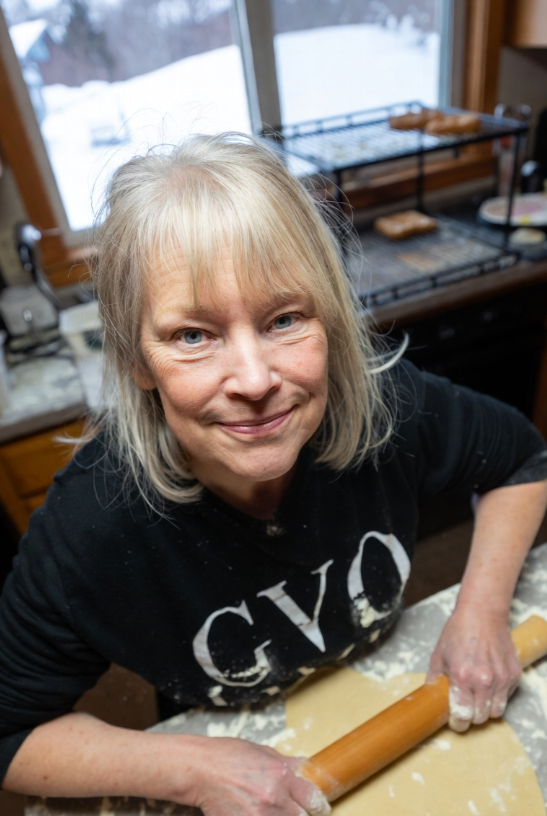
Linda is a sixty-three-year-old retired nurse from Duluth, Minnesota, living alone in the house where she raised her children and said goodbye to her husband. She lost Paul to ALS in 2020 after two years of watching the kindest man she'd ever known lose everything but his dignity. She cooks Scandinavian comfort food and Minnesota hotdish and the pot roast Paul loved, and she sets two places at the table out of habit because it makes her feel less alone. Every recipe she writes is a person she's loved.
