
 By
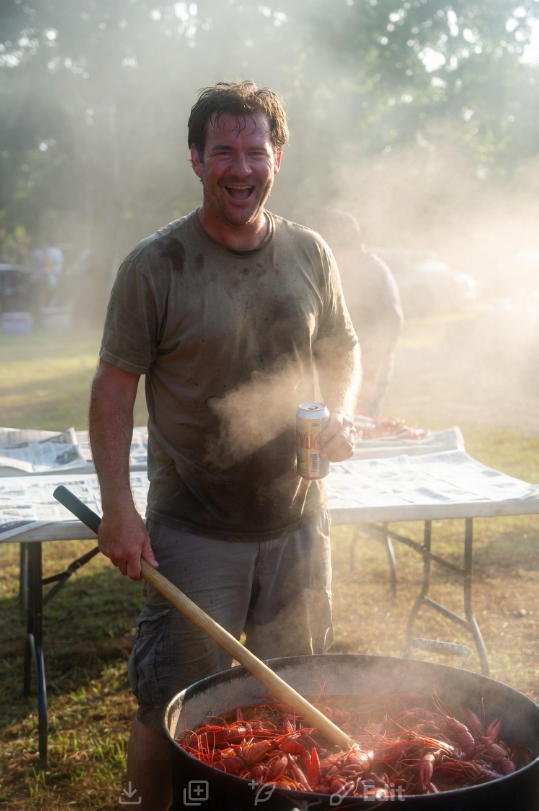
By Week 537. Year 11. Tommy is 44. Summer heat. The kind that makes the attic work brutal and the evening grill essential and the cold beer a medical necessity. Rémy (14) finishing school, drawn to the water. Fishing trips continue — the bayou, the marsh, the same water that Joey fished and that Rémy fishes now with the same cast and the same patience and the different hands that hold the same rod.
Made corn and crab bisque this week — the kind of food that fills the house with the smell of Louisiana and the knowledge that whoever walks through the door is walking into a home where the stove is on and the food is ready and the welcome is unconditional. The meal was the day. The day was the meal. Both were good. Laissez les bons temps rouler.
The small union-electrician role at the small IBEW Local 995 in Baton Rouge continues to be the small career-spine. The small thirty-year-Local-995-membership has built the small senior-electrician-status. The small commercial-construction-projects are the small steady-work in the small Baton-Rouge-Industrial-Corridor.
The three kids are: Luc (born 2006, the small oldest), Colette (born 2008, the small middle-daughter), Rémy (born 2011, the small youngest). The small Danielle (the small wife, from Lafayette) is the small partner Tommy has built the small Baton-Rouge-life with. The small two-income family-of-five has been the small Baton Rouge middle-class household.
The small Hurricane Katrina (August 2005) destroyed the small Chalmette, Louisiana home where Tommy had grown up. The small twenty-year-anniversary of the small loss is the small ongoing-marker. The small move to Baton Rouge in October 2005 had been the small refugee-from-the-storm displacement. The small Baton Rouge has been the small home for the small twenty years now.
The small Cajun-cooking-tradition is the small kitchen-identity. The small jambalaya, the small gumbo, the small etouffee, the small red-beans-and-rice (on Mondays, the small traditional-Cajun Monday-staple). The small recipes from Maw-Maw Beaumont (Tommy’s grandmother who had been in Chalmette before Katrina, passed in 2014) continue to be the small kitchen-spine.
The small St. Aloysius Catholic Parish congregation is the small Sunday-worship and social-network. The small twenty-year-membership has been the small post-Katrina-rebuild of the small community. The small parish-cookouts, the small parish-bingo, the small parish-school-fundraisers are the small Beaumont-family-engagement.
The small Louisiana-summer-heat-and-humidity is the small weather-reality. The small grilling-and-outdoor-cooking happens in the small early-morning or the small late-evening when the small temperature is bearable. The small Louisiana-spring-and-fall are the small narrow-windows of pleasant cooking-weather.
The small Sunday-publishing-rhythm of the recipe blog continues to be the small organizing-spine of the small week. The small Sunday-cooking happens in the small late-morning-to-early-afternoon window. The small photographing of the finished dish happens at the small three-PM kitchen-light-window. The small writing-up of the recipe happens at the small four-PM workspace at the kitchen-counter. The small final-edit happens at the small five-PM. The small post publishes at seven PM. The small ritual has been running for years.
The small recipe-development-philosophy continues to be the small small-batch-test-then-publish approach. The small first cook of a small new recipe happens on the small Saturday afternoon. The small adjustments are noted in the small kitchen-notebook. The small second cook happens Sunday with the small adjustments incorporated. The small Sunday-cook is the small version that gets photographed and published. The small two-test process catches the small recipe-flaws before they reach the small reader.
The small kitchen-equipment-inventory has the small key-pieces that show up in nearly every recipe. The small heavy-bottomed Dutch oven for the small braises. The small twelve-inch cast-iron skillet for the small sears and the small pan-roasts. The small half-sheet baking-pans for the small roasted vegetables and the small cookies. The small wooden-spoon-collection in the small ceramic-pitcher on the counter. The small chef’s-knife and the small paring-knife and the small bread-knife that are the small daily-tools.
The small grocery-shopping rhythm runs through the small Tuesday-evening trip and the small Saturday-morning top-off. The small Tuesday-trip is the small weekly-stock-up for the small staples and the small produce and the small protein. The small Saturday-trip is the small quick-fill for whatever the small Sunday-recipe requires that is not already in the small pantry. The small two-trip-per-week pattern keeps the small grocery-bill manageable and the small food-waste low.
The small meal-planning happens on the small Sunday-evening for the small week-ahead. The small dinners are mapped out across the small Monday-through-Saturday. The small repeating-meals are slotted in (the small pasta-Monday, the small taco-Tuesday or similar pattern). The small new-recipes are slotted for the small Wednesday-or-Thursday for the small variety. The small planning ahead reduces the small daily what-are-we-making-for-dinner stress.
The small weekday-cooking is the small efficient-and-fast mode. The small Sunday-cooking is the small slow-and-careful mode. The small two-modes serve the small two-different-needs. The small weekday-cooking has to be on the small table within forty-five minutes of getting home from the small work-or-school-pickup. The small Sunday-cooking can take three hours and benefit from every minute of that time.
The small recipe-archive on the small blog has grown to many hundreds of recipes over the years. The small archive is the small searchable-resource for the small weekday-meal-planning. The small reader-feedback in the small comments-section helps refine the small recipes over time. The small note-from-a-reader who tried a small substitution that worked better than the small original gets incorporated into the small recipe-revision.
The small Sunday-cooking-and-writing rhythm is the small thing that has held across years of life-changes and family-events and small ordinary-weekday-disruptions. The small constant is the small Sunday. The small constant is the small recipe. The small constant is the small posting-at-seven-PM ritual. The small constant is the small reader on the other end of the small post who is going to read the small recipe and try the small recipe in the small reader’s own kitchen.
The bisque filled the house the way only a long Sunday cook can — slow heat, patient stirring, the kind of smell that tells everyone walking through the door exactly where they are and that they are welcome. But summer in Baton Rouge doesn’t just ask for one Sunday project; it asks for the kind of cooking that keeps giving through the week, that you jar up and set on the counter and reach for when the grill is going and the evening has finally cooled enough to stand outside. This zucchini relish is that recipe — a Sunday slow cook that bridges the garden and the grill and keeps the summer larder stocked the way Maw-Maw Beaumont always kept hers.
Zucchini Relish
Prep Time: 30 min (plus 2 hrs draining) | Cook Time: 25 min | Total Time: ~3 hrs | Servings: ~48 (makes about 6 half-pint jars)
Ingredients
- 6 cups zucchini, finely shredded (about 4 medium zucchini)
- 2 cups yellow onion, finely diced
- 1 cup green bell pepper, finely diced
- 1 cup red bell pepper, finely diced
- 3 tablespoons kosher salt (for salting and draining)
- 2 1/4 cups granulated sugar
- 2 1/4 cups white distilled vinegar (5% acidity)
- 1 tablespoon celery seed
- 1 tablespoon mustard seed
- 1/2 teaspoon ground turmeric
- 1/2 teaspoon black pepper
- 1/4 teaspoon garlic powder
Instructions
- Salt and drain the vegetables. Combine the shredded zucchini, diced onion, and both bell peppers in a large colander set over a bowl. Sprinkle with the kosher salt, toss well to coat, and let stand at room temperature for at least 2 hours to draw out excess moisture. Rinse thoroughly under cold water, then press firmly with clean hands or a kitchen towel to remove as much liquid as possible.
- Prepare your jars. If canning, sterilize 6 half-pint mason jars and lids in boiling water and keep warm. If making a refrigerator relish, clean jars are sufficient.
- Make the brine. In a large, heavy-bottomed Dutch oven or stockpot, combine the sugar, white vinegar, celery seed, mustard seed, turmeric, black pepper, and garlic powder. Stir over medium heat until the sugar fully dissolves and the mixture just reaches a gentle boil.
- Cook the relish. Add the drained vegetable mixture to the brine. Stir to combine and return to a boil. Reduce heat to medium and simmer uncovered for 20—25 minutes, stirring occasionally, until the relish thickens slightly and the vegetables are tender but still have a little bite.
- Pack the jars. Using a ladle and canning funnel, pack the hot relish into prepared jars, leaving 1/4 inch headspace. Wipe jar rims clean, apply lids finger-tight, and process in a boiling water bath for 10 minutes if canning for shelf storage. Remove and let cool undisturbed on a towel-lined counter for 12 hours. Any jars that do not seal should be refrigerated and used within 3 weeks. Sealed jars keep in a cool, dark place for up to 1 year.
- Rest before serving. For best flavor, allow sealed jars to rest at least 24 hours before opening. The flavors develop and mellow significantly overnight. Serve alongside grilled sausage, burgers, po’boys, or anywhere you’d reach for a bright, tangy condiment.
Nutrition (per serving, approximately 2 tablespoons)
Calories: 38 | Protein: 0g | Fat: 0g | Carbs: 9g | Fiber: 0g | Sodium: 95mg