
 By
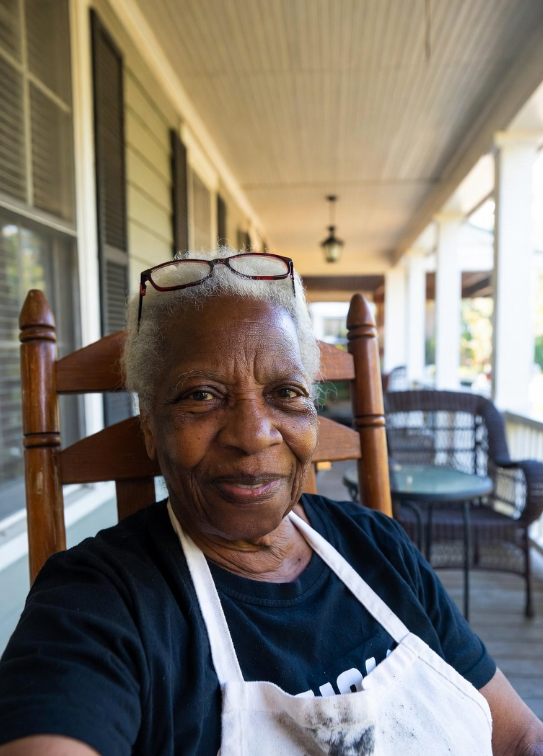
By Five years. Two hundred and sixty weeks. I started this blog on March 28, 2016, standing in my kitchen at four forty-five in the morning, looking out the window at Earl's garden, typing with one finger about the azaleas and the Cherokee Purples and the man in the recliner watching the weather channel. That woman — that sixty-year-old woman with the husband and the job and the kitchen full of life — she is both me and not me. She is who I was. I am who she became.
Five years. In that time: Kayla graduated and became a nurse. Marcus married Tasha. Amara was born. Earl died. I retired. A pandemic came. I cooked twenty-two Thanksgiving dinners and twenty-two Christmas dinners. I wrote a book. David Jr. was born. I went to Sapelo Island and found Pearl. I made hot sauce from her peppers. I held my great-granddaughter. I fed Mrs. Crawford. I survived.
The cooking class started this week. First session: shrimp and grits. Fourteen new students. I brought Hattie Pearl's skillet. I told the story of Pearl. I told them about the grits — stone-ground, low and slow, stir constantly. I told them about the shrimp — fresh, never frozen, C not O. And I told them this: cooking is not about the food. Cooking is about the people you feed and the love you put in and the stories you tell while you stir. The food is just the evidence. The love is the point.
I came home and I made shrimp and grits for myself. Same dish. Same kitchen. Same skillet. Same woman, five years older, five years sadder, five years wiser, five years more certain that feeding people is the holiest act she knows.
Five years ago, Hattie Pearl said from wherever she is: "Now go on and feed somebody."
I did, Mama. I did. And I'm not done yet.
Now go on and feed somebody.
Teaching that first shrimp and grits class reminded me of something I already knew but needed to say out loud again: it is never really about the specific dish. It is about the intention you carry into the kitchen. So when I came home and wanted to make something that honored the brightness of this week — five years, a new class, Pearl’s skillet on a new table — I reached for something warm and tropical and alive. This Tropical Mahi Mahi is that kind of food. It tastes like a celebration that earned itself.
Tropical Mahi Mahi
Prep Time: 15 min | Cook Time: 12 min | Total Time: 27 min | Servings: 4
Ingredients
- 4 mahi mahi fillets (6 oz each), patted dry
- 2 tablespoons coconut oil
- 1 teaspoon salt
- 1/2 teaspoon black pepper
- 1/2 teaspoon smoked paprika
- 1/4 teaspoon cayenne pepper
- 1 cup fresh mango, diced small
- 1/2 cup fresh pineapple, diced small
- 1/4 cup red onion, finely diced
- 1 small jalapeño, seeded and minced
- 3 tablespoons fresh lime juice (about 2 limes)
- 2 tablespoons fresh cilantro, chopped
- 1 clove garlic, minced
- 1 teaspoon honey
- Lime wedges, for serving
Instructions
- Make the tropical salsa. In a medium bowl, combine the mango, pineapple, red onion, jalapeño, lime juice, cilantro, garlic, and honey. Stir gently to combine. Taste and adjust salt as needed. Set aside at room temperature while you cook the fish so the flavors can come together.
- Season the fish. In a small bowl, mix together the salt, black pepper, smoked paprika, and cayenne. Pat both sides of each mahi mahi fillet dry with a paper towel, then rub the seasoning evenly over all sides. Dry fish is the difference between a good sear and a sad steam — do not skip the pat.
- Heat the skillet. Place a large cast iron or heavy-bottomed skillet over medium-high heat. Add the coconut oil and let it melt and shimmer — about 1 to 2 minutes. You want that pan truly hot before the fish goes in.
- Sear the fish. Lay the fillets carefully into the hot skillet, presentation side down. Do not move them. Cook undisturbed for 4 to 5 minutes until the bottom is deep golden and releases cleanly from the pan. Flip once and cook another 3 to 4 minutes until the fish is opaque throughout and flakes easily with a fork. Internal temperature should reach 137°F.
- Rest and plate. Transfer fillets to a serving plate and let rest for 2 minutes. Spoon the tropical salsa generously over each fillet. Serve immediately with lime wedges on the side. Rice, warm tortillas, or simply a good piece of bread will welcome everything this dish has to offer.
Nutrition (per serving)
Calories: 310 | Protein: 34g | Fat: 9g | Carbs: 22g | Fiber: 2g | Sodium: 420mg