
 By
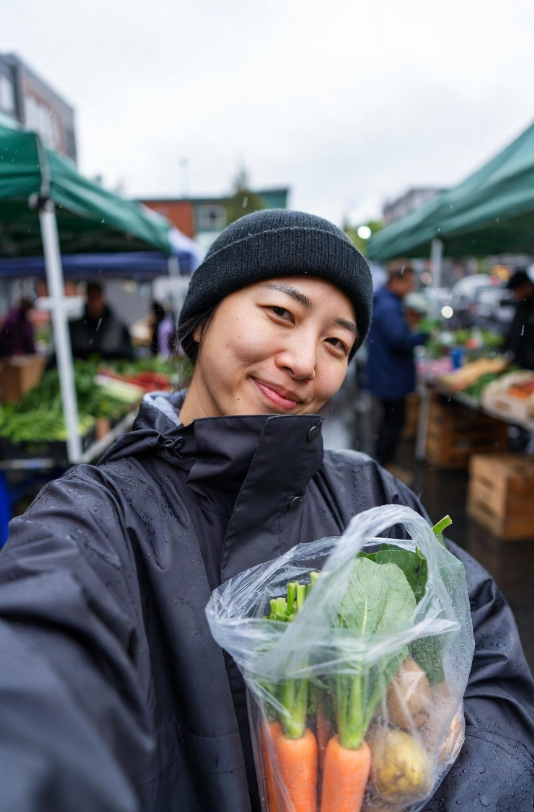
By June 2020. Three months of pandemic. The cautious reopening continues — outdoor dining, expanded grocery hours, the tentative return of some normalcy. James and I ventured to the Fremont farmers market (our first outing in months) and the normalcy of buying vegetables from a person was so overwhelming I nearly cried. The crying-over-normalcy reflex: still strong, four years in.
This week I made something significant: my own kimchi recipe. Not Maangchi's. Not Misook's. Not Jisoo's (I have not met Jisoo yet — the name I use is imagined, a placeholder for the birth mother I am searching for). Mine. Developed over four years, adjusted through dozens of batches: more garlic than most, less sugar, extra jeotgal (salted shrimp), a splash of soy sauce (my addition), five weeks fermentation. The recipe is my fingerprint. No two batches identical. Every batch recognizably mine.
I also perfected my anchovy stock — the Korean cooking foundation that makes everything else possible. The stock: dried anchovies (heads and guts removed), dried kelp, simmered twenty minutes, strained. Clear, oceanic, deeply savory. The stock goes into every jjigae, every guk, every braise. The stock is the infrastructure. Four years of building the infrastructure, and the infrastructure is invisible and essential, like plumbing, like code, like the identity itself.
Saturday: the first in-person Bellevue dinner in three months. I drove to Bellevue with a trunk of Korean food. Karen met me at the door. The hug lasted a minute. Three months of not hugging compressed into sixty seconds. David shook my hand and then hugged me (twice in one year — pandemic-record). Karen made pot roast. I made kimchi jjigae. The table was the same. We were the same and different. Three months of pandemic changes how you see a table: not as furniture but as the infrastructure of togetherness, the platform on which love is served.
The kimchi jjigae I brought to Bellevue that Saturday was mine in every way that mattered—four years of adjustments, my fingerprint in every jar. But the dish that kept running through my head afterward, the one that felt like it belonged on that same table alongside Karen’s pot roast, was something with the same sweet-and-savory tension I love in Korean cooking: pork ribs lacquered in a bold, sticky sauce, the kind of thing you pass around and tear apart with people you’ve missed. This recipe captures that spirit—the balance of sweet and sour that echoes the fermented depth of a good kimchi, the pork that’s fall-apart tender the way a long reunion should feel.
Sweet & Sour Pork Ribs
Prep Time: 15 minutes | Cook Time: 1 hour 30 minutes | Total Time: 1 hour 45 minutes | Servings: 4
Ingredients
- 3 lbs pork spare ribs, cut into individual ribs
- 1/4 cup soy sauce
- 1/4 cup rice vinegar
- 3 tablespoons brown sugar
- 2 tablespoons honey
- 2 tablespoons ketchup
- 1 tablespoon sesame oil
- 4 cloves garlic, minced
- 1 teaspoon fresh ginger, grated
- 1/2 teaspoon red pepper flakes
- 2 tablespoons vegetable oil
- 1/2 cup water
- 2 green onions, thinly sliced (for garnish)
- 1 teaspoon sesame seeds (for garnish)
Instructions
- Prep the ribs. Pat ribs dry with paper towels and season lightly with salt and pepper on all sides.
- Sear. Heat vegetable oil in a large heavy-bottomed pot or Dutch oven over medium-high heat. Working in batches, sear ribs for 2–3 minutes per side until browned. Transfer to a plate and set aside.
- Make the sauce. In a bowl, whisk together soy sauce, rice vinegar, brown sugar, honey, ketchup, sesame oil, garlic, ginger, and red pepper flakes until the sugar dissolves.
- Braise. Return all ribs to the pot. Pour the sauce and water over the ribs. Bring to a boil, then reduce heat to low, cover, and simmer for 1 hour to 1 hour 15 minutes, turning ribs halfway through, until meat is tender and pulling away from the bone.
- Reduce and glaze. Uncover the pot and increase heat to medium. Cook for an additional 10–15 minutes, turning ribs occasionally, until the sauce reduces to a thick, sticky glaze that coats the ribs.
- Serve. Arrange ribs on a platter, spoon any remaining glaze over the top, and garnish with sliced green onions and sesame seeds. Serve immediately.
Nutrition (per serving)
Calories: 610 | Protein: 38g | Fat: 42g | Carbs: 18g | Fiber: 0g | Sodium: 820mg