
 By
By First day of school, 2017 edition. Noah in middle school — sixth grade, new building, new kids, locker for the first time. He navigated it with the calm efficiency of someone who approaches everything as a solvable problem. He came home and said it was "fine," which in Noah's vocabulary is actually fine, not Iowa-fine. Emma started fourth grade and came home with three new friends and a plan to join every club the school offers. Jack started first grade with his 4-H ribbon in his backpack and a small bag of sunflower seeds for his teacher, because Jack gives seeds the way other kids give apples.
I sent them off with packed lunches that took me forty-five minutes to assemble: turkey sandwiches on whole wheat, apple slices, carrot sticks, a cookie from the summer batch I froze. Kevin said, "They have a cafeteria." I said, "They have my food." He didn't argue. You don't argue with a Weber woman about feeding children. The children will be fed. The sandwiches will be made. The cookies will be included. This is not negotiable.
The house was quiet after they left. That September quiet that hits like a wall — all summer the house is chaos and noise and screen doors slamming and the sprinkler running and then suddenly it's Monday morning and they're gone and the silence is so loud it has weight. I sat at the kitchen table with my coffee and looked at the empty chairs and thought: this is what Dad feels. This quiet. This absence of the people you feed. No wonder he doesn't eat.
I made chicken noodle soup for dinner because first-day-of-school dinner should be warm and welcoming and the kind of food that says "tell me everything." Noah told me about his science teacher who has a Tesla coil in the classroom. Emma told me about her new friend Mia who has a horse (the horse campaign continues, now with external evidence). Jack told me his teacher has a cactus and it needs "better drainage." He offered to consult. He is six.
I drove to Grinnell Saturday. Dad's garden is winding down — the tomatoes are done, the corn is picked, the sunflower heads are drying for seeds. He was sitting on the porch watching the fields across the road. Corporate harvest is underway. The combines are running on what used to be his land. He watched them the way you watch someone else raise your child. Not angry. Just aware. Just carrying it.
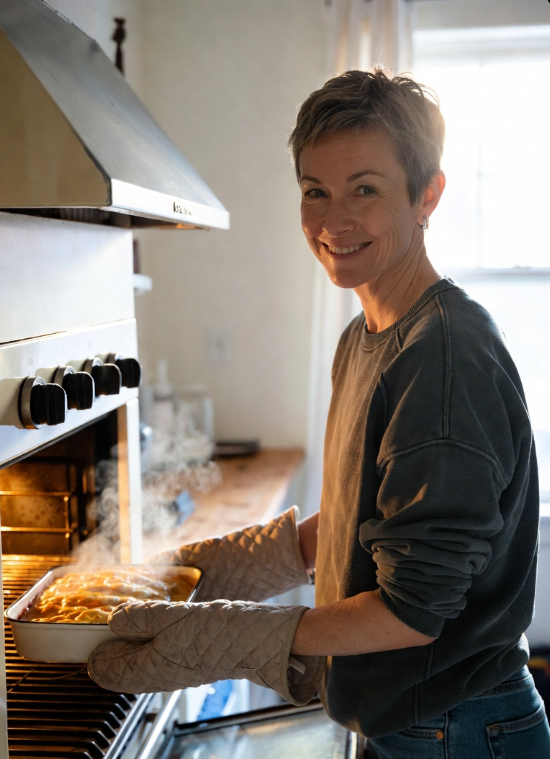
I had the chicken noodle soup simmering before Noah even got off the bus, but it was the rolls that finished the table — the thing that made it feel less like a meal and more like a welcome home. Parker House Rolls are what my mother made when she wanted the house to smell like she’d been waiting for you all day, and on a first-day-of-school evening with three kids full of stories and a September quiet still ringing in my ears, that’s exactly the message I needed to send. They take a little time, but that’s the point — you start them in the afternoon while the house is still empty, and by the time everyone’s back and loud and dropping backpacks in the hallway, they’re golden and ready.
Parker House Rolls
Prep Time: 25 minutes | Cook Time: 20 minutes | Total Time: 2 hours 45 minutes (includes rise time) | Servings: 16 rolls
Ingredients
- 1/4 cup warm water (105–110°F)
- 2 1/4 teaspoons active dry yeast (one standard packet)
- 1 teaspoon sugar, plus 2 tablespoons sugar (divided)
- 3/4 cup whole milk, warmed
- 4 tablespoons unsalted butter, melted and slightly cooled, plus 3 tablespoons for brushing
- 1 teaspoon kosher salt
- 1 large egg, room temperature
- 3 1/4 cups all-purpose flour, plus more for dusting
- Flaky sea salt, for finishing (optional)
Instructions
- Proof the yeast. Combine warm water, yeast, and 1 teaspoon sugar in the bowl of a stand mixer. Stir gently and let sit for 5–10 minutes until foamy. If it doesn’t foam, your yeast is expired — start over.
- Mix the dough. Add the warm milk, 4 tablespoons melted butter, 2 tablespoons sugar, salt, and egg to the yeast mixture. Using the dough hook, mix on low to combine. Add flour one cup at a time, mixing on low until incorporated, then increase to medium and knead for 6–8 minutes until the dough is smooth, elastic, and pulls away cleanly from the sides of the bowl.
- First rise. Shape dough into a ball and transfer to a lightly oiled bowl, turning once to coat. Cover with plastic wrap or a clean kitchen towel and let rise in a warm spot for 1 to 1 1/2 hours, until doubled in size.
- Shape the rolls. Punch down the dough and turn it out onto a lightly floured surface. Divide into 16 equal pieces (a bench scraper makes this easy). Roll each piece into a smooth ball, then use a floured dowel or the handle of a wooden spoon to press a deep crease across the center of each ball — not all the way through, just deeply indented. Fold along the crease and press lightly to hold the classic Parker House shape.
- Second rise. Arrange rolls in a buttered 9x13-inch baking dish, just touching. Cover loosely and let rise for 45 minutes to 1 hour, until puffed and pillowy.
- Bake. Preheat oven to 375°F. Bake rolls for 18–22 minutes until deep golden brown on top.
- Butter and finish. As soon as rolls come out of the oven, brush generously with the remaining 3 tablespoons melted butter. Sprinkle with flaky sea salt if using. Serve warm.
Nutrition (per serving)
Calories: 175 | Protein: 4g | Fat: 7g | Carbs: 24g | Fiber: 1g | Sodium: 160mg