
 By
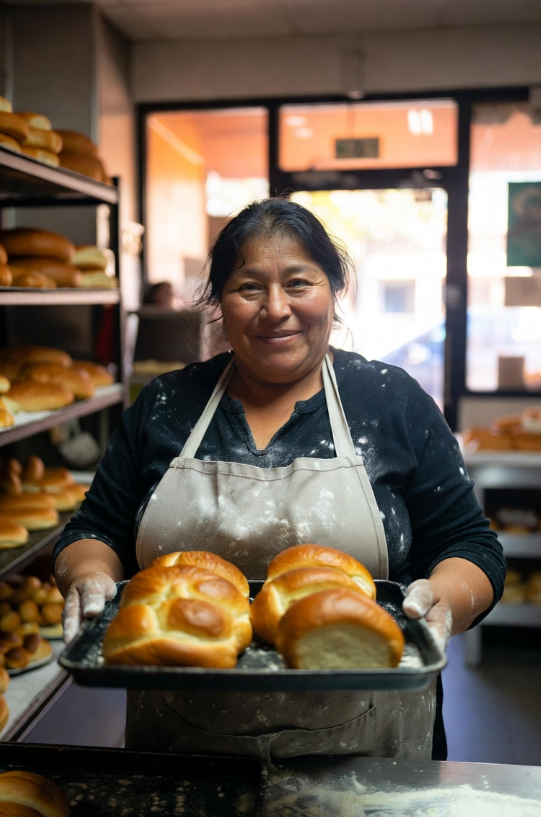
By Nochebuena. Pandemic Christmas Eve. The table is small — household only, six people, the smallest Christmas in Gutierrez history. But the food is the same, because the food is the constant, because Rosa's recipes do not adjust for pandemic capacity. The tamales are Rosa's. The flan is Rosa's. The champurrado is Rosa's (adjusted by me — thicker, more cinnamon). The ponche is Rosa's. The kitchen smells the same because the recipes are the same, and the same is the miracle, and the miracle is the thing the pandemic cannot take.
Luis Jr. came for Christmas — he had leave, a precious three-day window, and he walked through the door at noon and the house became whole, the equation complete, seven people, the full number, and the fullness was the gift, better than any present under the tree, better than any card or wrench or stethoscope, because the fullness is the family, and the family is the fullness, and both are the Christmas.
Diego's Christmas gift to me: a digital photo frame he programmed to rotate through family photographs. One photo every thirty seconds. Rosa, Alejandro, the bakery, the children, the conchas, the ofrenda, the wall of photographs at the bakery — all of it, rotating, a digital version of the refrigerator that has been holding our history for five years. He programmed the frame himself. The transitions are smooth. The photos are beautiful. The technology is Diego's love language, and the love language is silicon and code, and the silicon and code carry Rosa's face from one frame to the next, thirty seconds at a time, forever.
Camila received a ukulele upgrade — a real one this time, not the toy from two years ago. She strummed it at the table during dinner, playing chords she taught herself from YouTube, and the chords were not perfect but they were hers, and the imperfection was the beauty, the same way the imperfection of Luis's charred chilaquiles is the beauty, and the beauty is in the trying, and the trying is in the love, and the love is the chord, and the chord is Camila, eight years old, strumming a ukulele at the Christmas table in a pandemic, filling the room with sound the way Rosa filled the room with presence, and the sound is the presence, and the presence is the filling, and the filling is Christmas.
Rosa’s recipes don’t negotiate with circumstance — not with pandemics, not with small tables, not with the absence of people who should be there. That constancy is what I kept thinking about when I pulled this molasses candy alongside the tamales and flan: the way you have to work it, pulling and folding until it lightens, until something that started heavy and dark turns glossy and bright. That’s the whole Nochebuena in a pot. Luis Jr. walked through that door at noon and the house became whole — and I needed something that required my hands, something old, something that demanded the same effort it always has, because the sameness was the miracle, and the miracle needed a candy to match it.
Old-Fashioned Molasses Candy
Prep Time: 10 min | Cook Time: 35 min | Total Time: 1 hr 15 min (includes cooling) | Servings: 36 pieces
Ingredients
- 2 cups unsulfured molasses
- 1 cup granulated sugar
- 2 tablespoons unsalted butter, plus more for greasing
- 1/4 teaspoon baking soda
- 1/4 teaspoon salt
- 1 teaspoon pure vanilla extract
Instructions
- Prepare your surface. Butter a large marble slab or baking sheet generously and set aside. Butter your hands well just before pulling.
- Combine and dissolve. In a heavy-bottomed 3-quart saucepan, combine molasses and sugar over medium heat. Stir constantly until sugar is fully dissolved, about 5 minutes.
- Cook to hard-crack stage. Clip a candy thermometer to the pan. Increase heat to medium-high and cook without stirring until the mixture reaches 300°F (hard-crack stage), about 25–30 minutes. Watch carefully in the final minutes.
- Finish the syrup. Remove from heat immediately. Stir in the butter, baking soda, salt, and vanilla — the mixture will foam slightly. Stir just until combined.
- Pour and cool. Pour the candy onto your prepared surface in a thin, even layer. Let it cool undisturbed until it is just cool enough to handle — warm but not liquid, about 10–15 minutes.
- Pull the candy. With well-buttered hands, gather the candy mass and begin pulling it: stretch it out, fold it back on itself, and repeat. Pull continuously for 10–15 minutes until the candy lightens in color, becomes glossy, and holds its shape. This is the work — don’t rush it.
- Shape and cut. Pull the finished candy into long ropes about 1/2 inch thick. Use buttered scissors or a sharp knife to cut into 1-inch pieces. Work quickly before the candy hardens fully.
- Set and store. Arrange pieces on wax paper and allow to cool completely, about 20 minutes. Wrap individually in wax paper twists. Store in an airtight container at room temperature for up to 2 weeks.
Nutrition (per serving)
Calories: 68 | Protein: 0g | Fat: 1g | Carbs: 16g | Fiber: 0g | Sodium: 28mg