
 By
By Mama’s small expanded garden gave its first small pumpkins this fall (well, last fall — the small pumpkin-puree had been frozen and is now thawing for the small mini pumpkin-cakes). Brayden is two hundred and thirty-two weeks old. Eden is one year and thirty-eight weeks.
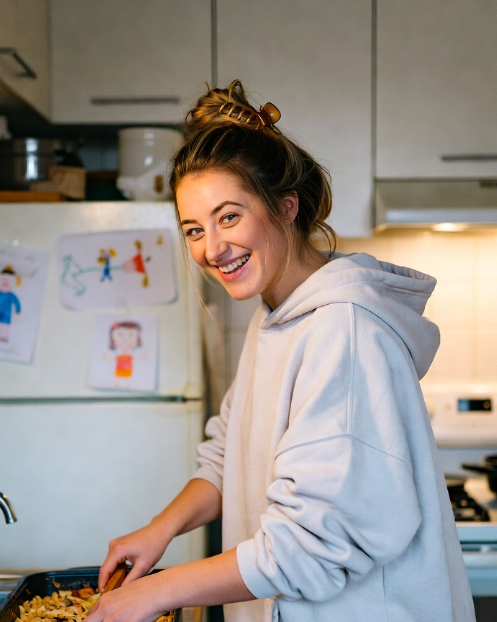
Sunday I made twelve small cakes.
The technique-detail I always lean on: the small intentional-pause between steps. Stir, pause, taste, then continue. The small pauses are the small mid-recipe quality-control. The small home-cook who pauses is the small home-cook whose dishes come out at the small reliable-level. The small pauses are how the small kitchen-rhythm holds across years.
Mama’s Wednesday-evening call was the small mid-week anchor. The cafe’s small operational-state continues to be small steady. Cody runs the small lunch-and-dinner rotation. Aaron, Beatriz, and Patricia (the small new staff hired for the expansion) have integrated well. The small cafe-second-decade has its small functional shape.
Mama’s small Sapulpa garden continues to produce. The small expanded plot from 2024 is in its small steady-state. Mama has been canning small jars of tomatoes, small jars of pickled-things, small jars of preserves. The small jars are the small ongoing-gift-stream to the small Tulsa-apartment-and-Aunt-Linda-and-Roy.
The small Sapulpa-Elementary-cooking-class program has been the small reliable-spring-and-fall fixture. The small alumni from the first cohorts have started showing up at the cafe with their parents and ordering plate-lunches. The small ripple-effect of the small program is starting to be visible.
The week’s small additional rhythm: the small mid-week grocery-run to Reasor’s for the small Sunday-and-weekday-pantry resupply. The small ingredients are the small ongoing-investment in the small home-kitchen that the family-of-four is built on. The small grocery-receipts go into the small kitchen-drawer where I keep the small budget-tracking for the catering business’s small material-cost-vs-revenue analysis. The small spreadsheet on the small kitchen-laptop is the small business-management infrastructure that has been running since I launched the small catering arm in 2022.
Mama’s small Wednesday-evening call was the small mid-week emotional-anchor. Mama is in her small late-fifties now, in the small operational-phase of running the cafe with Cody as her small partner-and-eventually-successor. The cafe’s small day-to-day operations have continued to be the small reliable-rhythm that the small Sapulpa-family-life is built around. Cody has been managing the small new-staff onboarding. Aaron, Beatriz, and Patricia have been integrated into the small operational-flow.
The small Aunt-Linda Tuesday-visit-rhythm continues. She arrives at the small 2 PM mark. She holds whichever small child needs to be held. She drinks the small coffee I keep ready in the small French press. We talk through the small week’s family-news, the small Roy-update (Roy is in his small mid-late-sixties now, post-macular-degeneration adjustment, fully passenger now with Aunt Linda driving both), the small Harper-and-Hadley update, the small Bristow-cousins news.
The small Sunday-evening publishing-and-archiving ritual continues. The recipe gets photographed at the small three PM kitchen-light-window. The post gets drafted at the small four PM workspace at the kitchen-counter. The post gets the small final-pass-edit at the small five PM. The post publishes at seven PM. The small comments and emails come in across the small Sunday-night-and-Monday-morning window. The small ritual is the small spine of the small Recipe Spinoff blog operation.
The small Pantry Rules cookbook companion has continued to sell at its small steady pace. The small kayleeturnercatering.com online-store carries both cookbooks now. The small revenue from the small books is the small adjacent-stream to the small catering-arm revenue and Dustin’s small auto-shop income. The small three-stream household-financial-shape continues to be the small stable-structure the family-of-four has been building around.
Mini Pumpkin Cakes
Prep Time: 15 min | Cook Time: 22 min | Total Time: 37 min | Servings: 12
Ingredients
- 1 cup all-purpose flour
- 1 teaspoon baking powder
- 1/2 teaspoon baking soda
- 1/2 teaspoon salt
- 1 teaspoon ground cinnamon
- 1/2 teaspoon ground nutmeg
- 1/4 teaspoon ground ginger
- 1/4 teaspoon ground cloves
- 3/4 cup pumpkin puree (fresh or canned)
- 1/2 cup granulated sugar
- 1/4 cup packed brown sugar
- 1/3 cup vegetable oil
- 2 large eggs
- 1 teaspoon pure vanilla extract
- 1/2 cup powdered sugar, for dusting
Instructions
- Preheat. Heat your oven to 350°F. Grease a 12-cup muffin tin or line with paper liners and set aside.
- Mix dry ingredients. In a medium bowl, whisk together the flour, baking powder, baking soda, salt, cinnamon, nutmeg, ginger, and cloves until evenly combined.
- Mix wet ingredients. In a large bowl, whisk together the pumpkin puree, granulated sugar, brown sugar, oil, eggs, and vanilla until smooth and well incorporated.
- Combine. Add the dry ingredients to the wet ingredients and stir gently until just combined — do not overmix. A few small lumps are fine.
- Fill and bake. Divide the batter evenly among the prepared muffin cups, filling each about 3/4 full. Bake for 20–22 minutes, or until a toothpick inserted in the center comes out clean.
- Cool. Allow the mini cakes to cool in the pan for 5 minutes, then transfer to a wire rack to cool completely.
- Finish. Dust generously with powdered sugar just before serving. Serve at room temperature or slightly warm.
Nutrition (per serving)
Calories: 168 | Protein: 2g | Fat: 7g | Carbs: 25g | Fiber: 1g | Sodium: 148mg