I read Paul's books in the evening. The shipwreck books, of course. The same chapters I have read forty times now. The repetition is the comfort. I am not reading for new information. I am reading because the act of opening Paul's books and turning Paul's pages is a form of sitting in the room with him. He is not in the room. The book was in his hand. The book is in my hand. The hands are connected through the book.
Peter called from Chicago. He sounded thinner than last week. He said work was fine. I do not believe him. He said his apartment was fine. I do not believe him either. He asked about the dog. He asked about the lake. He told me he loved me. I told him I loved him too. I told him about the bread I was baking. He said he could almost smell it through the phone. We hung up. I stood at the sink for a long minute. I did not know what else to do.
Sophie texted a photo of Mira eating cereal. Mira's face was covered in milk. The photo was lit from the side by morning light and the smile in it was uninhibited and full and I could not stop looking at it. I printed the photo. I taped it to the fridge. I have a system on the fridge now: a column for each grandchild, a column for each great-grandchild, photos rotated weekly. The fridge is the gallery. The gallery is the proof.
I cooked Tater tot hotdish this week. The first frost dish. Ground beef, soup, green beans, tots in concentric rings.
Thursday at the Damiano Center: I made an extra pot of pea soup, the way Mamma taught me — yellow split peas, ham hock, onion, the whole of Sunday afternoon dedicated to its slow simmer. Gerald said, "Variety. We approve." The regulars approved too. One older woman ate three bowls and asked if she could take some home. I sent her home with a quart in a glass jar. She is bringing the jar back next Thursday. We have an arrangement.
I walked to the lake on Saturday. I stood at the spot where Paul and I used to walk — the bench at the end of the lakefront trail, the one with the brass plaque about a different Paul who died in 1972. I told my Paul about the week. About the kids. About the dog. About the soup. I do not feel foolish doing this. The lake is patient. The lake has, in some real sense, become my husband by proxy. I would not have predicted this in 1988. It has turned out to be true anyway.
It is enough. Paul is not here. Mamma is not here. Pappa is not here. Erik is not here. They are all here in the kitchen, in the smell, in the taste, in the wooden spoon and the bread pans and the marble slab. The dead are not where the body went. The dead are in the kitchen.
I have come to think that grief is not a problem to be solved. Grief is a country. You move into it. You learn its language. You make a life there. You do not leave the country, but you also do not spend every minute thinking about the fact that you live in it. You make breakfast. You walk the dog. You write a blog post. The country is the country. You live there now.
It is enough.
The hotdish goes in the oven every year at first frost — it is practically a calendar event — but the week had me thinking about all the other dishes that hold a table together, the ones that feel substantial enough to mean something even without meat at the center. The Damiano Center has taught me that. You feed whoever shows up, and you learn quickly that a well-made thing is a well-made thing, carnivore or not. These are the recipes I reach for when the weather turns and the kitchen needs to do its work.
24 Meatless Recipes That Carnivores Love
Prep Time: 20 min | Cook Time: 40 min | Total Time: 1 hr | Servings: 6
Featured Recipe: Hearty Lentil and Root Vegetable Stew
A deeply savory, stick-to-your-ribs stew that earns its place on any cold-weather table. Green lentils hold their shape; smoked paprika and tomato paste do the work that meat usually does. Serve with good bread.
Ingredients
- 2 tablespoons olive oil
- 1 large yellow onion, diced
- 3 cloves garlic, minced
- 3 medium carrots, peeled and cut into 1/2-inch rounds
- 2 medium parsnips, peeled and cut into 1/2-inch pieces
- 2 stalks celery, sliced
- 2 tablespoons tomato paste
- 1 1/2 teaspoons smoked paprika
- 1 teaspoon ground cumin
- 1/2 teaspoon dried thyme
- 1 1/2 cups green or brown lentils, rinsed
- 1 can (14.5 oz) diced tomatoes, with juices
- 5 cups vegetable broth
- 1 bay leaf
- Salt and black pepper to taste
- 2 cups baby spinach or chopped kale
- 1 tablespoon red wine vinegar
- Fresh parsley, chopped, for serving
Instructions
- Build the base. Heat olive oil in a large heavy pot or Dutch oven over medium heat. Add onion and cook, stirring occasionally, until softened and translucent, about 6 minutes. Add garlic and cook 1 minute more.
- Add the vegetables. Stir in carrots, parsnips, and celery. Cook for 4–5 minutes, letting the edges begin to soften.
- Bloom the spices. Push the vegetables to the sides and add tomato paste to the center of the pot. Let it cook undisturbed for 1 minute, then stir it into the vegetables. Add smoked paprika, cumin, and thyme and stir everything together for 30 seconds.
- Add lentils and liquid. Add the lentils, diced tomatoes with their juices, vegetable broth, and bay leaf. Stir well. Bring to a boil over medium-high heat.
- Simmer low and slow. Reduce heat to low, cover partially, and simmer for 30–35 minutes, until lentils are tender and the stew has thickened. Stir occasionally and add a splash of broth if it becomes too thick.
- Finish and season. Remove the bay leaf. Stir in the spinach or kale and cook until just wilted, about 2 minutes. Add the red wine vinegar, then taste and adjust salt and pepper.
- Serve. Ladle into bowls and top with fresh parsley. Pass good crusty bread alongside.
Nutrition (per serving)
Calories: 310 | Protein: 16g | Fat: 6g | Carbs: 48g | Fiber: 14g | Sodium: 620mg
About the cook who shared this
Linda Johansson
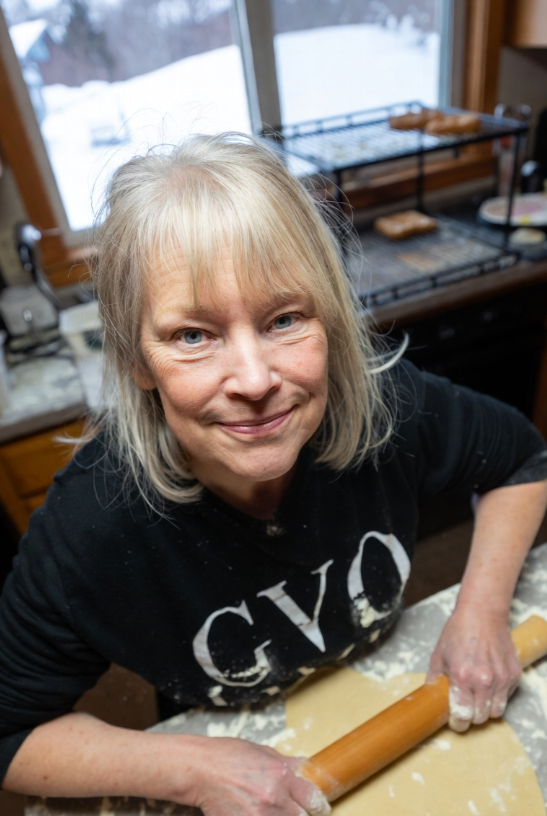
Week 397 of Linda’s 30-year story
· Duluth, Minnesota
Linda is a sixty-three-year-old retired nurse from Duluth, Minnesota, living alone in the house where she raised her children and said goodbye to her husband. She lost Paul to ALS in 2020 after two years of watching the kindest man she'd ever known lose everything but his dignity. She cooks Scandinavian comfort food and Minnesota hotdish and the pot roast Paul loved, and she sets two places at the table out of habit because it makes her feel less alone. Every recipe she writes is a person she's loved.
