Anna and David and the kids came up for the weekend. The house held everyone. The dishwasher ran four times. The fridge was full. The bed was made. The week was good. I am sixty-something and I have hosted my children and grandchildren in this house for forty years and the routine of the visit has become a polished thing — the way the towels go in the guest room, the way the coffee gets started, the way the Sunday breakfast happens at 9 AM with eggs and bacon and potato pancakes and limpa toast.
Karin is having heart trouble. She had a procedure. She is fine. Stockholm is far. I called every day for two weeks. She said: "You are the most insistent sister." I said: "You are the only sister in Sweden." Fair, she said. We laughed. The laughing across the Atlantic, mediated by video call, is its own form of intimacy. We are eighty and seventy-something and we are still the small girls in the kitchen on Fifth Street, in some way that the years have not erased.
Peter came up for a long weekend. He looked good. He brought Janet (the new woman). She made banana bread. She held her own in the kitchen. She made me laugh — twice, both times at her own expense, which is the kind of self-deprecation that signals an emotionally healthy person. I think this might be the one. I think this might be the one Peter has been waiting for, the one who can match his particular wounded honesty with her own steady-handed kindness.
I cooked Easter ham this week. A bone-in ham, scored, glazed with brown sugar and mustard and orange juice, baked low for hours, basted often. The kitchen smells like Easter from every year of every life.
The Damiano Center on Thursday: wild rice soup, fifty gallons. Gerald helped me ladle. He told me about a regular who got into a sober house this week — a man named Curtis, who has been coming for soup for eight years and who has been sober for forty-three days now. The soup did not get him sober. The soup was there when he was hungry. The soup is the door, again. The door is the chance.
I read one of Paul's books in the evening. The Edmund Fitzgerald chapter. I have read it forty times now. The fortieth time is no less affecting than the first. The transmission still gives me a chill: "We are holding our own." Captain McSorley's last known words. The chapter ends with the wreck on the bottom of Lake Superior, and the men still inside, and the lake refusing to give up its dead. Paul read this chapter to me in 1989, on a winter evening, in the living room. I did not know then that he was reading me his own future.
It is enough. Paul is not here. Mamma is not here. Pappa is not here. Erik is not here. They are all here in the kitchen, in the smell, in the taste, in the wooden spoon and the bread pans and the marble slab. The dead are not where the body went. The dead are in the kitchen.
I have been thinking about the kitchen as a kind of slow-moving river. The river has carried things for a hundred and fifty years now — Mormor's recipes from Uppsala, brought across the Atlantic in steerage in the 1880s; Mamma's adaptations of those recipes for the cold of Minnesota; my own modifications, picked up over fifty years; the small experiments my granddaughters bring home from cooking shows they watch on phones. The river keeps moving. I am one bend in it. There will be others.
It is enough.
The Easter ham this year filled the kitchen with the smell of every Easter before it—brown sugar and mustard and orange, the low warmth of a long oven, the basting and the waiting. What I always want alongside it is something simple and honest: herbed potatoes and onions, the kind that soften and caramelize while the ham rests, the kind that need almost nothing from you once they’re in the pan. It is the side dish that has fed my children and now my grandchildren, and it asks only that you show up and let it do its work, which is, I have come to believe, the whole lesson of the kitchen.
Herbed Potatoes and Onions
Prep Time: 15 min | Cook Time: 35 min | Total Time: 50 min | Servings: 6
Ingredients
- 2 lbs Yukon Gold or red potatoes, cut into 1-inch chunks
- 1 large yellow onion, halved and sliced 1/4-inch thick
- 3 tablespoons olive oil
- 2 cloves garlic, minced
- 1 teaspoon dried rosemary, crumbled
- 1 teaspoon dried thyme
- 1/2 teaspoon dried parsley
- 3/4 teaspoon kosher salt
- 1/4 teaspoon black pepper
Instructions
- Preheat. Heat oven to 400°F. Line a large rimmed baking sheet with foil or parchment.
- Toss. In a large bowl, combine potatoes and onion slices. Drizzle with olive oil, add garlic, rosemary, thyme, parsley, salt, and pepper. Toss well until everything is evenly coated.
- Arrange. Spread the potato and onion mixture in a single layer on the prepared baking sheet. Do not crowd the pan—use two sheets if needed.
- Roast. Roast for 30–35 minutes, turning once at the 20-minute mark, until potatoes are golden and tender at the center and the onion edges are caramelized.
- Serve. Transfer to a serving dish and taste for salt. Serve hot alongside Easter ham or any roast.
Nutrition (per serving)
Calories: 185 | Protein: 3g | Fat: 7g | Carbs: 28g | Fiber: 3g | Sodium: 210mg
About the cook who shared this
Linda Johansson
Week 525 of Linda’s 30-year story
· Duluth, Minnesota
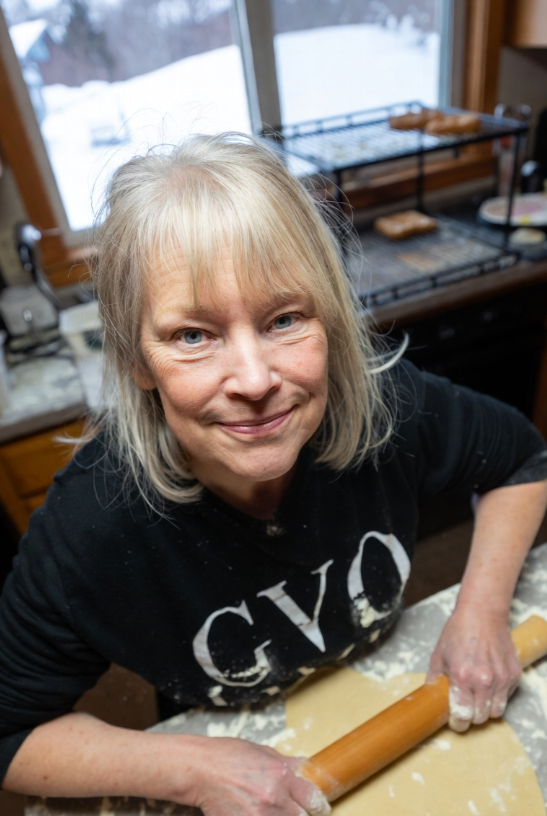
Linda is a sixty-three-year-old retired nurse from Duluth, Minnesota, living alone in the house where she raised her children and said goodbye to her husband. She lost Paul to ALS in 2020 after two years of watching the kindest man she'd ever known lose everything but his dignity. She cooks Scandinavian comfort food and Minnesota hotdish and the pot roast Paul loved, and she sets two places at the table out of habit because it makes her feel less alone. Every recipe she writes is a person she's loved.
