
 By
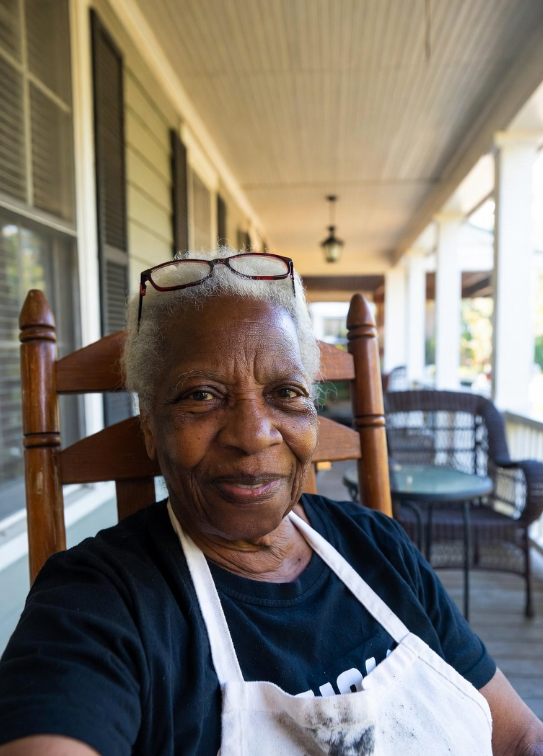
By January 2029. And I told Kayla about the knee. The right one. The one that has been talking since October and is now giving full lectures — long, detailed, persuasive lectures about why a seventy-three-year-old woman should not kneel in the garden, should not stand at the stove for three hours, should not carry a cast iron skillet that weighs four pounds when the skillet could be placed on the stove by someone whose right knee is not filing a lawsuit against the rest of her body.
Kayla was quiet. The nurse quiet. The quiet that means she is processing medical information and personal information simultaneously, the way she processes everything — clinically and emotionally, as a nurse and as a granddaughter, as a professional and as a woman who loves me and who does not want to see me in pain.
"How long?" she asked. "Since October," I said. "Granny," she said. "I know," I said. "You should have told me in October," she said. "I know," I said. "Why didn't you?" she said. "Because I wanted one more Thanksgiving on two real knees," I said. "And one more Christmas. And one more New Year. And one more garden planting. And one more—" "Granny," she said. "I know," I said.
The appointment is scheduled. Dr. Kwan — the same surgeon who did the left knee, who is familiar with my stubbornness and my recovery patterns and my absolute refusal to be a compliant patient. The consultation is in two weeks. The surgery will be sometime this spring. Another titanium knee. Another walker. Another six weeks of sitting while other people cook. Another round of Tanya the physical therapist telling me I'm exceeding expectations while I tell her I am simply meeting Henderson standards.
I have done this before. I know the script. I know the walker and the cane and the exercises and the frustration and the eventual triumph. What I didn't know the first time — and what I know now — is that the recovery isn't just the knee. The recovery is the kitchen. The recovery is the moment you stand at the stove again without help and you realize: I'm back. The food is back. The cooking is back. And the cooking is the living, and the living is worth a second surgery.
Made shrimp and grits tonight. On two knees that both work, for now. The grits were smooth. The shrimp were perfect. The butter was generous. The knees were present. All of this — the grits, the shrimp, the butter, the knees — all of this is temporary. The love is not.
Now go on and feed somebody.
I wasn’t going to make shrimp and grits and then hand you a complicated recipe that requires two good knees and a full afternoon — that’s not the point tonight. The point is the cast iron. The point is standing at the stove with something heavy in the pan and realizing your body still knows what to do. This German Skillet is what I reach for when I need a meal that is warm and real and done in under forty minutes, when I need the skillet to do the heavy lifting so I don’t have to. On two knees that both work, for now — this is the one.
German Skillet
Prep Time: 10 minutes | Cook Time: 25 minutes | Total Time: 35 minutes | Servings: 4
Ingredients
- 1 lb smoked kielbasa sausage, sliced into 1/4-inch rounds
- 3 medium Yukon Gold potatoes, diced into 1/2-inch cubes
- 1 medium yellow onion, thinly sliced
- 1 green bell pepper, chopped
- 1 cup sauerkraut, drained and lightly pressed
- 2 tablespoons unsalted butter
- 1 teaspoon garlic powder
- 1/2 teaspoon caraway seeds
- 1/2 teaspoon smoked paprika
- Salt and black pepper to taste
- 1 tablespoon fresh flat-leaf parsley, chopped (optional)
Instructions
- Start the potatoes. Melt butter in a large cast iron skillet over medium-high heat. Add diced potatoes in a single layer and cook undisturbed for 4–5 minutes until a golden crust forms on the bottom. Stir and continue cooking 5–6 minutes more, until potatoes are tender and browned on most sides.
- Soften the vegetables. Push potatoes to the outer edges of the skillet. Add onion and bell pepper to the center and cook for 3–4 minutes, stirring occasionally, until softened and beginning to caramelize.
- Brown the sausage. Add kielbasa rounds to the skillet and stir everything together. Cook for 4–5 minutes, letting the sausage get a little color on each side.
- Add the sauerkraut and seasoning. Stir in the drained sauerkraut, garlic powder, caraway seeds, and smoked paprika. Cook for 2–3 minutes, stirring to combine, until the sauerkraut is heated through and everything is well mixed.
- Finish and serve. Season generously with salt and black pepper. Scatter parsley over the top if using, and bring the whole skillet straight to the table.
Nutrition (per serving)
Calories: 415 | Protein: 17g | Fat: 25g | Carbs: 33g | Fiber: 4g | Sodium: 970mg