
 By
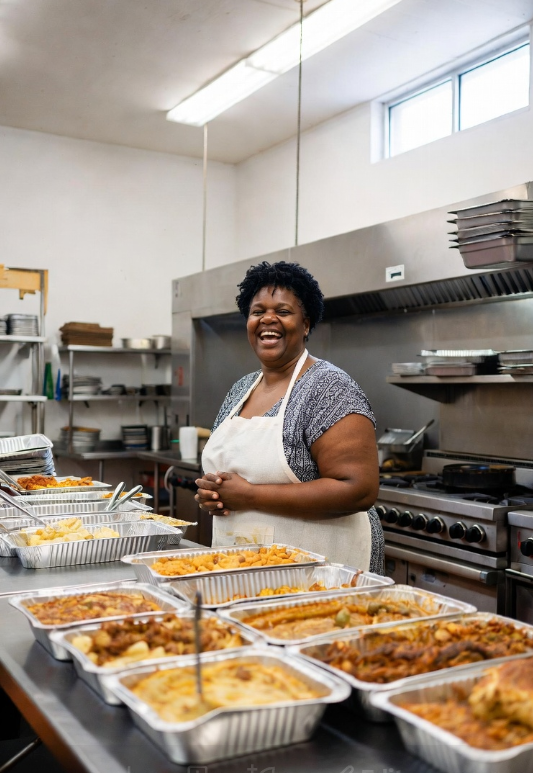
By I have been having a wonderful string of Saturdays with the cooking class. Twelve women, every week, and the quality of their cooking has reached a level that surprises and delights me—not because I didn't believe they would get there, but because the speed of the getting-there has been faster than I expected, which means they have been practicing at home, which means the knowledge has gone into their hands rather than staying in their notebooks, which is the whole point, which is the whole success. Imani can make yeasted bread. Kezia makes the gravy better than she did in August. Brenda—my fifty-eight-year-old student who arrived tired of canned food—made a full Sunday dinner last week for her daughter who visited from Montgomery and she called me Sunday evening to report that her daughter had said, "Mama, you cook like Grandma," and Brenda had said, "I know," and they had cried together, and then Brenda called me and we cried together, and if any tears fell into any dishes they were the right kind of tears and they only improved the food.
I wrote a post this week about what happens when the knowledge finally lands. About the moment when you stop thinking about how to do something and start just doing it—the hands moving ahead of the mind, the body trusting itself, the cook arriving at the cook she was always going to be. About Brenda. I didn't use her name, but I wrote about her. About the daughter who said "you cook like Grandma." About the chain finding its link after sixty years of a gap. The post got more response than anything I'd written in months. It will always be Brenda's post. She doesn't know that. She doesn't need to.
When I think about what Brenda must have put on that table in Montgomery, I think about something unhurried — something that asked patience of her, that rewarded the hours, that tasted like a woman who finally trusts her own hands. This German Sauerbraten is exactly that kind of dish: a long marinade, a slow braise, a gravy that deepens into something almost ancestral. It is the Sunday dinner you make when you want the person sitting across from you to close their eyes on the first bite. It is the dish that makes daughters say, “Mama, you cook like Grandma.”
German Sauerbraten
Prep Time: 30 min (plus 2–3 days marinating) | Cook Time: 3 hours | Total Time: 3 days 3.5 hours | Servings: 8
Ingredients
- 3 1/2 to 4 lbs beef rump roast or bottom round
- 1 cup red wine vinegar
- 1 cup dry red wine
- 1 cup water
- 1 large yellow onion, sliced into rings
- 2 medium carrots, sliced
- 2 stalks celery, sliced
- 2 bay leaves
- 8 whole cloves
- 10 whole black peppercorns
- 1 tsp granulated sugar
- 1 1/2 tsp salt, divided, plus more to taste
- 1/2 tsp black pepper, plus more to taste
- 2 tbsp vegetable oil
- 8 gingersnap cookies, finely crushed
- 1 tbsp brown sugar
Instructions
- Make the marinade. Combine the vinegar, wine, water, onion, carrots, celery, bay leaves, cloves, peppercorns, granulated sugar, and 1 tsp salt in a medium saucepan. Bring to a boil over medium-high heat, stirring to dissolve the sugar and salt. Remove from heat and let cool completely to room temperature.
- Marinate the roast. Place the beef in a large zip-top bag or a deep non-reactive bowl. Pour the cooled marinade over the roast, seal or cover tightly, and refrigerate for 2 to 3 days. Turn the meat once or twice each day so it marinates evenly.
- Sear the roast. Remove the beef from the marinade and pat it thoroughly dry with paper towels — this is what gives you a good crust. Reserve the marinade. Season the roast on all sides with the remaining 1/2 tsp salt and 1/2 tsp pepper. Heat the vegetable oil in a large Dutch oven over medium-high heat until shimmering. Sear the roast on all sides until deeply browned, 3 to 4 minutes per side.
- Braise low and slow. Strain the reserved marinade through a fine-mesh sieve, discarding the solids. Pour the strained liquid over the seared roast. Bring to a boil, then reduce the heat to low, cover tightly, and simmer for 2 1/2 to 3 hours, turning the roast once halfway through, until the meat is very tender and yields easily to a fork.
- Rest the roast. Transfer the roast to a cutting board, tent loosely with foil, and let it rest for 15 minutes before slicing.
- Build the gravy. While the roast rests, skim the fat from the surface of the braising liquid. Bring the liquid to a gentle simmer over medium heat. Stir in the crushed gingersnaps and brown sugar. Continue simmering, stirring frequently, until the gravy is smooth and thickened, 8 to 10 minutes. Taste and adjust salt and pepper as needed.
- Serve. Slice the sauerbraten against the grain into 1/2-inch slices and arrange on a warm platter. Ladle the gingersnap gravy generously over the top. Serve with buttered egg noodles, braised red cabbage, or potato dumplings alongside.
Nutrition (per serving)
Calories: 375 | Protein: 37g | Fat: 15g | Carbs: 14g | Fiber: 1g | Sodium: 510mg