The grief is a different shape than Paul's grief was. This grief is older — older in me, older in the bone, older in the sense that I have been preparing for it since I was a small girl and noticed that Mamma was not always going to be here. Paul's grief was unjust and brutal. Mamma's grief is just and brutal. Both kinds hurt. The hurting is different. I am learning the new hurt. The kitchen is patient with me while I learn.
Astrid drove up from the Twin Cities for a long weekend. We sat in Mamma's kitchen at Fifth Street (Erik has not sold the house yet; we are not ready). We made meatballs together, in Mamma's kitchen, in Mamma's bowl, on Mamma's stove. We did not say much. We worked side by side the way we worked side by side as girls — at thirteen and ten, at nineteen and sixteen, now at sixty-something and sixty-something. The hands knew. The kitchen knew. The kitchen carried us through.
Elsa called from Voyageurs. She said the loons came back this week. She said Mamma always loved the loons. She said it had not been the same year without her. I said no. It had not been. We talked for ten minutes. Elsa does not call often. The calls she does make are small and dense, like a hard candy. I save them. I roll them around in my mind for days afterward.
I cooked Roasted chicken with herbs this week. Whole chicken with herbs from the garden — thyme, rosemary, sage, parsley. Lemon. Garlic. Rest before carving. The Sunday meal.
Damiano Center, Thursday. New volunteer this week — a young woman named Sara, just out of college, looking lost and brave. I showed her how to ladle. She caught on quickly. She asked me how long I had been doing this. I said: "Long enough that I do not count." She laughed. She will be back. The good ones come back.
Paul's chair is at the head of the table. His glasses are on the shelf. The arrangement is permanent. The arrangement is the love. The arrangement has been remarked on, gently, by various people over the years — Anna, mostly, and well-meaning friends. The arrangement persists. I do not require justification for it. The chair is the chair.
It is enough. Paul is not here. Mamma is not here. Pappa is not here. Erik is not here. They are all here in the kitchen, in the smell, in the taste, in the wooden spoon and the bread pans and the marble slab. The dead are not where the body went. The dead are in the kitchen.
I have started, in the last few years, to think about what I will leave behind. Not in a morbid way. In a practical way. The recipes are written down. The notebook is on the counter. The kitchen is in good order. The house is in Anna's name (we did the legal work in 2032; the kids agreed; it was the practical thing). The grandchildren and great-grandchildren each have a few small specific things — a wooden spoon, a bread pan, a particular cast iron skillet — that I have already labeled with their names on small pieces of masking tape. Nobody knows about the masking tape labels. They will find them when they find them.
Paul used to say that the difference between a place and a home was that a home was a place where you knew, from any room, what was happening in any other room. I knew, from the kitchen, when he was reading in the living room. I knew, from the bedroom, when he was getting coffee in the kitchen. The Kenwood house is still that kind of home. From the kitchen I know that Sven is asleep on his bed in the dining room (the small specific snore). From the kitchen I know what time the radio in the living room is set to come on. The home is the body of knowledge of itself. I still live inside that body of knowledge, even though Paul is not the one creating most of the data anymore.
It is enough.
The chicken was the Sunday meal — the thing my hands knew how to do without asking. But when Astrid went back to the Twin Cities and the house got quiet again, I found myself reaching for something older, something that came before even me: Mamma’s Finnish Christmas cookies, the ones she made every December without fail, the ones whose smell meant that the year was rounding toward something safe. I made them on a Thursday, not Christmas, because grief does not wait for the right season. They are small and plain and correct, the way Mamma was small and plain and correct, and they were exactly right.
Finnish Christmas Cookies
Prep Time: 20 min | Cook Time: 12 min | Total Time: 32 min | Servings: 36 cookies
Ingredients
- 1 cup (2 sticks) unsalted butter, softened
- 1/2 cup powdered sugar, plus more for rolling
- 1 teaspoon pure vanilla extract
- 1/2 teaspoon almond extract
- 2 cups all-purpose flour
- 1/4 teaspoon salt
- 1/2 cup finely chopped blanched almonds
Instructions
- Preheat. Heat oven to 350°F. Line two baking sheets with parchment paper.
- Cream butter and sugar. In a large bowl, beat the softened butter and powdered sugar together until pale and fluffy, about 3 minutes. Mix in the vanilla and almond extracts.
- Add dry ingredients. Stir in the flour and salt until just combined. Fold in the chopped almonds. The dough will be soft but not sticky.
- Shape the cookies. Roll dough into 1-inch balls and place 1 inch apart on the prepared baking sheets. Flatten each slightly with the palm of your hand or the bottom of a glass.
- Bake. Bake for 10—12 minutes, until the edges are just set and the bottoms are barely golden. Do not overbake — they should remain pale on top.
- Roll in sugar. While still warm, roll each cookie gently in powdered sugar to coat. Transfer to a wire rack and let cool completely. Roll in powdered sugar a second time once fully cool.
Nutrition (per serving)
Calories: 85 | Protein: 1g | Fat: 6g | Carbs: 7g | Fiber: 0g | Sodium: 18mg
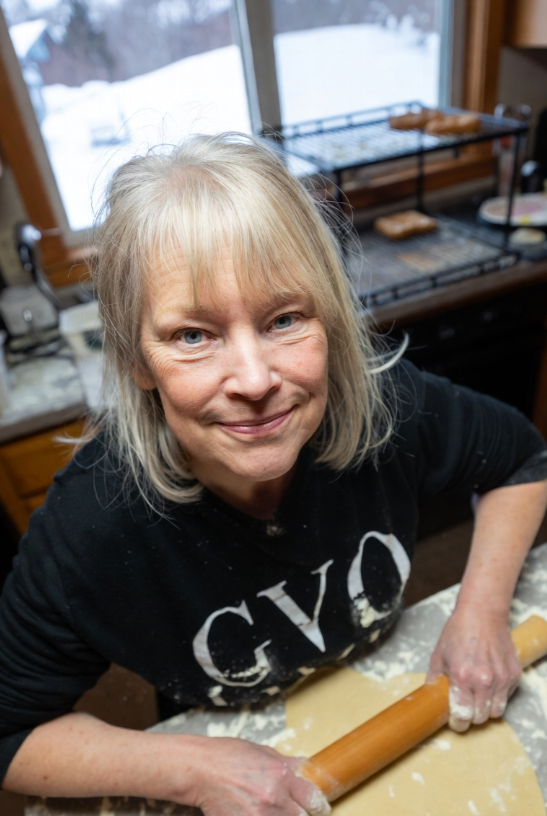
About the cook who shared this
Linda Johansson
Week 479 of Linda’s 30-year story
· Duluth, Minnesota
Linda is a sixty-three-year-old retired nurse from Duluth, Minnesota, living alone in the house where she raised her children and said goodbye to her husband. She lost Paul to ALS in 2020 after two years of watching the kindest man she'd ever known lose everything but his dignity. She cooks Scandinavian comfort food and Minnesota hotdish and the pot roast Paul loved, and she sets two places at the table out of habit because it makes her feel less alone. Every recipe she writes is a person she's loved.
