
 By
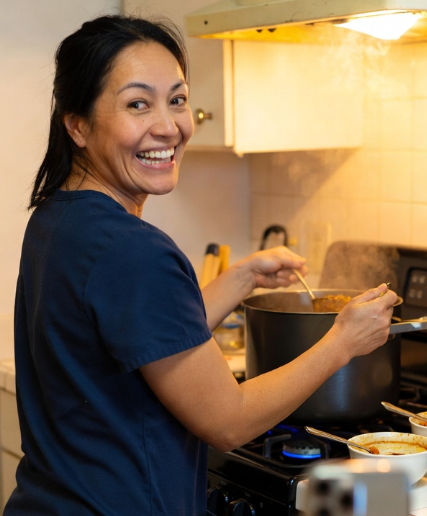
By Mother's Day again. Second one since the breakdown, and this time I arrived at Lourdes's house upright and functional and carrying not lumpia but a full meal: moose adobo. The most Alaskan-Filipino recipe I know, the dish that exists because my parents were immigrants who adapted and improvised and looked at a moose — a massive, ridiculous animal that wanders through Anchorage like it owns the place (which it does) — and thought: that's protein.
Moose meat is lean, gamey, dark. It doesn't taste like beef or pork — it tastes like moose, which is to say, like the spruce-and-tundra landscape the animal ate its way through. Cooking it adobo-style requires adjustment: more vinegar to cut the gaminess, more soy sauce for depth, a longer braise because the meat is tough and needs time to surrender. Reynaldo figured this out. He was the one who first braised moose in adobo sauce, after a coworker from the hospital gave him a few pounds of moose from a fall hunt. Lourdes was skeptical. Reynaldo was insistent. The moose was delicious. Another Santos recipe born from curiosity and circumstance.
Lourdes tasted the moose adobo and was quiet for a moment — the particular Lourdes quiet that means memory is moving through her, Reynaldo-shaped, and she's letting it pass the way you let weather pass. Then she said, "You used too much soy sauce. But the meat is tender." This is how Lourdes processes grief: through culinary critique. The soy sauce comment is the deflection. The "tender" is the feeling. Both are real. Both are love.
Angela came with James. Mark called from San Diego. Joseph called from Kodiak with wind in the background, which is Joseph's permanent soundtrack. We sat at the Mountain View table and Lourdes presided and the food was too much — always too much, because in a Filipino household, the amount of food is inversely proportional to the amount of worry, and Lourdes worries enough to feed a city.
I gave Lourdes a card. Inside I wrote: "Thank you for the garlic. Thank you for the vinegar. Thank you for the kitchen. Thank you for the floor — because the floor is in your house and your house is where I learned to stand up." She read it and her eyes went wet and she said, "The floor needs mopping anyway." I laughed. She laughed. The laughter was the realest thing in the room.
When Lourdes said the meat was tender, I knew I’d done something right — and tenderness, in meat as in grief, is always the goal. The moose adobo that day lived and died by its soy sauce and its long, patient braise, and this beef bulgogi operates on the same essential truth: a good soy-based marinade, given enough time, can make almost anything yield. It’s not moose, and it’s not Filipino, but it carries the same spirit — marinated deep, cooked with care, and shared at a table where the food is always too much and the love is always the point.
Easy Beef Bulgogi {Korean BBQ Beef}
Prep Time: 15 minutes | Cook Time: 10 minutes | Total Time: 25 minutes (plus 30 minutes marinating) | Servings: 4
Ingredients
- 1 1/2 lbs thinly sliced ribeye or sirloin beef
- 1/4 cup soy sauce
- 2 tablespoons brown sugar
- 1 tablespoon sesame oil
- 1 tablespoon rice vinegar
- 5 cloves garlic, minced
- 1 teaspoon fresh ginger, grated
- 1/2 Asian pear or Bosc pear, grated (about 1/4 cup)
- 3 green onions, thinly sliced, divided
- 1 tablespoon sesame seeds, for garnish
- 1 tablespoon neutral oil (vegetable or canola), for cooking
- Steamed white rice, for serving
Instructions
- Make the marinade. In a large bowl, whisk together the soy sauce, brown sugar, sesame oil, rice vinegar, minced garlic, grated ginger, and grated pear until the sugar is dissolved. The pear adds natural enzymes that help tenderize the meat, so don’t skip it.
- Marinate the beef. Add the thinly sliced beef and half the green onions to the bowl. Toss well to coat every piece evenly. Cover and refrigerate for at least 30 minutes, or up to 8 hours for deeper flavor. The longer it sits, the more the meat surrenders to the marinade.
- Heat the pan. Set a large cast-iron skillet or heavy pan over high heat until very hot. Add the neutral oil and swirl to coat. You want real heat here — it’s what gives the beef its caramelized edges.
- Cook the bulgogi. Working in batches to avoid crowding, add the marinated beef in a single layer. Let it sear undisturbed for 1 to 2 minutes, then stir and cook another 1 to 2 minutes until the beef is cooked through and the edges are lightly caramelized. Do not overcrowd the pan or the beef will steam instead of sear.
- Finish and serve. Transfer the cooked beef to a platter. Garnish with the remaining green onions and sesame seeds. Serve immediately over steamed white rice.
Nutrition (per serving)
Calories: 390 | Protein: 34g | Fat: 22g | Carbs: 12g | Fiber: 1g | Sodium: 920mg