The grief is a different shape than Paul's grief was. This grief is older — older in me, older in the bone, older in the sense that I have been preparing for it since I was a small girl and noticed that Mamma was not always going to be here. Paul's grief was unjust and brutal. Mamma's grief is just and brutal. Both kinds hurt. The hurting is different. I am learning the new hurt. The kitchen is patient with me while I learn.
Astrid drove up from the Twin Cities for a long weekend. We sat in Mamma's kitchen at Fifth Street (Erik has not sold the house yet; we are not ready). We made meatballs together, in Mamma's kitchen, in Mamma's bowl, on Mamma's stove. We did not say much. We worked side by side the way we worked side by side as girls — at thirteen and ten, at nineteen and sixteen, now at sixty-something and sixty-something. The hands knew. The kitchen knew. The kitchen carried us through.
Elsa called from Voyageurs. She said the loons came back this week. She said Mamma always loved the loons. She said it had not been the same year without her. I said no. It had not been. We talked for ten minutes. Elsa does not call often. The calls she does make are small and dense, like a hard candy. I save them. I roll them around in my mind for days afterward.
The first weeks without Mamma. The phone does not ring on Tuesday at 10 AM. The bread pans are still on the shelf. The kitchen on Fifth Street is being emptied. Erik handles most of it. I cannot. I drive past the house and I look at it and I keep driving. I will go in eventually. Not yet.
I cooked Split pea soup with ham this week. The ham bone from the Easter ham, saved in the freezer for exactly this purpose. Split peas soaked overnight. Onion, carrot, celery, the ham bone, water to cover, two hours of low simmer. The peas dissolve into a thick green sea. The ham falls off the bone. I shred the meat back in. Salt, pepper, a slice of buttered rye to dip.
Damiano Thursday: a young father came in with two small children. He had not eaten in a day. The children had crackers from a bus station. I gave them three bowls each. They ate without speaking. The father wept silently while he ate. I pretended not to notice. Scandinavian decorum, applied with care. After he left, Gerald and I stood at the pot for a long minute. We did not speak. We knew what we had seen. The pot stayed warm.
I miss Erik. I have been missing Erik more than I anticipated. I knew I would miss him, but I had not realized how often the missing would surface — in small specific moments, like noticing the wood pile is low and remembering that he used to chop it for me, or looking at the calendar and seeing the Sunday and knowing he is not coming for dinner. Erik was the closest person to me in space and time. The space and time are now not closed by anyone in particular. The kids fill the gap as they can. The gap is still a gap.
It is enough. Paul is not here. Mamma is not here. Pappa is not here. Erik is not here. They are all here in the kitchen, in the smell, in the taste, in the wooden spoon and the bread pans and the marble slab. The dead are not where the body went. The dead are in the kitchen. It is enough.
The split pea soup carried me through the hardest days that week — but the evening Astrid was still here, after the meatballs were finished and the bowl was back on the shelf, we did not want to stop being in the kitchen together. We made this fondue. Two sisters, one pot, bread torn by hand. There is something about standing close to a warm pot that does not require explanation or words. You dip, you pass the skewer, you feel the heat rising, and the kitchen holds you exactly as long as you need.
Cheese Lover’s Fondue
Prep Time: 15 min | Cook Time: 20 min | Total Time: 35 min | Servings: 4–6
Ingredients
- 1 clove garlic, halved
- 1 cup dry white wine (such as Sauvignon Blanc or Pinot Grigio)
- 8 oz Gruyère cheese, freshly shredded
- 8 oz Emmental or Swiss cheese, freshly shredded
- 2 tablespoons cornstarch
- 1 tablespoon fresh lemon juice
- 1/4 teaspoon freshly grated nutmeg
- 1/4 teaspoon white pepper
- Salt to taste
- 1 loaf crusty French bread or sourdough, cut into 1-inch cubes, for dipping
- Optional dippers: apple slices, steamed broccoli florets, baby potatoes, cornichons
Instructions
- Prepare the pot. Rub the inside of a fondue pot or heavy-bottomed saucepan thoroughly with the cut sides of the garlic clove. Discard the garlic or mince and add it back in if you prefer a stronger flavor.
- Toss the cheese with cornstarch. In a large bowl, combine both shredded cheeses with the cornstarch and toss until the cheese is evenly coated. This step prevents clumping and keeps the fondue smooth.
- Warm the wine. Pour the white wine and lemon juice into the prepared pot over medium heat. Warm until it just begins to steam and small bubbles appear at the edges — do not let it boil.
- Add the cheese gradually. Add the cornstarch-coated cheese in three or four small handfuls, stirring in a slow figure-eight motion after each addition. Wait until each batch is fully melted and incorporated before adding the next.
- Season. Once all the cheese is melted and the fondue is smooth and glossy, stir in the nutmeg and white pepper. Taste and add salt as needed.
- Keep warm and serve. Transfer the pot to a fondue burner set to low heat, or keep over the lowest flame your stove allows. Serve immediately with bread cubes and any additional dippers arranged alongside. Stir gently between dips to keep the fondue from separating.
Nutrition (per serving)
Calories: 390 | Protein: 23g | Fat: 27g | Carbs: 11g | Fiber: 0g | Sodium: 510mg
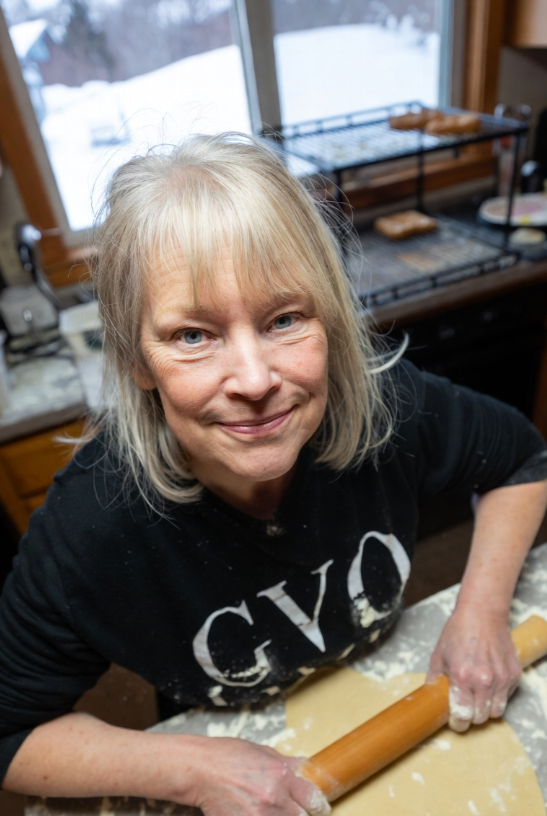
About the cook who shared this
Linda Johansson
Week 459 of Linda’s 30-year story
· Duluth, Minnesota
Linda is a sixty-three-year-old retired nurse from Duluth, Minnesota, living alone in the house where she raised her children and said goodbye to her husband. She lost Paul to ALS in 2020 after two years of watching the kindest man she'd ever known lose everything but his dignity. She cooks Scandinavian comfort food and Minnesota hotdish and the pot roast Paul loved, and she sets two places at the table out of habit because it makes her feel less alone. Every recipe she writes is a person she's loved.
