Elsa called from Voyageurs. She has met someone. A man named Tom. A canoe guide. She sounds different on the phone — softer, brighter, the voice of a woman who is not as alone as she used to be. Elsa has been alone in the woods for fifteen years. I have respected the aloneness. I have also worried about it. The new voice on the phone is not a worry. The new voice is a relief.
Erik turned seventy. We had a small party at his house. He grilled. He drank one beer (his quota, a quota set by his doctor, observed religiously). He was quiet and happy. He looked like Pappa around the eyes. I had not noticed before. I notice now. The resemblance has deepened with age. Erik is becoming Pappa in the slow gentle way that men become their fathers if they live long enough.
Astrid had a fall. She is fine. The Twin Cities sister-call club is now its own small intervention. Karin and I take turns calling Astrid. Astrid resents the calls. We make them anyway. The resentment is the love filtered through Astrid's particular Scandinavian self-sufficiency. We do not mind being resented. We mind, far more, the alternative.
Elsa called. She has met someone. A man named Tom Birch. A canoe guide from Ely. She sounds different on the phone — softer, brighter, a different person on the inside that the phone is registering. I think this might be the one. I have not been right about all of my children's relationships. I am being cautious. But also: I think this might be the one.
I cooked Wild rice soup this week. The Thursday constant.
Thursday at the Damiano Center: I made an extra pot of pea soup, the way Mamma taught me — yellow split peas, ham hock, onion, the whole of Sunday afternoon dedicated to its slow simmer. Gerald said, "Variety. We approve." The regulars approved too. One older woman ate three bowls and asked if she could take some home. I sent her home with a quart in a glass jar. She is bringing the jar back next Thursday. We have an arrangement.
I walked to the lake on Saturday. I stood at the spot where Paul and I used to walk — the bench at the end of the lakefront trail, the one with the brass plaque about a different Paul who died in 1972. I told my Paul about the week. About the kids. About the dog. About the soup. I do not feel foolish doing this. The lake is patient. The lake has, in some real sense, become my husband by proxy. I would not have predicted this in 1988. It has turned out to be true anyway.
It is enough. It has to be. And on a morning like this, with the lake doing what the lake does and the dog at my feet and the bread on the counter and the kitchen warm enough to live in, it is.
I have come to think that grief is not a problem to be solved. Grief is a country. You move into it. You learn its language. You make a life there. You do not leave the country, but you also do not spend every minute thinking about the fact that you live in it. You make breakfast. You walk the dog. You write a blog post. The country is the country. You live there now.
It is enough.
I mentioned the bread on the counter almost as an afterthought, but it wasn’t. It was the thing that made the morning feel held—the smell of it, the weight of it sitting there while the dog settled at my feet and the lake did what the lake does. Elsa’s voice on the phone, Erik’s quiet birthday, Astrid’s stubbornness, the woman at Damiano going home with a jar of soup—all of it asked for something warm and unhurried in return, and this Autumn Pear Bread was exactly that. I’ve been making versions of it since the pears came in, and this week it earned its place as the Thursday constant’s quieter, sweeter companion.
Autumn Pear Bread
Prep Time: 15 min | Cook Time: 60 min | Total Time: 1 hr 15 min | Servings: 10 slices
Ingredients
- 1 1/2 cups all-purpose flour
- 1/2 cup whole wheat flour
- 1 teaspoon baking soda
- 1/2 teaspoon baking powder
- 1/2 teaspoon salt
- 1 teaspoon ground cinnamon
- 1/4 teaspoon ground nutmeg
- 1/4 teaspoon ground ginger
- 2 large eggs
- 1/2 cup granulated sugar
- 1/4 cup packed brown sugar
- 1/3 cup vegetable oil
- 1/4 cup plain yogurt or sour cream
- 1 teaspoon pure vanilla extract
- 1 1/2 cups peeled and finely diced ripe pears (about 2 medium pears)
- 1/2 cup chopped walnuts or pecans (optional)
Instructions
- Preheat and prepare. Heat your oven to 350°F. Grease a 9x5-inch loaf pan and set it aside.
- Combine the dry ingredients. In a large bowl, whisk together both flours, baking soda, baking powder, salt, cinnamon, nutmeg, and ginger until evenly blended.
- Mix the wet ingredients. In a separate bowl, beat the eggs with the granulated sugar and brown sugar until slightly thickened. Stir in the oil, yogurt, and vanilla extract until smooth.
- Fold together. Pour the wet mixture into the dry ingredients and stir gently until just combined—do not overmix. Fold in the diced pears and nuts, if using.
- Fill and bake. Scrape the batter into the prepared pan and smooth the top. Bake for 55–65 minutes, until a toothpick inserted in the center comes out with just a few moist crumbs.
- Cool before slicing. Let the bread cool in the pan for 10 minutes, then turn it out onto a wire rack. Wait at least 20 minutes before slicing—the texture settles and sweetens as it cools.
Nutrition (per serving)
Calories: 230 | Protein: 4g | Fat: 9g | Carbs: 34g | Fiber: 2g | Sodium: 210mg
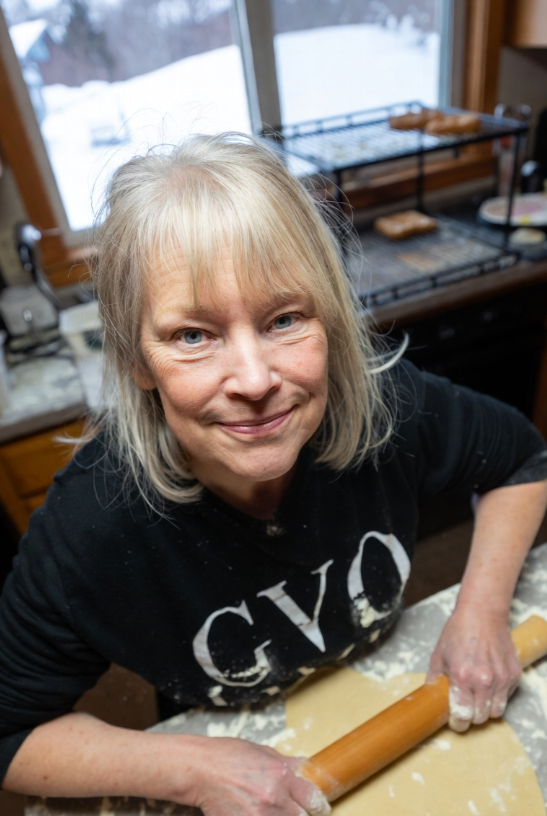
About the cook who shared this
Linda Johansson
Week 532 of Linda’s 30-year story
· Duluth, Minnesota
Linda is a sixty-three-year-old retired nurse from Duluth, Minnesota, living alone in the house where she raised her children and said goodbye to her husband. She lost Paul to ALS in 2020 after two years of watching the kindest man she'd ever known lose everything but his dignity. She cooks Scandinavian comfort food and Minnesota hotdish and the pot roast Paul loved, and she sets two places at the table out of habit because it makes her feel less alone. Every recipe she writes is a person she's loved.
