November. The clocks fell back. The dark arrived like a guest who shows up early and stays too long. By five PM the world is black and the kitchen windows become mirrors and you see yourself reflected in the glass, standing at the counter, and the person in the reflection looks older than you feel and you turn away and cook.
Paul's hand dropped a glass on Monday. It shattered on the kitchen floor — one of the glasses from our wedding set, 1988, the ones with the etched S pattern that I've kept for twenty-nine years — and Paul stood there looking at the pieces and said, "I'm sorry, Linda." Not sorry about the glass. Sorry about whatever the glass represents. The hand. The future. The thing we're not talking about.
I said, "It's a glass, Paul. We have eleven more." I swept up the pieces. I didn't cry. I added the incident to the mental list I'm keeping — the list of things Paul's left hand can't do anymore, the list that grows slowly, the list I don't write down because writing it down would make it a document and documents are official and I'm not ready for official.
The list: dropped butter knife (June). Difficulty with buttons (June). Crushing blueberries (August). Dropped glass (November). Four items in five months. It could be nothing. It could be carpal tunnel that the EMG missed. It could be a hundred things.
It could be the one thing.
I went to the Damiano Center on Thursday and made extra soup and worked harder than I needed to because working is how I process and the processing needed to happen. Gerald noticed. "You're quiet today, Linda," he said. I said, "Just tired." He said, "Tired in the body or tired in the spirit?" I looked at him — this man, this veteran who lost two fingers and sleeps in a shelter and comes to the soup kitchen every Thursday — and I thought: he sees me. This man who has nothing sees me more clearly than most people with everything.
I said, "Both." He said, "The soup helps." He was right. The soup helps.
I made a big comfort dinner on Saturday: chicken and dumplings. Not Swedish — pure American, the kind of meal Paul's mother used to make, thick stew with fluffy dumplings dropped in by the spoonful. It's the food equivalent of being wrapped in a blanket. Paul ate a large bowl and his eyes were soft and grateful and he said, "My mom used to make this." I said, "I know." That's why I made it. Because sometimes the person you're cooking for needs to taste their own history, not yours.
The December appointment is five weeks away. The dark is here. The glass is broken. We have eleven more. We'll be fine.
We have eleven more glasses and five weeks and a dog and a kitchen and each other. We'll be fine.
Chicken and dumplings was the right call for Saturday—Paul’s mother’s meal, his history in a bowl—but this Warm Chicken Lentil Stew is the version I return to on the quieter nights, the Thursdays after the soup kitchen when Gerald’s words are still with me and I need something that will simmer on the stove and make the kitchen smell like it’s holding things together. It’s thick and gentle and honest, the way comfort food should be when comfort is the whole point. If you’re in a season where the dark comes early and the list in your head keeps growing, make this stew. Let the ladle do some of the work.
Warm Chicken Lentil Stew
Prep Time: 15 minutes | Cook Time: 40 minutes | Total Time: 55 minutes | Servings: 6
Ingredients
- 1 1/2 lbs boneless, skinless chicken thighs, trimmed
- 1 cup green or brown lentils, rinsed
- 2 tablespoons olive oil
- 1 medium yellow onion, diced
- 3 cloves garlic, minced
- 3 medium carrots, peeled and sliced into rounds
- 2 stalks celery, sliced
- 1 can (14.5 oz) diced tomatoes, with juices
- 4 cups low-sodium chicken broth
- 1 cup water
- 1 teaspoon ground cumin
- 1/2 teaspoon smoked paprika
- 1/2 teaspoon dried thyme
- 1/4 teaspoon black pepper
- 3/4 teaspoon kosher salt, plus more to taste
- 2 cups baby spinach or chopped kale
- 1 tablespoon fresh lemon juice
- Fresh parsley, roughly chopped, for serving
Instructions
- Sear the chicken. Heat olive oil in a large heavy-bottomed pot or Dutch oven over medium-high heat. Season chicken thighs on both sides with salt and pepper. Add to the pot and sear 3–4 minutes per side until golden. Transfer to a plate—they will finish cooking in the stew.
- Build the base. Reduce heat to medium. Add onion and celery to the same pot and cook, stirring occasionally, until softened, about 5 minutes. Add garlic and cook 1 minute more until fragrant.
- Add vegetables and spices. Stir in carrots, cumin, smoked paprika, thyme, and 3/4 teaspoon salt. Cook 2 minutes to bloom the spices.
- Simmer the stew. Add lentils, diced tomatoes with their juices, chicken broth, and water. Nestle the seared chicken thighs back into the pot. Bring to a boil, then reduce heat to low, cover, and simmer 25–30 minutes, until lentils are tender and chicken is cooked through.
- Shred and finish. Remove chicken to a cutting board and shred with two forks. Return shredded chicken to the pot. Stir in spinach or kale and lemon juice. Cook uncovered 3–4 minutes until greens are wilted. Taste and adjust salt as needed.
- Serve. Ladle into wide bowls and top with fresh parsley. Serve with crusty bread or over a scoop of plain rice if you want something more substantial.
Nutrition (per serving)
Calories: 310 | Protein: 32g | Fat: 9g | Carbs: 26g | Fiber: 9g | Sodium: 480mg
About the cook who shared this
Linda Johansson
Week 84 of Linda’s 30-year story
· Duluth, Minnesota
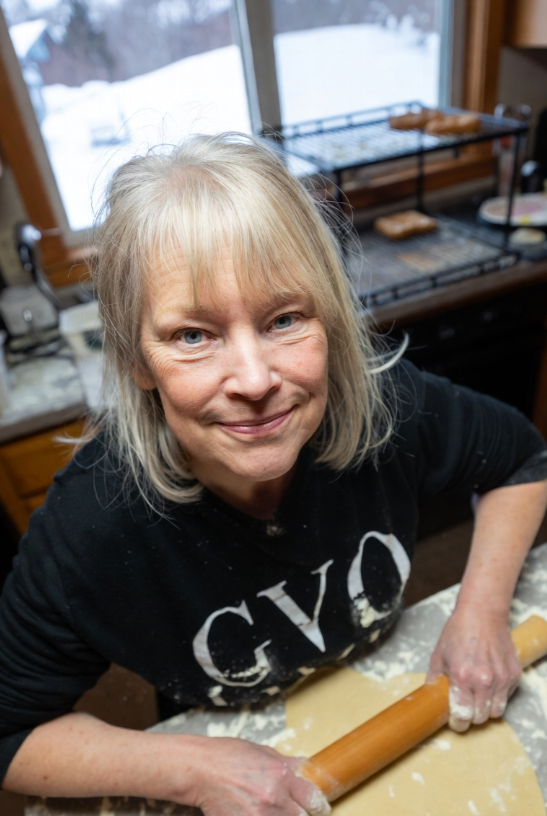
Linda is a sixty-three-year-old retired nurse from Duluth, Minnesota, living alone in the house where she raised her children and said goodbye to her husband. She lost Paul to ALS in 2020 after two years of watching the kindest man she'd ever known lose everything but his dignity. She cooks Scandinavian comfort food and Minnesota hotdish and the pot roast Paul loved, and she sets two places at the table out of habit because it makes her feel less alone. Every recipe she writes is a person she's loved.
