
 By
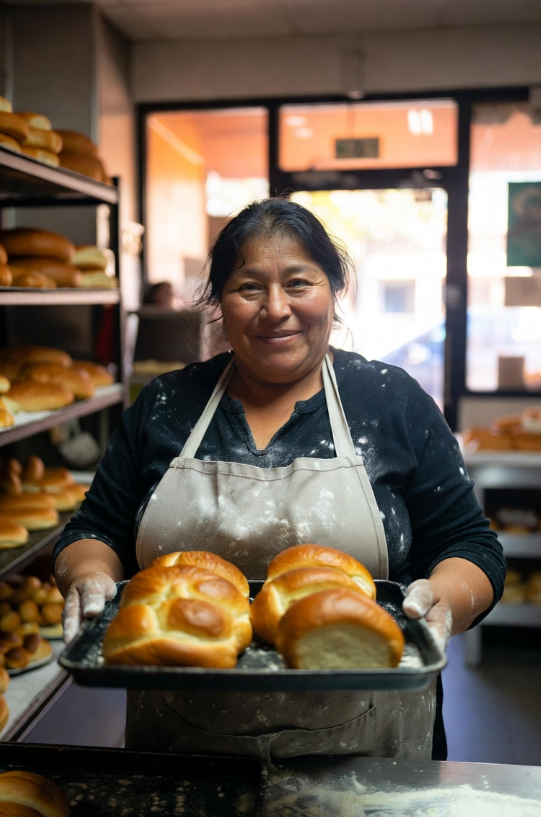
By A quiet week. The Valentine's rush is over. The bakery exhales. I stand in the kitchen at 4 AM and the stillness is welcome — not the empty stillness of grief but the productive stillness of a kitchen that has earned its rest. The ovens cool. The mixers are silent. The flour is in its bins. The conchas will be made at the usual pace — two hundred a day, steady, the rhythm that sustains — and the Valentine's rush is a memory that Sofia has already entered into her spreadsheet under the column labeled "Comparable Data for Year-Over-Year Analysis." She is thirteen. She has a column for year-over-year analysis. I have a column for flour.
Isabella got accepted to the UTEP research internship. She will work with Dr. Ramirez, a professor studying maternal and infant health outcomes in border communities. She will spend the summer collecting data, interviewing mothers, analyzing the intersection of poverty and health that killed Rosa and that kills women like Rosa every day. She is sixteen and she is going to study the thing that took her grandmother, and the studying is not revenge — it is repair. Repair is what Isabella does. Isabella sees broken things and fixes them, and the broken thing she is fixing is a healthcare system that lets women like Rosa die of preventable disease because the prevention costs money and money is the thing that poverty does not have.
Diego entered the district science fair with his sustainable energy project. He built a working model of a solar-wind hybrid system — a small solar panel connected to a small wind turbine connected to a battery that lights an LED. He presented it to the judges with a confidence that startled me, because Diego at home is quiet and Diego in front of judges is eloquent, and the transformation is the transformation of a boy who has found his audience, and the audience is not family (family is obligated to listen) but strangers who are choosing to listen, and the choosing makes the listening sacred.
I made menudo again this week — the Sunday ritual, the tripe soup that starts the week. The menudo simmered all Saturday night, the way Rosa's did, the way it has to, because menudo is not a recipe you rush. Menudo is a commitment. You commit to the tripe and the hominy and the eight hours and the chiles and the hope that when you wake up on Sunday the soup will be ready and the house will smell like something ancient and the week will start from a place of warmth instead of a place of cold. The menudo was ready. The house smelled ancient. The week started warm.
The menudo is a ritual I protect fiercely — Rosa’s recipe, eight hours, non-negotiable — but on the weeks when I want that same Sunday warmth without the Saturday-night commitment, I come back to this Vermicelli Beef Stew: slow, patient, deeply savory, the kind of pot that fills the house with the same ancient smell and sends the week out with something solid underneath it. After a week of watching Isabella choose repair over grief and Diego find his audience in a roomful of strangers, I needed the pot. I always need the pot.
Vermicelli Beef Stew
Prep Time: 20 minutes | Cook Time: 2 hours 30 minutes | Total Time: 2 hours 50 minutes | Servings: 6
Ingredients
- 2 lbs beef chuck, cut into 1-inch cubes
- 1 tablespoon olive oil
- 1 medium white onion, diced
- 4 cloves garlic, minced
- 2 medium carrots, sliced into rounds
- 2 stalks celery, sliced
- 1 can (14.5 oz) diced tomatoes, undrained
- 1 can (6 oz) tomato paste
- 6 cups beef broth
- 1 teaspoon ground cumin
- 1 teaspoon smoked paprika
- 1/2 teaspoon dried oregano
- 1/2 teaspoon black pepper
- 1 teaspoon salt, plus more to taste
- 6 oz vermicelli pasta, broken into 2-inch pieces
- 2 tablespoons fresh cilantro, chopped (for serving)
- Lime wedges, for serving
Instructions
- Sear the beef. Heat olive oil in a large heavy-bottomed pot or Dutch oven over medium-high heat. Working in batches, sear the beef cubes on all sides until deeply browned, about 3–4 minutes per batch. Transfer seared beef to a plate and set aside.
- Build the base. Reduce heat to medium. In the same pot, add the diced onion and celery. Cook, stirring occasionally, until softened, about 5 minutes. Add the garlic and cook 1 minute more until fragrant.
- Add tomatoes and spices. Stir in the tomato paste and cook for 2 minutes, letting it caramelize slightly against the pot bottom. Add the diced tomatoes, cumin, smoked paprika, oregano, salt, and black pepper. Stir to combine.
- Simmer low and slow. Return the seared beef and any accumulated juices to the pot. Pour in the beef broth and add the carrots. Bring to a boil, then reduce heat to low, cover, and simmer for 2 hours until the beef is fork-tender and the broth is rich and deeply flavored.
- Cook the vermicelli. Increase heat to medium and stir in the broken vermicelli. Cook uncovered for 8–10 minutes, stirring occasionally, until the pasta is tender. Taste and adjust salt as needed.
- Serve. Ladle into bowls and top with fresh cilantro. Serve with lime wedges on the side for brightness.
Nutrition (per serving)
Calories: 420 | Protein: 38g | Fat: 14g | Carbs: 32g | Fiber: 3g | Sodium: 820mg