
 By
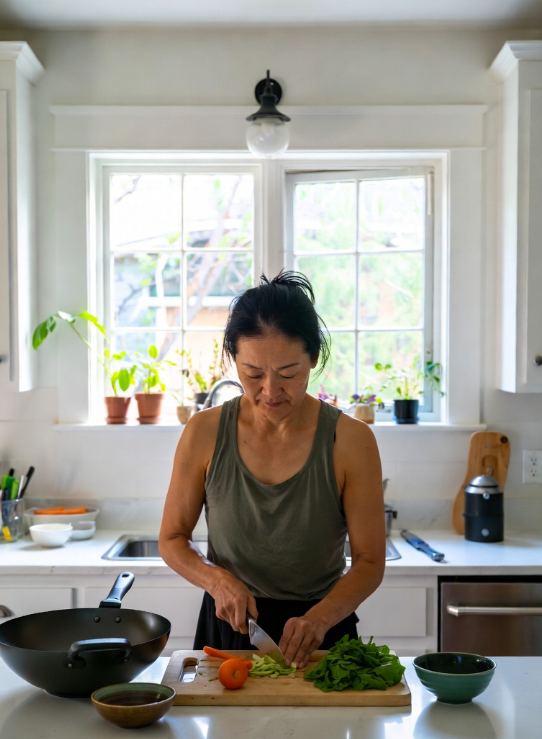
By New Year's Day. I woke before anyone and stood in the kitchen in the dark and made ozoni — the New Year's miso soup that Fumiko has made every January first for as long as I have been alive. This year, I made it myself. Not a copy, not a practice run — the real thing, for the real day, in my own kitchen. The mochi was store-bought because I am not Fumiko and cannot make mochi from scratch without a village and a wooden mortar. But the broth was homemade, the white miso dissolved carefully, the dashi prepared the night before. I added the traditional toppings: a small piece of chicken, a slice of kamaboko fish cake, spinach, yuzu peel.
I called Fumiko before I started. She walked me through the corrections over the phone — more miso, less water, the mochi should be grilled before it goes in the soup, not dropped in raw. "You grill the mochi until it puffs," she said. "Until it smells like a kitchen, not like a store." I grilled the mochi in the cast iron pan, her pan, and it puffed and browned and the apartment filled with the smell of toasted rice and char and I understood what she meant. A kitchen, not a store. Food made by hands, not by machines.
Brian ate it politely and then reached for the leftover pizza from New Year's Eve. This is the image that will define the ozoni tradition in my household: one bowl of carefully prepared New Year's soup, one slice of cold pepperoni pizza, two people who love each other and eat different things. Miya sat in her high chair gumming rice, oblivious to the cultural significance of the meal, which is fine. She does not need to understand it yet. She just needs to taste it. The understanding comes later, the way understanding always comes — slowly, through repetition, through the body remembering what the mind has not yet learned.
It becomes our tradition. Every year: Jen cooks, Fumiko critiques from Sacramento. The ozoni is never quite right. It is always mine. And that distinction — between right and mine — is the whole story of being a third-generation Japanese-American cooking food from a country I have never visited, in a language I am still learning to read, for a family that does not fully understand what the food means. But I make it. I make it every year. And the making is the meaning.
Fumiko’s voice on the phone — more miso, less water, grill the mochi until it puffs — reminded me that a great bowl of soup is never just a recipe. It’s a set of instructions passed between people who love each other across distances. When I want to carry that same energy into a weeknight that isn’t New Year’s Day, when I want the steam and the smell and the slow satisfaction of broth made right, I make this vegetarian pho. It isn’t ozoni — nothing else is — but it asks the same thing of you: patience, attention, and a willingness to stand in the kitchen and let the smell tell you when it’s ready.
Vegetarian Pho
Prep Time: 20 minutes | Cook Time: 1 hour | Total Time: 1 hour 20 minutes | Servings: 4
Ingredients
- 8 cups vegetable broth
- 1 large yellow onion, halved
- 3-inch piece fresh ginger, halved lengthwise
- 3 whole star anise
- 3 whole cloves
- 1 cinnamon stick
- 1 teaspoon whole coriander seeds
- 2 tablespoons soy sauce or tamari
- 1 tablespoon rice vinegar
- 1 teaspoon toasted sesame oil
- 8 oz flat rice noodles (banh pho)
- 2 cups baby spinach or bok choy, roughly chopped
- 1 cup cremini or shiitake mushrooms, sliced
- 1 block (14 oz) firm tofu, drained and sliced into strips
- 2 scallions, thinly sliced
- Salt to taste
- For serving: fresh bean sprouts, fresh basil or Thai basil, fresh mint, sliced jalapeño, lime wedges, hoisin sauce, sriracha
Instructions
- Char the aromatics. Place the halved onion and ginger cut-side down in a dry cast iron skillet or directly over a gas burner flame. Cook over medium-high heat for 5–7 minutes until deeply charred. This step builds the deep, smoky backbone of your broth — do not skip it.
- Toast the spices. In a large dry stockpot over medium heat, add the star anise, cloves, cinnamon stick, and coriander seeds. Toast, stirring frequently, for 2–3 minutes until fragrant. Watch carefully; they should smell warm and spiced, not burnt.
- Build the broth. Add the vegetable broth, charred onion, charred ginger, soy sauce, and rice vinegar to the pot with the toasted spices. Bring to a boil, then reduce to a gentle simmer. Cook uncovered for 45 minutes to develop full flavor.
- Strain and season. Pour the broth through a fine mesh strainer into a clean pot, discarding the solids. Stir in the sesame oil. Taste and adjust seasoning with salt or additional soy sauce. Keep warm over low heat.
- Prepare the noodles. Cook rice noodles according to package directions, usually by soaking in boiling water for 6–8 minutes until tender but still slightly chewy. Drain and rinse with cold water to stop cooking. Divide among four deep bowls.
- Cook the toppings. In a small skillet over medium heat, warm a splash of oil and sauté the sliced mushrooms for 4–5 minutes until golden. Arrange the mushrooms, tofu strips, spinach, and scallions over the noodles in each bowl.
- Ladle and serve. Pour the hot broth directly over each bowl — the heat will gently wilt the greens and warm the tofu. Serve immediately with all accompaniments on the side so each person can finish their bowl the way they like it.
Nutrition (per serving)
Calories: 310 | Protein: 14g | Fat: 7g | Carbs: 48g | Fiber: 4g | Sodium: 890mg