
 By
By The week between Christmas and New Year is a strange time — the calendar does not know what to do with itself, and neither do I. The big cooking is done. The children are still home, which fills the house with noise and dishes and the particular brand of chaos that only adult children home for the holidays can create. CJ is on the couch with his laptop working remotely. Destiny is in her old room reorganizing things she reorganized last Christmas. Marcus is eating leftovers at a rate that suggests he is storing food for winter, which, technically, it is.
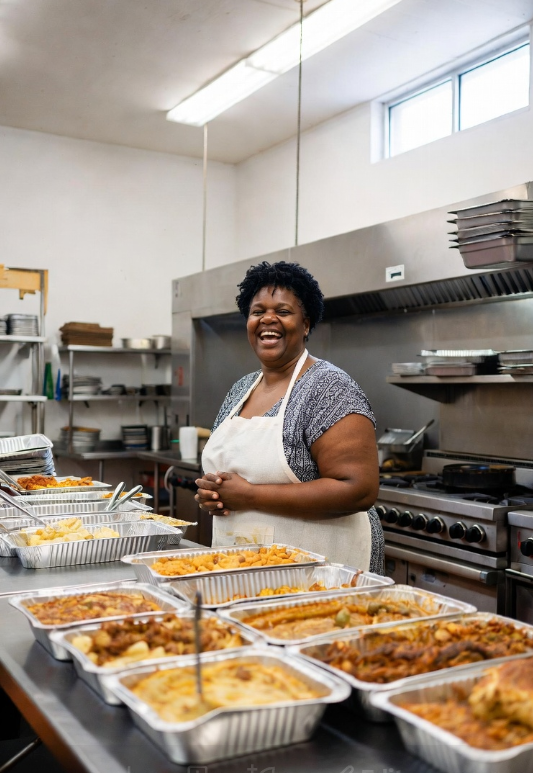
I spent Monday making black-eyed peas for New Year's Day, because black-eyed peas on January first is not optional in this house. It is tradition. It is law. It is Mama's law, passed down to me, and I enforce it with the authority of a woman who has never in her life entered a new year without eating black-eyed peas, and I do not intend to start now. The peas soak overnight. They cook with a ham hock and onion and garlic and bay leaves. They simmer until the broth is thick and the peas are tender and the house smells like luck and pork and the coming year.
Collard greens for New Year too, because black-eyed peas bring luck and collard greens bring money and between the two of them a person is covered for whatever the year decides to throw. I do not know if this is superstition or faith. I suspect it is both, and I suspect that the line between them is thinner than either side would like to admit. I cook the greens the way Mama cooked them: smoked turkey necks, vinegar, a little sugar, salt, and time. Time is the ingredient that turns collard greens from leaves into testimony. Without time they are just vegetables. With time they are a story about patience.
Marcus asked me what my New Year's resolution was. I said baby, I resolve to keep cooking and keep loving and keep showing up, which is what I resolved last year and the year before that. He said that is the same resolution every year. I said that is because some things do not need to change. Some things need to keep going. He thought about that. He is seventeen. He wants change. I am forty-seven. I want continuity. We are both right. That is the beautiful thing about kitchens and families — there is room for both.
New Year's Eve was quiet. Calvin and I stayed up until midnight watching the countdown on television. He fell asleep at eleven-forty-five. I woke him at eleven-fifty-nine. He said Happy New Year and kissed me and went back to sleep. I stood at the kitchen window at midnight and looked at the fireworks popping over Birmingham and said thank you for this year and please for the next one and went to bed with hope in my chest and black-eyed peas in the refrigerator, ready for tomorrow.
I told Marcus that some things do not need to change—they need to keep going. That is as true of this lentil loaf as it is of black-eyed peas or collard greens or the resolution I have made every January first for the past decade. Lentils are a legume, and legumes have always meant something at my table around the new year: nourishment, humility, the quiet confidence that the earth provides what you need if you tend it with care. This loaf takes time and a little faith, and it comes out of the oven smelling like exactly the kind of meal that belongs at the start of something.
Vegan Lentil Loaf
Prep Time: 20 min | Cook Time: 55 min | Total Time: 1 hr 15 min | Servings: 8
Ingredients
- 2 cups cooked green or brown lentils (about 3/4 cup dry)
- 1 cup rolled oats
- 1/2 cup plain breadcrumbs
- 1 medium yellow onion, finely diced
- 3 cloves garlic, minced
- 2 stalks celery, finely diced
- 1 medium carrot, grated
- 2 tablespoons tomato paste
- 2 tablespoons low-sodium soy sauce or tamari
- 1 tablespoon vegan Worcestershire sauce
- 1 teaspoon smoked paprika
- 1 teaspoon dried thyme
- 1/2 teaspoon black pepper
- 1/2 teaspoon salt
- 2 tablespoons olive oil, plus more for pan
- For the glaze: 3 tablespoons ketchup, 1 tablespoon maple syrup, 1 teaspoon apple cider vinegar
Instructions
- Preheat and prepare. Preheat your oven to 375°F. Lightly oil a standard 9x5-inch loaf pan and line it with parchment paper, leaving some overhang on the sides for easy removal.
- Sauté the vegetables. Heat olive oil in a skillet over medium heat. Add the onion and celery and cook for 5 to 6 minutes until softened. Add the garlic and carrot and cook 2 minutes more. Stir in the tomato paste and cook for 1 minute. Remove from heat and let cool slightly.
- Mash the lentils. In a large mixing bowl, add the cooked lentils and mash roughly with a fork or potato masher—you want about half mashed and half whole for texture. Do not pureée them smooth.
- Combine the mixture. Add the sautéed vegetables to the lentils along with the rolled oats, breadcrumbs, soy sauce, Worcestershire sauce, smoked paprika, thyme, salt, and pepper. Stir well until everything is evenly combined. The mixture should be thick enough to hold its shape when pressed; if it seems too wet, add a tablespoon more breadcrumbs.
- Shape and load. Transfer the mixture to the prepared loaf pan and press it in firmly and evenly with the back of a spoon or damp hands. Smooth the top.
- Make the glaze. Stir together the ketchup, maple syrup, and apple cider vinegar in a small bowl. Spread evenly over the top of the loaf.
- Bake. Bake uncovered for 50 to 55 minutes, until the top is set and the glaze is caramelized. The edges will pull slightly from the pan. Let the loaf rest in the pan for 15 minutes before lifting out and slicing—this resting time is not optional; it is what holds the loaf together.
- Slice and serve. Use a sharp serrated knife for clean slices. Serve warm alongside collard greens, roasted vegetables, or mashed potatoes.
Nutrition (per serving)
Calories: 215 | Protein: 11g | Fat: 5g | Carbs: 33g | Fiber: 9g | Sodium: 390mg