
 By
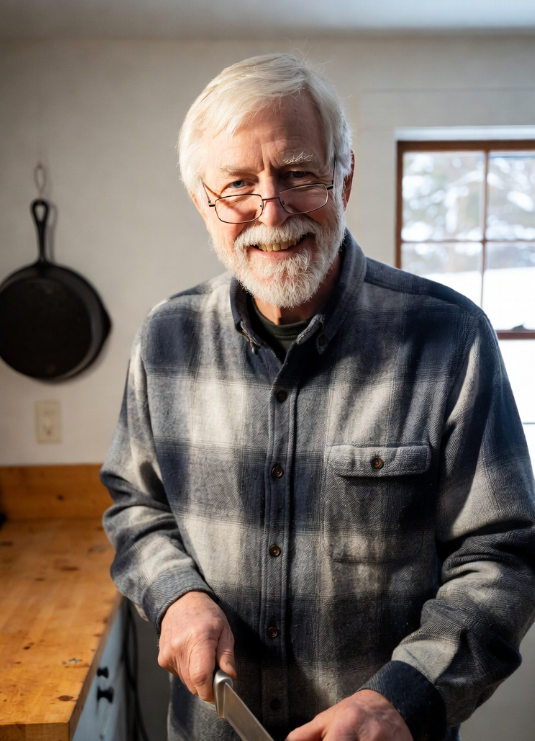
By Mid-January. The cold has settled into the valley in the particular way it does after the holidays — not dramatically, not stormy, just present and unrelenting. Three below last night, eight above this afternoon. The woodstove ran all day. I split extra wood in the morning, before the temperature climbed enough to make it possible to work outside without constant wind management. The act of splitting wood in Vermont January is partly about the wood and partly about being the kind of man who goes outside in January and does something necessary. Vermont winters are partly a character test. You pass by doing the thing. You do not take a grade on the test. You just pass or you don't.
I have been baking bread more regularly this winter than any winter since I retired. The sourdough Harold is active and productive — two loaves a week, which Helen says is more bread than two people need and which I say is approximately right given that some of it goes to the neighbor down the road whose husband died in November and who has not been cooking for herself very reliably since then. I bring a loaf when I walk Frost. She does not ask for it. She takes it without being asked to, which is how neighbors work here. You bring the thing. They take it. No conversation required about the taking or the bringing.
The blog post this week was about bread — specifically about starter maintenance in winter versus summer. About how Harold needs more frequent feeding in winter because the cold slows the fermentation, and how this requires a different kind of attention: not more, but more consistent. About how the bread that comes from a well-tended winter starter is better than summer bread in a specific way I cannot entirely explain but which has something to do with the quality of patience that winter demands from both the baker and the yeast.
Harold has been producing reliably enough that there is always a heel or a thick end-slice sitting on the cutting board by mid-week — too good to waste, not quite right for the neighbor. On the mornings after a long split-wood day, when the stove is already warm and Helen is still reading in the back room, I make French toast from whatever sourdough is left. No eggs in this version, which surprised me when I first tried it, but the batter holds and the bread’s crust crisps the way it should, and it is exactly the kind of breakfast that earns a cold morning rather than merely endures one.
Vegan French Toast
Prep Time: 5 minutes | Cook Time: 15 minutes | Total Time: 20 minutes | Servings: 2
Ingredients
- 4 thick slices sourdough or hearty bread (about 3/4 inch thick)
- 1 cup unsweetened oat milk (or almond milk)
- 2 tablespoons ground flaxseed
- 1 tablespoon pure maple syrup, plus more for serving
- 1 teaspoon vanilla extract
- 1 teaspoon ground cinnamon
- 1/4 teaspoon ground nutmeg
- Pinch of salt
- 1 tablespoon vegan butter or neutral oil, for the pan
- Fresh fruit or powdered sugar, for serving (optional)
Instructions
- Make the batter. In a shallow bowl or baking dish, whisk together the oat milk, ground flaxseed, maple syrup, vanilla extract, cinnamon, nutmeg, and salt until fully combined. Let the mixture sit for 2 minutes so the flaxseed begins to thicken the batter.
- Soak the bread. Lay the bread slices in the batter one or two at a time, letting each side soak for 30 to 45 seconds. The bread should absorb the batter without falling apart — sourdough holds up particularly well here.
- Heat the pan. Warm a cast iron skillet or nonstick pan over medium heat. Add the vegan butter and let it melt and coat the surface evenly.
- Cook the toast. Place the soaked bread slices in the pan without crowding. Cook for 3 to 4 minutes per side, until each surface is deeply golden and the edges have crisped. Adjust heat as needed to avoid burning.
- Serve. Transfer to plates and serve immediately with a drizzle of maple syrup and fresh fruit if you have it. A dusting of powdered sugar works well on a plain winter morning.
Nutrition (per serving)
Calories: 310 | Protein: 9g | Fat: 8g | Carbs: 50g | Fiber: 4g | Sodium: 380mg