
 By
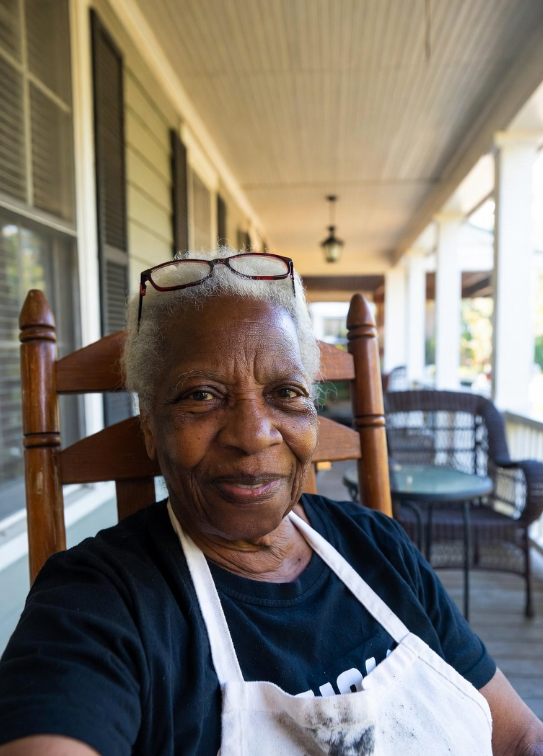
By Home. One week post-surgery. The walker and I have reached an understanding: it goes where I go, and I go nowhere fast. The walker is aluminum and boring and it makes me feel eighty instead of sixty-eight, but it is keeping me upright and moving and that is its job and I will not insult it for doing its job.
Recovery is humbling. I am a woman who has cooked two wedding feasts, stood eight hours at a Lowcountry boil, and fried two hundred pieces of chicken on knees that wanted to quit. And now I need help getting to the bathroom. That is the truth of surgery — it takes everything you were and reduces you to everything you need, and what you need turns out to be very basic: a walker, a hand, a toilet, and someone who loves you enough to pretend they don't notice when you struggle.
Denise is on duty this week. The spreadsheet — the color-coded, tab-organized, military-grade spreadsheet — is in full effect. Medications at eight, noon, and six. Physical therapy exercises at ten. Ice the knee for twenty minutes every two hours. Elevate. Rest. Do not — repeat, DO NOT — attempt to cook. That last instruction is written in red and underlined twice and I have already violated it once by directing Denise on how to make grits from my chair by the stove.
"Mama, I know how to make grits," Denise said. "Denise," I said, "I have watched you make grits. You make them too fast. Grits are not a fast food. Grits are a slow meditation. Stir slowly. Add the butter in pieces. And for the love of God, do not use instant." She sighed. She made the grits slowly. They were acceptable. Not perfect — acceptable. I said so. She sighed again. The sighing is part of the recovery process, apparently.
Kayla comes every evening after her shift. She checks the incision, checks the swelling, checks my mood. The mood is the hardest to manage. I am sitting in a chair watching other people live in my kitchen, and the sitting is harder than the surgery. The sitting is harder than the pain. The pain has medication. The sitting has no cure except time, and time and I are not on speaking terms right now.
Earl Jr. flew in from Atlanta for the weekend. He sat with me on the porch and we watched the evening come in — the light going gold, the marsh birds calling, the Spanish moss doing whatever Spanish moss does, which is exist beautifully and contribute nothing. Earl Jr. said, "You doing okay, Mama?" I said, "I'm doing. The okay part comes later." He squeezed my hand. He is his father's son. Quiet. Present. There.
Now go on and feed somebody. Even if somebody else has to do the actual cooking for now.
Grits were the battleground this week, but they won’t always be on the menu — and sitting in that chair watching Denise work reminded me that the best Southern cooking is never about speed, it’s about giving something time and heat and attention. This tomato cobbler is exactly that kind of dish: slow, savory, deeply satisfying, and forgiving enough that someone who loves you can pull it off while you call instructions from across the kitchen. It’s the sort of thing you make when you want the house to smell like home and you’ve got the good sense to let somebody else do the standing.
Tomato Cobbler
Prep Time: 20 min | Cook Time: 45 min | Total Time: 1 hr 5 min | Servings: 6
Ingredients
- 2 1/2 lbs fresh tomatoes, cored and roughly chopped (about 5–6 medium)
- 1 medium yellow onion, thinly sliced
- 3 cloves garlic, minced
- 2 tablespoons olive oil
- 1 tablespoon balsamic vinegar
- 1 teaspoon fresh thyme leaves (or 1/2 teaspoon dried)
- 1/2 teaspoon smoked paprika
- 1/2 teaspoon salt, plus more to taste
- 1/4 teaspoon black pepper
- 1/4 teaspoon crushed red pepper flakes (optional)
- 1 cup all-purpose flour
- 1 1/2 teaspoons baking powder
- 1/4 teaspoon salt
- 4 tablespoons cold unsalted butter, cut into small pieces
- 1/2 cup whole milk
- 1/2 cup shredded sharp cheddar cheese
- 2 tablespoons fresh basil, torn, for serving
Instructions
- Preheat and prep. Preheat your oven to 375°F. Lightly grease a 10-inch cast iron skillet or a 2-quart baking dish and set aside.
- Cook the filling. Heat olive oil in a large skillet over medium heat. Add the sliced onion and cook, stirring occasionally, for 8–10 minutes until softened and beginning to caramelize. Add the garlic and cook 1 minute more. Stir in the chopped tomatoes, balsamic vinegar, thyme, smoked paprika, salt, pepper, and red pepper flakes if using. Simmer over medium-low heat for 10 minutes, stirring gently, until the tomatoes release their juices and the mixture thickens slightly. Taste and adjust seasoning.
- Make the biscuit topping. In a medium bowl, whisk together the flour, baking powder, and salt. Add the cold butter pieces and use your fingertips to work the butter into the flour until the mixture resembles coarse crumbs with some pea-sized pieces remaining. Stir in the shredded cheddar. Pour in the milk and stir just until a shaggy dough comes together — do not overmix.
- Assemble the cobbler. Pour the tomato filling into the prepared skillet or baking dish. Drop the biscuit dough over the top in large spoonfuls, leaving some gaps for steam to escape. You are not covering every inch — the patchwork look is exactly right.
- Bake low and slow. Bake at 375°F for 35–40 minutes, until the biscuit topping is golden brown and cooked through and the tomato filling is bubbling around the edges. If the topping browns too quickly, tent loosely with foil for the last 10 minutes.
- Rest and serve. Let the cobbler rest for 10 minutes before serving — the filling will thicken as it cools slightly. Scatter torn fresh basil over the top and bring it to the table warm.
Nutrition (per serving)
Calories: 265 | Protein: 7g | Fat: 13g | Carbs: 31g | Fiber: 3g | Sodium: 420mg