
 By
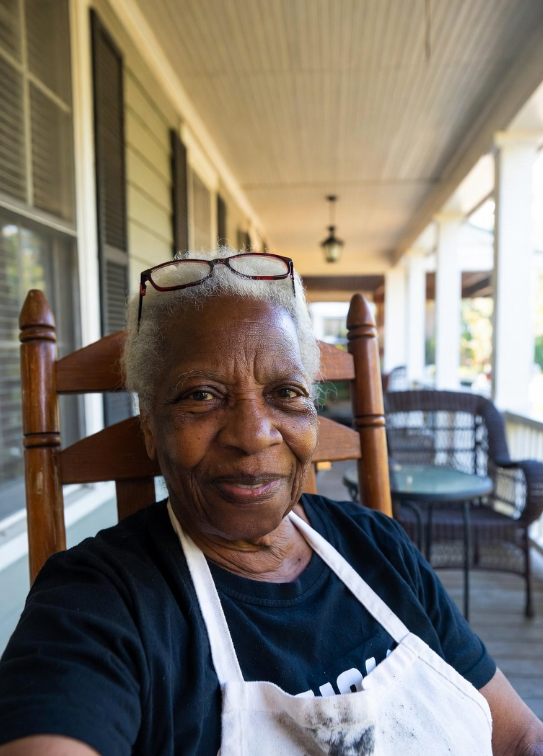
By February is coming and I can feel it in the garden. The collards are still going strong — they love the cold, the colder the better, and a frost makes them sweet in a way that summer never could. The rosemary is eternal. And I've started seeds indoors — tomato and pepper seeds in little peat pots on the kitchen windowsill, lined up like soldiers waiting for spring. Earl says the windowsill looks like a science experiment. I say it looks like hope.
At school, we're in the long stretch — January through March, no holidays to break up the weeks, just the steady rhythm of lunches and lunches and lunches. I don't mind it. There's something meditative about routine. Four hundred and twenty-six trays, five days a week, and each tray is a small prayer: let this child be fed, let this child be seen, let this child know that someone stood at a stove at five in the morning and thought about them.
The quiet girl has a friend. I noticed on Tuesday — there's another girl sitting with her in the corner now, a new student with glasses and a ponytail, and they were talking. Quietly, heads bent toward each other, the way girls talk when they're sharing something important. The quiet girl was showing her something in her book. I stood behind the counter and watched, and I thought: this is what school is for. Not the tests. Not the standards. The lunchtable friendships. The girl you sat next to in third grade who became the person you told your secrets to. I have been feeding these moments for thirty-two years, and they are the best meal I've ever served.
I made shrimp pilau on Saturday — my grandmother's grandmother's recipe, handed down through so many hands I can't trace them all. The Gullah word for it sounds different from the way cookbooks spell it, and I don't care how it's spelled because I learned it by watching, not by reading. You take rice — Carolina Gold if you can find it, long grain if you can't — and you cook it in shrimp stock with onion and butter and the shrimp go in at the end, just enough time to turn pink. It's simple. It's ancient. It's the taste of the Lowcountry before anyone called it the Lowcountry.
Denise and Monique came for dinner Sunday. Monique is thirteen and she asked me to teach her shrimp pilau, and I said, "Baby, come stand by me." And she did. And I showed her. And somewhere in this kitchen, Hattie Pearl was smiling.
Now go on and feed somebody.
The shrimp pilau I described above is not a recipe I can fully give you—it lives in the hands and the watching, and some things have to stay that way. But when Monique stood beside me in the kitchen Sunday night, what I saw in her face was the same thing I see every time someone learns to cook rice properly on a stovetop: wonder, and then confidence, and then something that looks a lot like belonging. This Thai Pineapple Fried Rice isn’t Lowcountry—it travels a different ocean—but it asks the same things of you: high heat, good timing, and the willingness to trust the rice. Make it for someone you love. Let them stand beside you while you do.
Thai Pineapple Fried Rice
Prep Time: 15 min | Cook Time: 15 min | Total Time: 30 min | Servings: 4
Ingredients
- 3 cups cooked jasmine rice, day-old preferred (cold rice fries best)
- 1 cup fresh or canned pineapple chunks, drained
- 1/2 lb medium shrimp, peeled and deveined (or sub diced chicken or tofu)
- 2 tablespoons neutral oil, divided
- 3 cloves garlic, minced
- 1/2 medium yellow onion, diced
- 1/2 red bell pepper, diced
- 2 eggs, lightly beaten
- 3 tablespoons soy sauce (or tamari for gluten-free)
- 1 tablespoon fish sauce
- 1 teaspoon sesame oil
- 1/2 teaspoon white pepper
- 1/4 cup frozen peas
- 3 green onions, thinly sliced
- 1/4 cup toasted cashews (optional)
- Fresh cilantro and lime wedges, to serve
Instructions
- Prep the rice. If using freshly cooked rice, spread it on a baking sheet and refrigerate for at least 30 minutes to dry it out. Cold, dry rice is the secret to fried rice that doesn’t clump.
- Cook the shrimp. Heat 1 tablespoon oil in a large wok or skillet over high heat until shimmering. Add shrimp in a single layer and cook 1 to 2 minutes per side until just pink and opaque. Remove to a plate and set aside.
- Saute the aromatics. Add remaining oil to the same pan. Add onion and bell pepper and stir-fry 2 to 3 minutes until softened. Add garlic and cook 30 seconds until fragrant.
- Scramble the eggs. Push the vegetables to one side of the pan. Pour beaten eggs into the empty space and scramble gently, breaking into small curds. Stir to combine with the vegetables once mostly set.
- Fry the rice. Add the cold rice to the pan, breaking up any clumps with a spatula. Press it against the hot surface and let it sit undisturbed for 1 minute to develop a little color, then toss and repeat. This is where the flavor builds—don’t rush it.
- Add the sauce and pineapple. Drizzle soy sauce, fish sauce, and sesame oil over the rice. Add pineapple chunks and frozen peas. Toss everything together over high heat for 2 to 3 minutes until heated through and well coated.
- Finish and serve. Return shrimp to the pan and toss just to warm through, about 1 minute. Season with white pepper. Plate and top with green onions, cashews if using, fresh cilantro, and a squeeze of lime.
Nutrition (per serving)
Calories: 420 | Protein: 24g | Fat: 13g | Carbs: 52g | Fiber: 3g | Sodium: 890mg