
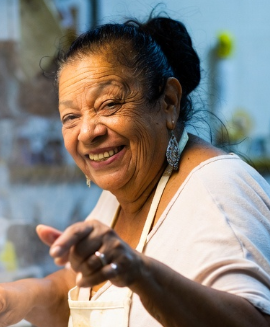
 By
Father's Day. Third Sunday of June. The holiday I have had a complicated relationship with since 1989 when I had my first Father's Day as the daughter of a problem drinker and the wife of a sober man and the mother of a newborn, and I was trying to figure out how to honor the good and not pretend away the hard, and I did not succeed that year, and I have gotten better over the years, but not completely.
Miguel Sr. has been dead twelve years. Twelve Father's Days without him, and the first five were the hardest, and the last seven have been a gradual acceptance. My father was flawed. My father drank. My father was loud and embarrassing and he loved us and he failed us and he was still my father and I still miss him and I still do not fully forgive him and both of these things live inside me and I have made peace with them not resolving. The rum took him. The rum had a head start.
For Eduardo — who is the actual father in this house, the undramatic one, the present one — I made ribs. Costillitas. Ribs, the Puerto Rican way: braised first with sofrito and beer and a little brown sugar, then finished on the grill. Miguel Jr. came over Sunday morning with Lucas. Jenny was at her own parents' house — her father is seventy-one and still alive and they had a brunch. So it was Eduardo, Miguel Jr., Lucas, and me. Four generations in the house if you count Eduardo's father's old fishing hat on the coat rack, which Eduardo inherited and which he will not throw out and which I do not ask him to throw out because every man needs one thing from his father to hold on to.
Eduardo ate four ribs. Miguel Jr. ate six. Lucas ate two and declared, "Papi, these are the best ribs," and Miguel Jr. said, "Mijo, your abuela made them," and Lucas said, "Abuela, these are the best ribs," and I said, "I know, mijo." This is grandmothering. You accept the compliment and you do not feign modesty.
After lunch, Miguel Jr. and Eduardo watched baseball in the living room. The Red Sox were losing. They sat side by side and complained about the bullpen, and I sat in the kitchen with Lucas and we drew pictures on the back of a brown paper bag — Lucas drew a dinosaur that he said was also a pernil, which may be the truest artistic rendering of my cooking that has ever existed — and I thought: this is the Father's Day I wanted in 1989 and did not know how to make. The quiet one. The one with the grandchild. The one where the only drama is the bullpen. Wepa.
I did not set out to make a complicated meal that Sunday — just something that rewarded patience the way Eduardo does, the way good fathers do. When the ribs were gone and Lucas was drawing dinosaurs on paper bags and the men were arguing about the bullpen, I kept thinking about what makes a dish feel like a man who stays: it has to be tender all the way through, cooked low and slow until it gives. This Tender Round Steak is the recipe I reach for when I want that same quality — humble cut, unhurried method, deeply satisfying at the table.
Tender Round Steak
Prep Time: 15 min | Cook Time: 1 hr 45 min | Total Time: 2 hr | Servings: 4
Ingredients
- 2 lbs beef round steak, cut into serving-size pieces
- 1/2 teaspoon salt
- 1/4 teaspoon black pepper
- 1/4 teaspoon garlic powder
- 2 tablespoons vegetable oil
- 1 medium yellow onion, sliced into rings
- 2 cloves garlic, minced
- 1 cup beef broth
- 1/2 cup water
- 1 tablespoon Worcestershire sauce
- 1 teaspoon tomato paste
- 1/2 teaspoon dried thyme
- 1 tablespoon cornstarch (optional, for thickening)
Instructions
- Season the steak. Pat the round steak pieces dry with paper towels. Season both sides evenly with salt, pepper, and garlic powder.
- Sear the meat. Heat vegetable oil in a large heavy-bottomed skillet or Dutch oven over medium-high heat. Add the steak pieces in a single layer and sear 3–4 minutes per side until a deep brown crust forms. Work in batches if needed to avoid crowding. Remove and set aside.
- Soften the aromatics. Reduce heat to medium. Add sliced onion to the same pan and cook, stirring occasionally, for 4–5 minutes until softened and beginning to caramelize. Add minced garlic and cook 1 minute more.
- Build the braise liquid. Stir in beef broth, water, Worcestershire sauce, tomato paste, and dried thyme. Scrape up any browned bits from the bottom of the pan — that’s where the flavor lives.
- Braise low and slow. Return the seared steak to the pan. The liquid should come about halfway up the meat; add a splash more water if needed. Bring to a gentle simmer, then cover tightly and reduce heat to low. Cook for 1 hour 30 minutes, turning the steak once halfway through, until the meat is fork-tender.
- Thicken the gravy (optional). If you prefer a thicker gravy, remove the steak to a platter and whisk cornstarch with 2 tablespoons cold water until smooth. Stir into the pan liquid and cook over medium heat for 2–3 minutes until thickened. Pour over the steak to serve.
- Rest and serve. Let the steak rest 5 minutes before serving. Spoon braising liquid and onions generously over each piece. Serve with rice, roasted potatoes, or crusty bread to catch the gravy.
Nutrition (per serving)
Calories: 310 | Protein: 38g | Fat: 13g | Carbs: 6g | Fiber: 1g | Sodium: 480mg