I have been baking more lately. The grief work after Mamma is, I think, complete enough that the baking has shifted from defense to celebration. The bread is for the table where Ingrid sits in her high chair. The cookies are for the great-grandchildren who come up for the weekends. The pies are for the friends I have started feeding again. The kitchen is back to its primary function: feeding the living people I love.
Elsa and Tom came for the weekend. Tom helped me move the heavy planters in the garden — the big terracotta ones I bought at a yard sale in 1995 that I cannot lift anymore. He did not ask. He just did it. He is the quiet kind of man Paul was. I see why Elsa loves him. The quiet men are not the loudest in the room, but they are usually the most useful. Paul taught me this by example. Tom is teaching it by repetition.
Anna had a small surgery. She is fine. I drove to Minneapolis for two weeks to help. I cooked. I cleaned. I cared. Anna said: "Mom, I had forgotten you were a nurse." I said: "I haven't." The thirty-five years at St. Mary's are not the kind of thing that fades. The skills come back at the first request. The hands remember how to take a pulse. The eyes remember how to read a face for pain. The role is permanent.
I cooked Chicken caesar salad this week. Romaine, parmesan, croutons from yesterday's bread, grilled chicken, anchovy-garlic-lemon dressing made in the mortar. Lunch on the porch.
The Damiano Center on Thursday. I have served soup at this center for twenty-some years. I know the regulars by name. I know the seasons of the crowd. I know that the first cold snap brings new faces. I know that the days after holidays bring the lonely ones. I know that the worst weeks of the year are not the ones that feel the worst — they are the ones in February when the cold has worn everyone down and the city has run out of tenderness.
Paul would have liked this dinner. Paul would have liked this week. Paul would have liked this life. I tell him about it anyway. The telling is the keeping. I have been told, by a grief counselor, by friends, by my own children at certain anxious moments, that perhaps the constant tell-Paul thing is not healthy. I do not agree. I think it is exactly healthy. I think it is, in fact, the structural beam of my emotional architecture. The beam is solid. The house stands.
It is enough. It has to be. And on a morning like this, with the lake doing what the lake does and the dog at my feet and the bread on the counter and the kitchen warm enough to live in, it is.
The lake from the kitchen window has been doing what the lake does for as long as there has been a lake. The lake has carried fish and ships and the bodies of drowned sailors and the names of Ojibwe villages and the granite-cold of melted glaciers. The lake does not notice the lives along its shore. The lives notice the lake. That is the deal. That has always been the deal.
It is enough.
The Caesar salad I made that week — romaine, croutons from yesterday’s bread, the dressing worked in the mortar until the anchovies dissolved into something sharp and golden — reminded me that the best lunches are the ones that ask something of you. You don’t rush a mortar-and-pestle dressing, and you don’t rush stuffed artichokes either; both belong to the category of food that slows the cook down on purpose. After two weeks in Minneapolis with my hands back in their nursing shape, I wanted something that used them differently — something that required patience rather than urgency, pleasure rather than assessment. Stuffed artichokes, the way my mother made them and the way I have made them since, are that dish exactly.
Stuffed Artichokes
Prep Time: 20 minutes | Cook Time: 45 minutes | Total Time: 1 hour 5 minutes | Servings: 4
Ingredients
- 4 large globe artichokes
- 1 cup Italian-seasoned breadcrumbs
- 1/2 cup freshly grated Parmesan cheese
- 4 cloves garlic, finely minced
- 1/4 cup fresh flat-leaf parsley, finely chopped
- 1 lemon, zested and cut into wedges for serving
- 1/4 cup olive oil, plus extra for drizzling
- 1/2 teaspoon kosher salt, plus more to taste
- 1/4 teaspoon freshly ground black pepper
- 2 cups water (for steaming)
Instructions
- Trim the artichokes. Using a sharp knife, cut off the top inch of each artichoke and trim the stem so it sits flat. With kitchen scissors, snip the sharp tip from each outer leaf. Rub all cut surfaces immediately with a lemon wedge to prevent browning.
- Open the leaves. Hold each artichoke firmly and press it cut-side down on the counter, pressing gently to splay the leaves open. This creates space for the stuffing to settle between layers.
- Make the stuffing. In a medium bowl, combine breadcrumbs, Parmesan, garlic, parsley, lemon zest, olive oil, salt, and pepper. Stir until the mixture holds together loosely and the oil is evenly distributed.
- Fill the artichokes. Working from the outermost leaves inward, spoon stuffing between the layers, pressing it gently into each gap. Pile any remaining stuffing into the center cavity. The artichokes should look generously filled but not packed so tightly the leaves cannot steam through.
- Prepare the pot. Pour 2 cups of water into a large heavy pot or Dutch oven. Set the stuffed artichokes upright in the pot, stems down. Drizzle the tops lightly with additional olive oil.
- Steam. Bring the water to a boil over medium-high heat, then reduce to medium-low, cover tightly, and steam for 40 to 45 minutes. The artichokes are done when an outer leaf pulls away easily and its base is tender when scraped with a tooth.
- Serve. Transfer artichokes carefully to a platter. Serve warm or at room temperature with fresh lemon wedges. To eat, pull leaves one at a time, scrape the stuffed base with your teeth, and work toward the heart.
Nutrition (per serving)
Calories: 285 | Protein: 10g | Fat: 15g | Carbs: 31g | Fiber: 8g | Sodium: 510mg
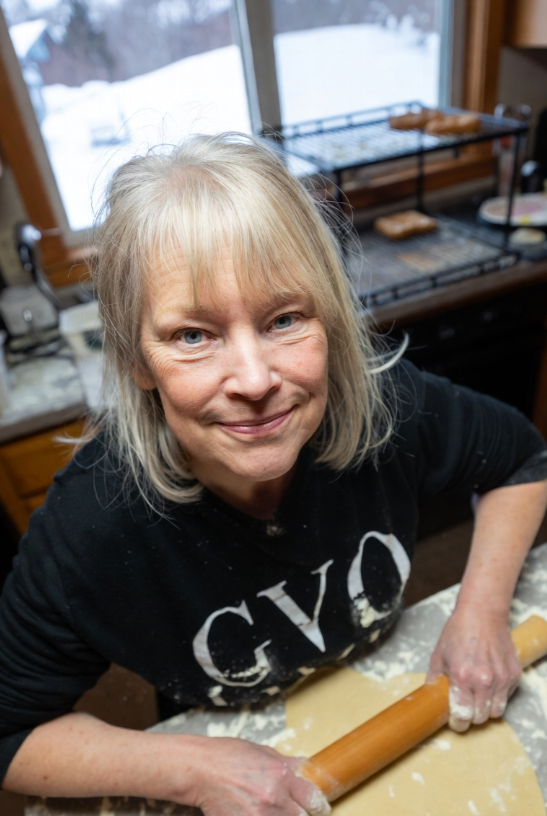
About the cook who shared this
Linda Johansson
Week 544 of Linda’s 30-year story
· Duluth, Minnesota
Linda is a sixty-three-year-old retired nurse from Duluth, Minnesota, living alone in the house where she raised her children and said goodbye to her husband. She lost Paul to ALS in 2020 after two years of watching the kindest man she'd ever known lose everything but his dignity. She cooks Scandinavian comfort food and Minnesota hotdish and the pot roast Paul loved, and she sets two places at the table out of habit because it makes her feel less alone. Every recipe she writes is a person she's loved.
