May. The month when Duluth wakes up and remembers it has colors besides white and gray. The trees are budding — the birches first, small green points appearing on branches that have been bare since October. The grass is coming back, tentative and pale, like something that's been in hiding and isn't sure it's safe to come out yet.
I planted peas on Saturday. Peas go in first because they don't mind the cold — they're Scandinavian vegetables, tough and unpretentious. I also started my tomato seedlings indoors, in the little pots on the windowsill that catch the morning sun. They won't go outside until June — Duluth's last frost is late May, and I've been burned before by optimism — but the seedlings are there, green and hopeful, and I talk to them when Paul isn't looking because talking to plants is one step away from talking to yourself and I'm not ready for that yet.
Mamma called on Sunday with a report on her own garden: peas planted, onion sets in, rhubarb three inches taller than mine. The annual garden competition continues. I am losing. I will always lose. Mamma has been gardening in Duluth since 1962 and the soil respects her in ways that it does not yet respect me. I've only been gardening since 1989. Give me another thirty years.
Anna called with news: Sophie finished her freshman year. She's coming to Duluth for a week before starting her summer CNA job again. She wants to learn more recipes. She specifically asked about Mamma's meatball recipe, which is the Holy Grail, the recipe that doesn't exist in written form, the recipe that lives only in Mamma's hands and possibly in her dreams.
I said, "I've been trying to get that recipe for forty years." Anna said, "Sophie's going to ask Grandma directly." I said, "God speed to her."
I made a spring pasta — linguine with fresh peas (from the co-op, not the garden, the garden peas won't be ready until July), asparagus, lemon, Parmesan, and a cream sauce that's barely a sauce — more of a gloss. It's light and green and it tastes like the season, which is the whole point. Paul ate a large plate and said, "This doesn't taste like Duluth food." I said, "It's spring food." He said, "Duluth food is heavy." I said, "Duluth food in winter is heavy. Duluth food in spring is whatever I say it is." He accepted this because he is a wise man.
Sven chased a squirrel in the yard. He didn't catch it. He never catches them. The squirrels know this. Sven knows this. The chase continues because hope is a golden retriever running after a squirrel in May.
This is the pasta I described above — the one Paul said didn’t taste like Duluth food. He’s right that it doesn’t taste like winter Duluth food, but that’s the whole point: the peas are sweet, the asparagus snaps, and the lemon and Parmesan do something bright and uncomplicated together. It’s a classic Paglia e Fieno at heart, which means “straw and hay” — traditionally made with white and green pasta, though I use linguine and let the vegetables bring all the green. After a morning of planting peas and talking to tomato seedlings, this is exactly what spring in Duluth should taste like.
Straw and Hay (Paglia e Fieno)
Prep Time: 15 minutes | Cook Time: 15 minutes | Total Time: 30 minutes | Servings: 4
Ingredients
- 12 oz linguine (or half regular, half spinach linguine for the classic straw-and-hay look)
- 1 cup fresh or frozen peas
- 1 bunch asparagus (about 1 lb), trimmed and cut into 1-inch pieces
- 2 tablespoons unsalted butter
- 2 cloves garlic, minced
- 1/2 cup heavy cream
- Zest and juice of 1 lemon
- 3/4 cup freshly grated Parmesan cheese, plus more for serving
- 1/2 cup reserved pasta cooking water
- 2 tablespoons olive oil
- Salt and freshly ground black pepper, to taste
- Fresh basil or chives for garnish (optional)
Instructions
- Cook the pasta. Bring a large pot of salted water to a boil. Cook the linguine according to package directions until al dente. During the last 2 minutes, add the asparagus pieces and peas directly to the pasta water. Reserve 1/2 cup of the cooking water, then drain everything together.
- Build the sauce. In the same pot over medium heat, melt the butter with the olive oil. Add the garlic and cook for about 30 seconds, until fragrant but not browned.
- Add the cream. Pour in the heavy cream and bring to a gentle simmer. Cook for 1 to 2 minutes, just until it begins to thicken slightly. Stir in the lemon zest and lemon juice.
- Toss everything together. Return the drained pasta, asparagus, and peas to the pot. Toss to coat, adding the Parmesan a little at a time. If the sauce seems tight, add the reserved pasta water a splash at a time until it’s glossy and just barely coats the noodles — more of a gloss than a sauce.
- Season and serve. Taste and adjust with salt and pepper. Divide among bowls and top with extra Parmesan and fresh herbs if you like.
Nutrition (per serving)
Calories: 520 | Protein: 19g | Fat: 22g | Carbs: 62g | Fiber: 5g | Sodium: 340mg
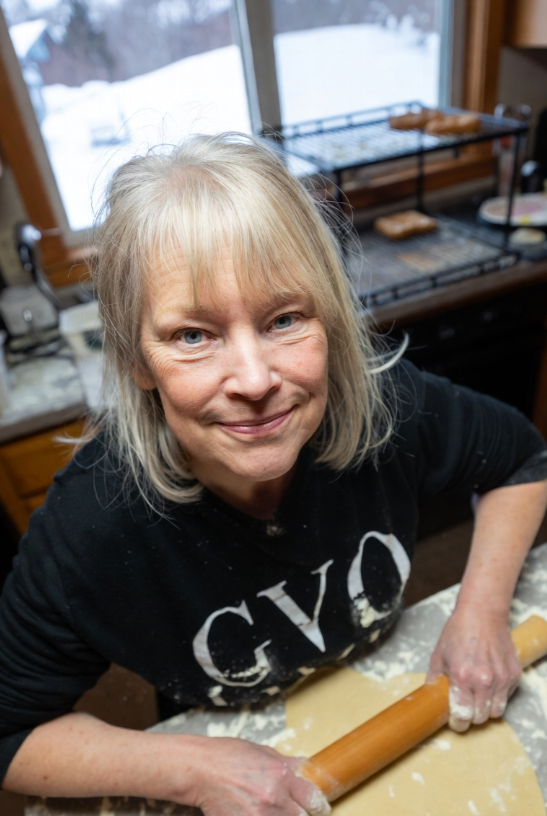
About the cook who shared this
Linda Johansson
Week 58 of Linda’s 30-year story
· Duluth, Minnesota
Linda is a sixty-three-year-old retired nurse from Duluth, Minnesota, living alone in the house where she raised her children and said goodbye to her husband. She lost Paul to ALS in 2020 after two years of watching the kindest man she'd ever known lose everything but his dignity. She cooks Scandinavian comfort food and Minnesota hotdish and the pot roast Paul loved, and she sets two places at the table out of habit because it makes her feel less alone. Every recipe she writes is a person she's loved.
