The feeding tube conversation happened again. Wednesday, at the ALS clinic. Dr. Andersen, gentle as always, said: "Paul's swallowing function has decreased. We should plan for a PEG tube placement while he's still strong enough for the procedure."
Paul typed: "When I stop being able to eat, I want the tube. Not before."
I understand his position. I understand the nurse's position, which is Dr. Andersen's position: place the tube early, when the body can handle the surgery, and use it as a supplement to oral feeding, not a replacement. The practical wisdom of planning ahead.
But I also understand Paul's position: eating is the last sensory pleasure he has. He can't touch. He can't walk. He can't talk. He can taste. The pureed meatballs, the blended soup, the thickened coffee — these are not just nutrition. They're experience. They're taste and warmth and the memory of meals that his body no longer allows but his tongue still remembers. Taking that away before it must be taken is a loss he won't accept voluntarily.
We compromised: the PEG tube will be placed in May. Paul will continue eating by mouth as long as he can. The tube will be there for when he can't. Both. Not either/or. Both.
I came home and made his favorite: wild rice soup. Pureed smooth, thickened with a little cornstarch so it doesn't go down too fast. The taste of Minnesota. The taste of home. Paul drank it from the cup I held and he closed his eyes and the closing of the eyes meant: this is good. I know this taste. This taste is you.
The taste is me. The soup is me. Every meal I've made for thirty-one years is me — my hands, my recipes, my mother's recipes, my love, reduced to liquid and held to his lips. When the tube comes, I'll still make the soup. I'll blend it finer. I'll feed it through the tube. The food will still be mine. The love will still be mine. The tube doesn't change that.
The tube doesn't change anything except the route. The food still comes from the same kitchen, the same hands, the same heart.
Elsa came for dinner. She made her rice dish. Paul had his soup. I had the rice. Sven had kibble and a guilty piece of bread under the table. The dinner was quiet — Elsa and I talked softly, Paul typed occasionally, the machine spoke. The evening was warm. The windows were open for the first time this spring. The air smelled like wet earth and the lake.
May. The tube. The transition. Another step on the path that only goes one direction.
But tonight: soup. From a cup. With the windows open. And the air smelling like spring.
This is the soup I made that Wednesday evening — not wild rice, which I’ll save for another telling, but the spinach sausage soup that had been in the freezer waiting, the one Paul has asked for on hard days for as long as I can remember. I pureed it completely smooth and thickened it just enough that it moved slowly, gently, the way his throat needs it to now. It’s a sturdy soup, full of flavor, and it holds up beautifully to blending — the sausage gives it body, the spinach gives it color, and when you close your eyes it still tastes like dinner, not like medicine. That matters more than I can say.
Spinach Sausage Soup
Prep Time: 15 min | Cook Time: 35 min | Total Time: 50 min | Servings: 6
Ingredients
- 1 lb bulk Italian sausage (mild)
- 1 medium yellow onion, diced
- 3 cloves garlic, minced
- 2 medium carrots, peeled and sliced
- 2 stalks celery, sliced
- 4 cups chicken broth (low sodium)
- 1 can (14.5 oz) diced tomatoes, undrained
- 1 can (15 oz) white beans (cannellini), rinsed and drained
- 4 cups fresh spinach, roughly chopped (or 1 package frozen, thawed and squeezed dry)
- 1/2 tsp dried Italian seasoning
- 1/4 tsp black pepper
- Salt to taste
- 2 tbsp cornstarch + 2 tbsp cold water (optional, for thickening)
- Grated Parmesan for serving (optional)
Instructions
- Brown the sausage. In a large heavy pot or Dutch oven over medium-high heat, cook the bulk sausage, breaking it into crumbles, until no pink remains, about 6–8 minutes. Drain off excess fat, leaving about 1 tablespoon in the pot.
- Soften the aromatics. Reduce heat to medium. Add the diced onion, carrots, and celery to the pot. Cook, stirring occasionally, until the vegetables soften, about 5 minutes. Add the garlic and cook 1 minute more until fragrant.
- Build the base. Pour in the chicken broth and diced tomatoes with their juices. Stir in the Italian seasoning and black pepper. Bring to a gentle boil, then reduce heat and simmer uncovered for 15 minutes, until the carrots are fully tender.
- Add beans and spinach. Stir in the white beans and spinach. Simmer another 5 minutes until the spinach is wilted and the beans are heated through. Taste and adjust salt as needed.
- Thicken if desired. For a thicker consistency that moves slowly and gently — helpful for anyone who needs the soup to pace itself — whisk together the cornstarch and cold water in a small bowl, then stir the slurry into the simmering soup. Cook 2–3 minutes, stirring, until the soup thickens slightly.
- Puree for smooth texture (optional). For a fully smooth consistency, use an immersion blender to puree the soup completely, or transfer in batches to a countertop blender. Return to low heat and thin with additional warm broth to reach the desired consistency. For dysphagia-friendly texture, puree until completely smooth with no lumps.
- Serve. Ladle into bowls or cups. Top with a little grated Parmesan if serving to those who can manage it. The soup reheats beautifully; thin with a splash of broth when rewarming.
Nutrition (per serving)
Calories: 310 | Protein: 18g | Fat: 16g | Carbs: 22g | Fiber: 5g | Sodium: 680mg
About the cook who shared this
Linda Johansson
Week 159 of Linda’s 30-year story
· Duluth, Minnesota
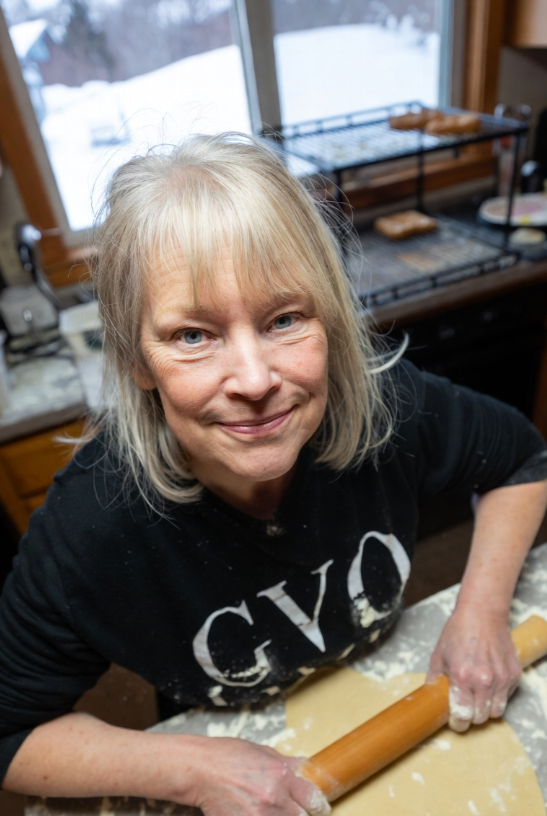
Linda is a sixty-three-year-old retired nurse from Duluth, Minnesota, living alone in the house where she raised her children and said goodbye to her husband. She lost Paul to ALS in 2020 after two years of watching the kindest man she'd ever known lose everything but his dignity. She cooks Scandinavian comfort food and Minnesota hotdish and the pot roast Paul loved, and she sets two places at the table out of habit because it makes her feel less alone. Every recipe she writes is a person she's loved.
