
 By
By The cookbook call happened. I talked to the editor — a woman named Sarah who has published regional cookbooks and whose voice on the phone had the particular warmth of someone who has read your writing and liked it, the warmth that says "I see you" before any words are exchanged. We talked for an hour. I told her about the floor. About the adobo. About Lourdes and Reynaldo and the moose and the salmon and the intersection. She said, "This is not a cookbook. This is a memoir that happens to have recipes." I said, "Is that okay?" She said, "That's exactly what I want."
The conversation was the most important conversation I've had since the one where Dr. Reeves said "PTSD" and the world rearranged itself. This conversation rearranged the world differently — not by naming the problem but by naming the solution. The book. The book is the solution. The floor was the problem. The adobo was the treatment. The book is the sharing of the treatment with everyone who has their own floor.
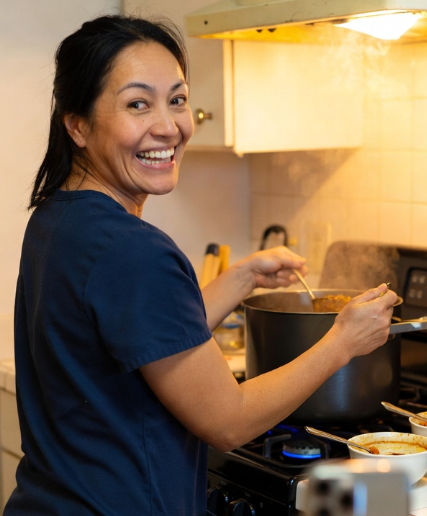
I made chicken adobo after the call. Not celebration adobo — foundational adobo. The adobo that started everything. The recipe that is the first chapter. The garlic sizzled and I thought: this garlic is going to be in a book. This vinegar is going to be on a page. This adobo — my adobo, Lourdes's adobo, Reynaldo's adobo — is going to sit on a shelf in someone else's kitchen and the sitting is the traveling and the traveling is the sharing and the sharing is the whole point.
After I hung up the phone with Sarah, I stood in my kitchen for a long moment before I reached for anything — and when I finally did cook, it wasn’t the adobo from that morning but something simpler, something that felt like a first page rather than a climax. These spinach pancakes are the kind of recipe I reach for when I need to feel the act of making without the weight of ceremony: green and honest and good for you in the way that quiet things are good for you. They are the food of beginnings, and that night, everything was a beginning.
Spinach Pancakes
Prep Time: 10 minutes | Cook Time: 20 minutes | Total Time: 30 minutes | Servings: 4
Ingredients
- 2 cups fresh baby spinach, packed
- 1 cup all-purpose flour
- 1 teaspoon baking powder
- 1/2 teaspoon salt
- 1/4 teaspoon black pepper
- 1 large egg
- 3/4 cup whole milk
- 2 tablespoons unsalted butter, melted, plus more for the pan
- 2 cloves garlic, minced
- 1/4 cup grated Parmesan cheese (optional)
Instructions
- Blend the spinach. Combine the baby spinach and milk in a blender and blend until smooth and uniformly green, about 30 seconds. Set aside.
- Mix the dry ingredients. In a large mixing bowl, whisk together the flour, baking powder, salt, and black pepper until combined.
- Combine wet and dry. Add the egg, melted butter, minced garlic, and the spinach-milk mixture to the dry ingredients. Stir gently until just combined — a few small lumps are fine. Fold in the Parmesan if using. Do not overmix.
- Rest the batter. Let the batter rest for 5 minutes while you heat your pan. This allows the baking powder to activate and gives you fluffier pancakes.
- Cook the pancakes. Heat a non-stick skillet or griddle over medium heat and add a small pat of butter. Once the butter is foaming, pour about 1/4 cup of batter per pancake onto the surface. Cook until small bubbles form on the surface and the edges look set, about 2—3 minutes. Flip and cook for another 1—2 minutes until cooked through.
- Serve warm. Transfer finished pancakes to a plate and keep warm in a low oven (200°F) while you cook the remaining batter. Serve with sour cream, a fried egg, or a drizzle of hot sauce.
Nutrition (per serving)
Calories: 210 | Protein: 8g | Fat: 9g | Carbs: 26g | Fiber: 2g | Sodium: 380mg