
 By
By Jack's garden operation grows more ambitious every year. The greenhouse, the market sales, the Farm Fund jar that now holds over three hundred dollars. He's 12 and he farms the way some kids play video games — obsessively, joyfully, with the deep understanding that this is not a hobby but a vocation wearing a hobby's clothes.
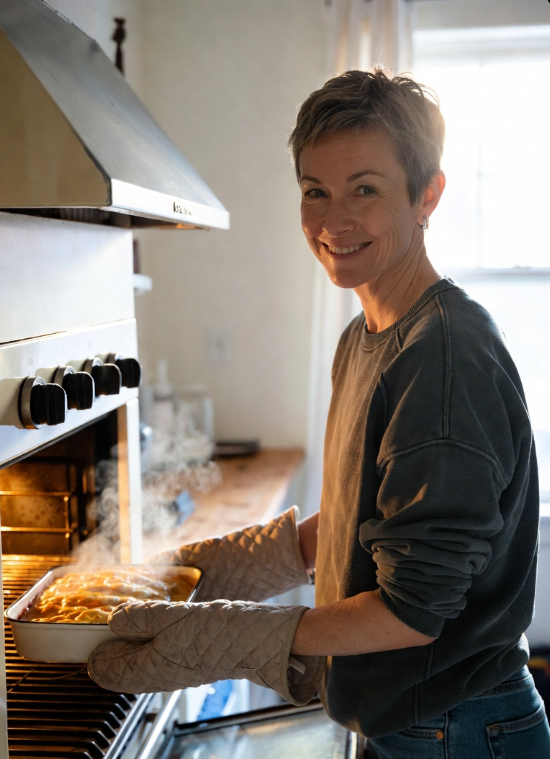
I made shepherd pie this week — the spring version, the one that fills the kitchen with the smell that means this time of year, this stage of life, this specific Tuesday when the stove is warm and the family is fed and the feeding is the point. Kevin ate seconds. The man always eats seconds. The eating is the approval and the approval is the marriage.
The garden is waking up. The garlic that overwintered is pushing green shoots through the soil, the annual proof that buried things come back. Jack's seedlings are hardening off in the greenhouse. The Marlene cherry tomato — generation 5 now — ready for transplanting. Every spring the planting is the memorial. Every spring the name goes back in the ground.
The shepherd’s pie got Kevin his seconds, and that—as any long-married woman knows—is the highest praise a kitchen can earn. But there’s another meal that holds that same quiet power in our house, the one I reach for when the garden is waking back up and the evenings still carry a little chill: a proper loaded baked potato, crisp on the outside and steaming open at the table, dressed up just enough to feel like an occasion. It’s not glamorous, but neither is a good marriage, and both of them sustain you in ways you stop noticing only when they’re gone.
Special Baked Potatoes
Prep Time: 10 minutes | Cook Time: 60 minutes | Total Time: 1 hour 10 minutes | Servings: 4
Ingredients
- 4 large russet potatoes, scrubbed clean
- 2 tablespoons olive oil
- 1 teaspoon kosher salt
- 1/2 teaspoon freshly ground black pepper
- 4 tablespoons unsalted butter, divided
- 1/2 cup sour cream
- 3/4 cup shredded sharp cheddar cheese
- 4 strips thick-cut bacon, cooked and crumbled
- 3 tablespoons fresh chives, thinly sliced
- Salt and pepper to taste for finishing
Instructions
- Preheat and prep. Heat your oven to 425°F. Line a baking sheet with foil. Pierce each potato all over with a fork — about 10–12 times per potato — so steam can escape during baking.
- Season the skins. Rub each potato all over with olive oil, then sprinkle generously with kosher salt and black pepper. Place directly on the prepared baking sheet.
- Bake until tender. Roast for 55–65 minutes, until the skins are deeply golden and crisp and a fork slides into the center without resistance. Larger potatoes may need the full 65 minutes.
- Rest briefly. Remove from the oven and let the potatoes rest for 5 minutes. This helps the interior steam finish cooking and makes them easier to handle.
- Split and fluff. Using a sharp knife, cut a lengthwise slit across the top of each potato, then make a second cut crosswise. Press the ends toward the center to open the potato and fluff the interior with a fork, breaking it up into light, fluffy chunks.
- Add butter first. Place 1 tablespoon of butter into the center of each potato while it’s still piping hot and let it melt down into the flesh. Season lightly with salt and pepper.
- Load the toppings. Top each potato with a generous dollop of sour cream, a handful of shredded cheddar, crumbled bacon, and a scatter of fresh chives. Serve immediately while the cheese melts into the heat.
Nutrition (per serving)
Calories: 420 | Protein: 12g | Fat: 22g | Carbs: 46g | Fiber: 4g | Sodium: 560mg