
 By
The pandemic school year is chaotic. Hybrid means half the week at school, half at home, and the toggling between the two is like switching between two radio stations — neither one comes in clearly, and the static between them is where the learning gets lost. Isabella manages it flawlessly because Isabella manages everything flawlessly. Sofia manages it by not trying — she is physically present at school and mentally at the bakery, and the teachers have accepted this allocation because fighting Sofia's focus is like fighting the tide. Diego thrives in the remote days because remote means independent, and independent is Diego's natural state. Camila struggles — not academically but socially, because Camila needs an audience and a mask makes the audience anonymous, and anonymous audiences are no audience at all for a girl who feeds on recognition like bread feeds on yeast.
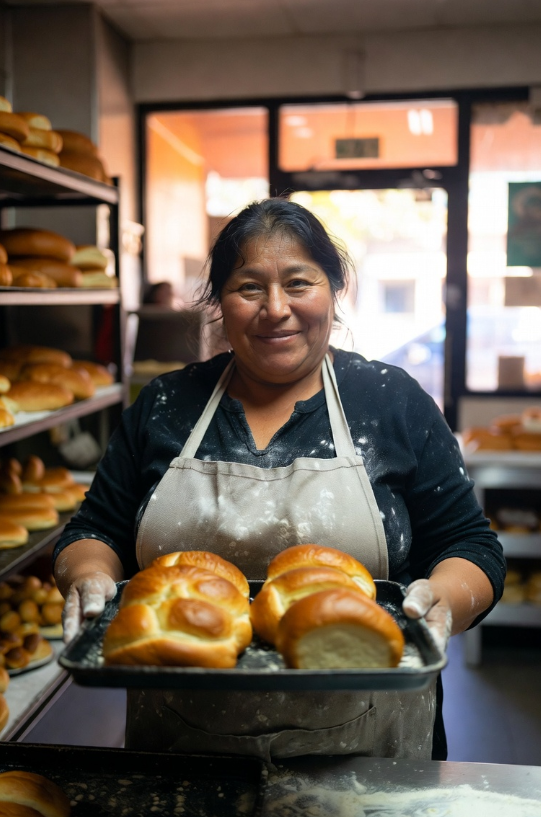
The bakery's recovery continues. July revenue: seven thousand five hundred. Better than the pandemic low (five thousand in April) but still below pre-pandemic (eight thousand in July 2019). The dining room is helping — four tables generating about twenty percent of revenue, with the rest from takeout, delivery, meal kits, and subscriptions. Sofia calls the revenue mix "diversified," which is the right word, and the diversification happened not because I planned it but because the pandemic forced it, and the forced diversification is now the strength, the same way a broken bone heals stronger than the original.
Luis Jr. came for Sunday dinner. He is back at Fort Bliss, active duty, the deployment behind him. He looks better — less thin, less tanned, the eyes less old. The recovery from deployment is happening in his body the way the bakery's recovery is happening in the revenue: slowly, unevenly, with setbacks and good weeks and the general direction being up. He eats my food with the deliberate gratitude of a man who has learned to taste each bite, and the tasting is the healing.
I made asado de puerco this week — pork loin braised in a guajillo and pasilla chile sauce, the kind of slow-cooked dish that fills the house with warmth and the particular satisfaction of a meal that took four hours and tastes like it took four days. Rosa made asado for company — for guests, for the priest, for anyone who deserved the four-hour investment. I make it on a Tuesday because Tuesdays deserve it too, because every day in a pandemic deserves the four-hour investment, because the investment is the resistance, and the resistance is the cooking, and the cooking is the thing that the virus cannot take.
I did not have four hours on Wednesday, but I had the same hunger for something with depth and smoke and the particular reward of pork cooked with intention. Spanish chorizo has that guajillo-adjacent quality—the paprika carries a warmth that reminds me of the dried chiles Rosa kept in a paper bag on the second shelf, and when it hits a hot pan the whole kitchen shifts into something that feels like effort even when it isn’t. This is the weeknight bridge between the asado I want to make and the Tuesday I actually have.
Spanish Chorizo Spaghetti Carbonara
Prep Time: 10 minutes | Cook Time: 20 minutes | Total Time: 30 minutes | Servings: 4
Ingredients
- 12 oz spaghetti
- 8 oz Spanish cured chorizo, casing removed, sliced into thin half-moons
- 4 large eggs
- 2 large egg yolks
- 1 cup finely grated Pecorino Romano, plus more for serving
- 1/2 cup finely grated Parmesan
- 4 cloves garlic, thinly sliced
- 1/2 teaspoon smoked paprika
- 1/4 teaspoon crushed red pepper flakes
- 1/2 cup dry white wine
- 1/3 cup pasta cooking water, reserved (plus more as needed)
- Freshly cracked black pepper, to taste
- Kosher salt, for pasta water
- 2 tablespoons extra-virgin olive oil
- Fresh flat-leaf parsley, chopped, for garnish
Instructions
- Make the egg mixture. In a medium bowl, whisk together the whole eggs, egg yolks, Pecorino Romano, and Parmesan until smooth and well combined. Season generously with cracked black pepper. Set aside.
- Cook the pasta. Bring a large pot of heavily salted water to a boil. Cook spaghetti according to package directions until just al dente. Before draining, reserve at least 1 cup of the starchy pasta water. Drain and set aside.
- Render the chorizo. While pasta cooks, heat olive oil in a large skillet over medium heat. Add chorizo slices in a single layer and cook, stirring occasionally, until the edges are lightly crisped and the fat has rendered, about 4—5 minutes. The oil will turn a deep burnished red from the paprika in the chorizo.
- Build the base. Add garlic, smoked paprika, and red pepper flakes to the skillet. Cook, stirring, until the garlic is softened and fragrant, about 1 minute. Pour in the white wine and let it simmer, scraping up any browned bits, until reduced by half, about 2 minutes. Remove the pan from heat.
- Combine pasta and chorizo. Add the drained spaghetti directly to the skillet and toss well to coat every strand in the chorizo fat. Let the pan cool for one full minute—this step is critical so the eggs don’t scramble.
- Add the egg sauce. Pour the egg and cheese mixture over the pasta. Working quickly with tongs, toss continuously while adding pasta water a splash at a time, until the sauce becomes glossy, silky, and clings to the noodles without pooling at the bottom. You may use between 1/4 and 1/2 cup of pasta water depending on consistency.
- Finish and serve. Taste and adjust salt and pepper. Divide among warmed bowls. Top each serving with additional grated Pecorino, a crack of black pepper, and a scatter of fresh parsley. Serve immediately.
Nutrition (per serving)
Calories: 680 | Protein: 34g | Fat: 31g | Carbs: 64g | Fiber: 3g | Sodium: 980mg