
 By
By The viral moment continues. The moose adobo post has been shared thousands of times. My inbox is a disaster of emails — recipe questions, interview requests from small food podcasts, messages from Filipino-Americans who say "this is my family" and messages from non-Filipinos who say "I never knew about Filipino food." Both kinds make me cry. Both kinds are the point.
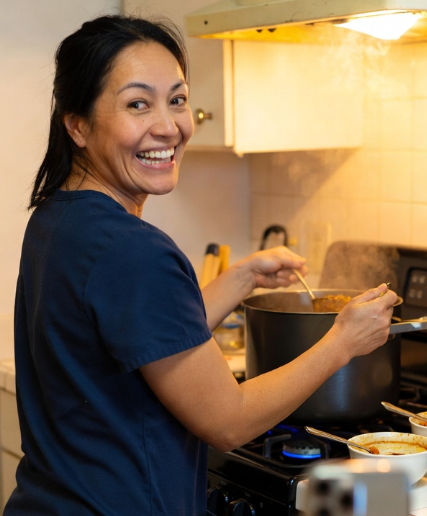
A food podcast asked to interview me. I said yes, nervously, because writing is one thing — I control the words, I edit, I revise — but talking is another, talking is unedited, talking is the raw version of the cooked version, and I'm not sure the raw version is ready for public consumption. But I did it. I called into the podcast from my kitchen (where else?) and talked for forty minutes about Filipino food in Alaska, about cooking as therapy, about the moose adobo and where it came from and what it means.
The host asked about my background. I told her: ER nurse, food writer, Filipino-American, Anchorage. She asked about the blog's origin. I told her — not the floor, not the full story, but the outline: I started writing about food during a difficult period, and the writing became a practice, and the practice became a community. She asked about my mother. I told her about Lourdes. The description of Lourdes — the vinegar insistence, the lumpia production, the garlic quantities — made the host laugh, and the laughter was warm, and I thought: my mother is funny. My mother's cooking philosophy is funny. The seriousness with which she approaches vinegar is objectively hilarious. I've been so close to it, so inside it, that I forgot to see the humor.
I made chicken adobo after the recording. The recipe that started everything. The recipe that is always the starting point, the foundation, the base layer on which everything else is built. The chicken browned. The vinegar steamed. The garlic was excessive. The adobo was right. I ate it at the table, seated, calm, the adrenaline of the podcast fading into the familiar comfort of a meal I've made hundreds of times.
Fifteen thousand readers. A podcast interview. My mother's recipes reaching kitchens I'll never see. The moose adobo doing what food does: traveling, connecting, arriving in strangers' homes and making them less strange. The kitchen is bigger now. The audience is bigger. The adobo is the same. Some things don't need to change. Some things are already right.
I came back to chicken after the podcast—not adobo this time, though adobo is always there in the back of my mind like a baseline hum. I wanted something I could throw together fast, something with heat and structure, something that wouldn’t ask too much of me while I was still unwinding from forty minutes of unedited, unrevised, raw-version-of-myself on someone else’s microphone. Southwest Chicken is that recipe for me: bold enough to feel like a reward, simple enough to let the mind settle. The garlic goes in, the spices bloom, the kitchen smells like intention again—and that’s enough.
Southwest Chicken
Prep Time: 10 minutes | Cook Time: 25 minutes | Total Time: 35 minutes | Servings: 4
Ingredients
- 4 boneless, skinless chicken breasts (about 6 oz each)
- 2 tablespoons olive oil
- 4 cloves garlic, minced
- 1 teaspoon chili powder
- 1 teaspoon ground cumin
- 1/2 teaspoon smoked paprika
- 1/2 teaspoon onion powder
- 1/4 teaspoon cayenne pepper (or to taste)
- 1/2 teaspoon kosher salt
- 1/4 teaspoon black pepper
- 1 cup salsa (chunky, jarred or fresh)
- 1/2 cup shredded Monterey Jack or cheddar cheese
- 2 tablespoons fresh cilantro, chopped (optional, for garnish)
- Lime wedges, for serving
Instructions
- Season the chicken. Pat chicken breasts dry with paper towels. In a small bowl, combine chili powder, cumin, smoked paprika, onion powder, cayenne, salt, and pepper. Rub the spice mixture evenly over both sides of each chicken breast.
- Sear the chicken. Heat olive oil in a large oven-safe skillet over medium-high heat. Add the chicken breasts and sear for 4—5 minutes per side until golden brown. The chicken does not need to be cooked through at this stage.
- Add garlic. Reduce heat to medium. Push chicken to one side of the pan and add minced garlic to the empty space. Cook, stirring the garlic, for 30—60 seconds until fragrant. Stir garlic into the pan juices around the chicken.
- Simmer with salsa. Pour salsa over and around the chicken. Reduce heat to medium-low, cover the skillet, and cook for 12—15 minutes, or until the chicken is cooked through and reaches an internal temperature of 165°F.
- Add cheese and finish. Sprinkle shredded cheese over each chicken breast. Cover the skillet for 2—3 minutes until the cheese is melted and bubbly.
- Serve. Plate the chicken with a spoonful of the pan salsa spooned over the top. Garnish with fresh cilantro and a squeeze of lime. Serve alongside rice, warm tortillas, or roasted vegetables.
Nutrition (per serving)
Calories: 320 | Protein: 42g | Fat: 13g | Carbs: 7g | Fiber: 1g | Sodium: 620mg