
 By
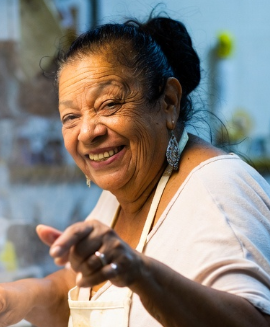
December begins and the kitchen shifts into its highest gear — the gear that only December demands, the gear where every surface is dusted with flour and every pot is in rotation and the refrigerator is a Tetris game of containers labeled with masking tape and my handwriting and dates that mean something only to me. This is pasteles season. This is the season of my grandmother, the season of banana leaves and masa and pork filling and the three-day labor of love that Abuela Consuelo performed every December and that Mami performed every December and that I perform every December because the tradition is not optional, the tradition is load-bearing, and if I stop the whole structure falls.
I called Marisol in Bayamón on Sunday. My sister, the third of us, the one who never left the island. She is fifty-seven and sounds like Mami sounded at fifty-seven, which is to say she sounds like home. We talked about Christmas plans. She is making pasteles too — of course she is, all the Delgado women are making pasteles, scattered across the mainland and the island, all of us performing the same ritual in different kitchens with the same hands and the same memory. Marisol said her masa was better than mine. I said, Marisol, your masa has not been better than mine since 1994. She said, 1994 was the last time you were in my kitchen so how would you know. She is not wrong. But I am not wrong either. This is how Delgado sisters communicate: through confident assertions about food that neither of us can verify.
At the hospital, the December menu includes holiday touches — gingerbread cookies, a cranberry orange bread that the patients love, hot cider in the afternoon. My staff decorated the cafeteria with paper snowflakes that a volunteer group made. The cafeteria looks festive in the way that hospital cafeterias can look festive, which is to say it is trying, and the trying matters, and the gingerbread cookies are real gingerbread and not the packaged kind because I do not serve packaged cookies in my cafeteria.
Eduardo put up the Christmas lights on Saturday. He does this every year with the methodical precision of an insurance adjuster assessing a claim — measuring the roofline, counting the bulbs, testing each strand before climbing the ladder. I watched from the kitchen window while making habichuelas and thought: this man has been putting up my Christmas lights for thirty-one years. Thirty-one years of climbing the same ladder, hanging the same lights, coming inside smelling like cold air and electrical tape. The repetition is the romance. The ladder is the love letter. Some people write poetry. Eduardo hangs lights.
When I’m standing at the stove watching Eduardo hang lights through the kitchen window, I need something in that pot that doesn’t need me — something that simmers on its own while my hands are free for habichuelas and my mind is somewhere between Bayamón and the pasteles I haven’t started yet. This Sopa Azteca is that pot. It is smoky and deeply savory and it speaks the same language as every December dish I grew up with, and on the nights when the masa isn’t ready and Marisol is on the phone and the cafeteria gingerbread is already boxed and done, this soup is the thing that feeds the people doing all the work.
Sopa Azteca (Tortilla Soup)
Prep Time: 15 min | Cook Time: 35 min | Total Time: 50 min | Servings: 6
Ingredients
- 2 tablespoons vegetable oil, divided
- 6 corn tortillas, cut into 1/2-inch strips
- 1 medium white onion, roughly chopped
- 4 cloves garlic, minced
- 3 dried pasilla or ancho chiles, stemmed and seeded
- 1 can (28 oz) whole fire-roasted tomatoes
- 6 cups chicken broth
- 1 teaspoon ground cumin
- 1 teaspoon dried oregano (Mexican oregano preferred)
- 1/2 teaspoon smoked paprika
- Salt and black pepper to taste
- 2 cups shredded cooked chicken (rotisserie works well)
- 1 cup canned black beans, drained and rinsed
- Juice of 1 lime
- For serving: crumbled queso fresco, sliced avocado, sour cream, fresh cilantro, lime wedges
Instructions
- Fry the tortilla strips. Heat 1 tablespoon oil in a large heavy pot or Dutch oven over medium-high heat. Working in batches, fry the tortilla strips until golden and crisp, 2–3 minutes per batch. Transfer to a paper-towel-lined plate and season lightly with salt. Set aside.
- Toast the chiles. In the same pot over medium heat, add the dried chiles and press them flat against the surface for 20–30 seconds per side until fragrant and slightly darkened. Do not burn. Transfer to a small bowl, cover with hot water, and soak for 10 minutes to soften.
- Build the base. Add the remaining tablespoon of oil to the pot. Sauté the onion over medium heat until softened and lightly golden, about 5 minutes. Add the garlic and cook 1 minute more.
- Blend the sauce. Drain the soaked chiles and add them to a blender along with the fire-roasted tomatoes and their juices. Blend until completely smooth, about 1 minute. Pour the blended sauce into the pot with the onion and garlic. It will sizzle — stir quickly and let it cook down for 4–5 minutes, stirring often, until the color deepens to a rich brick red.
- Simmer the soup. Pour in the chicken broth. Add cumin, oregano, and smoked paprika. Stir well, bring to a boil, then reduce heat and simmer uncovered for 15 minutes to let the flavors come together.
- Add protein and beans. Stir in the shredded chicken and black beans. Simmer 5 minutes more. Squeeze in the lime juice and taste for salt and pepper.
- Serve. Ladle the hot soup into bowls. Pile a handful of the fried tortilla strips into each bowl — do not add them too early or they will go soft. Top with queso fresco, avocado slices, a dollop of sour cream, and fresh cilantro. Serve with extra lime wedges on the side.
Nutrition (per serving)
Calories: 310 | Protein: 22g | Fat: 11g | Carbs: 31g | Fiber: 6g | Sodium: 720mg