The Damiano Center was busy on Thursday. It always is when the weather's turning — people who've been surviving winter in whatever shelter they could find start coming in more regularly when the cold loosens its grip, as if they've been holding their breath for five months and can finally exhale.
I've been volunteering there every Thursday for eleven years. I make wild rice soup — fifty gallons, in the big institutional pots that are so heavy when full that the younger volunteers have to help me lift them. I know the recipe by heart, obviously. I could make it in my sleep. Sometimes I think I do.
There's a man named Gerald who's been coming in for about three years. Vietnam veteran. Missing two fingers on his left hand. He always sits at the same table, always gets two bowls, always says "Thank you, Linda" as if my name is a word he's holding carefully. Last week he told me the soup reminded him of his mother's cooking, which his mother made in a kitchen in Hibbing, thirty miles north of here, before Gerald went to war and came back different and his mother died and the kitchen was sold. I didn't say anything. I ladled him a third bowl. Some conversations happen in soup.
I think about Lars when I'm at the Damiano Center. My brother Lars, who died at twenty when I was sixteen, killed by a machine at the paper mill where my father worked. Lars would be fifty-seven now. He might have been one of these men — or he might have been fine, might have married, might have had kids, might have eaten Sunday dinner at Mamma's every week. The thing about losing someone young is that you lose not just who they were but every version of who they might have been. I carry all of Lars's possible lives inside me, and none of them got to happen.
I don't talk about Lars much. The Johansson way is to carry grief the way you carry groceries — silently, stoically, in both arms, all the way from the car to the house without asking for help.
Paul drove me to the Damiano Center this week because my car needed an oil change. He sat in the parking lot and graded papers for four hours. I told him he could go home and come back. He said, "I brought a thermos." Twenty-eight years of marriage and the man still sits in a parking lot for four hours because he wants to drive me home. I don't know what I did to deserve Paul Johansson, but I'm keeping him.
I made smoked fish chowder tonight — Lake Superior whitefish from the smokehouse on Park Point, potatoes, cream, dill. It's a Duluth dish, the kind of thing you won't find anywhere else because it requires this particular fish from this particular lake, smoked in this particular way. The smokehouse has been there since 1927. I've been buying fish from them since I was a kid, when Pappa would take me on Saturdays and the man behind the counter would give me a piece of smoked trout and say "for the little one" and I'd eat it on the drive home and get my fingers oily and Pappa would pretend to be annoyed.
Pappa's been gone fifteen years. The smokehouse is still there. The fish still tastes the same. Some things hold.
Some nights you need something that holds you the way Paul held that parking lot — steady, without being asked. This chowder is that kind of food: old ingredients, old rhythms, the smell of smoked fish and dill filling the kitchen the same way it filled Pappa’s car on those Saturday drives. I’ve made it a hundred times and it never asks anything of me except that I pay attention. Here’s how.
Lake Superior Smoked Whitefish Chowder
Prep Time: 15 minutes | Cook Time: 35 minutes | Total Time: 50 minutes | Servings: 6
Ingredients
- 1 1/2 pounds smoked whitefish, skin and bones removed, flaked into chunks
- 3 tablespoons unsalted butter
- 1 medium yellow onion, diced small
- 2 stalks celery, diced small
- 3 cloves garlic, minced
- 1/4 cup all-purpose flour
- 3 cups whole milk
- 1 1/2 cups heavy cream
- 2 1/2 cups fish stock or low-sodium chicken broth
- 1 1/2 pounds Yukon Gold potatoes, peeled and cut into 1/2-inch cubes
- 2 bay leaves
- 1 teaspoon fresh thyme leaves (or 1/2 teaspoon dried)
- 3 tablespoons fresh dill, chopped, plus more for serving
- 1 teaspoon white pepper
- 1/2 teaspoon kosher salt, plus more to taste
- 1 tablespoon fresh lemon juice
- Oyster crackers or crusty rye bread, for serving
Instructions
- Sweat the aromatics. Melt the butter in a large heavy-bottomed pot or Dutch oven over medium heat. Add the onion and celery and cook, stirring occasionally, until softened and translucent, about 7 minutes. Add the garlic and cook 1 minute more until fragrant.
- Build the base. Sprinkle the flour over the vegetables and stir to coat. Cook for 2 minutes, stirring constantly, to eliminate the raw flour taste.
- Add liquid and potatoes. Slowly pour in the fish stock, whisking as you go to prevent lumps. Add the milk, heavy cream, potatoes, bay leaves, and thyme. Bring to a gentle simmer over medium heat — do not boil — stirring occasionally.
- Cook the potatoes. Simmer uncovered, adjusting heat as needed to maintain a gentle bubble, until the potatoes are completely tender when pierced with a fork, about 18 to 20 minutes.
- Add the fish. Reduce heat to low. Gently fold in the flaked smoked whitefish. Simmer 4 to 5 minutes until the fish is warmed through. Remove and discard the bay leaves.
- Season and finish. Stir in the fresh dill, white pepper, and lemon juice. Taste and adjust salt carefully — smoked fish carries salt, so add sparingly. The chowder should taste of the lake: smoky, creamy, and clean.
- Serve. Ladle into deep bowls. Top with a pinch of fresh dill and a crack of black pepper. Serve with oyster crackers or thick slices of toasted rye bread.
Nutrition (per serving)
Calories: 480 | Protein: 31g | Fat: 28g | Carbs: 29g | Fiber: 2g | Sodium: 740mg
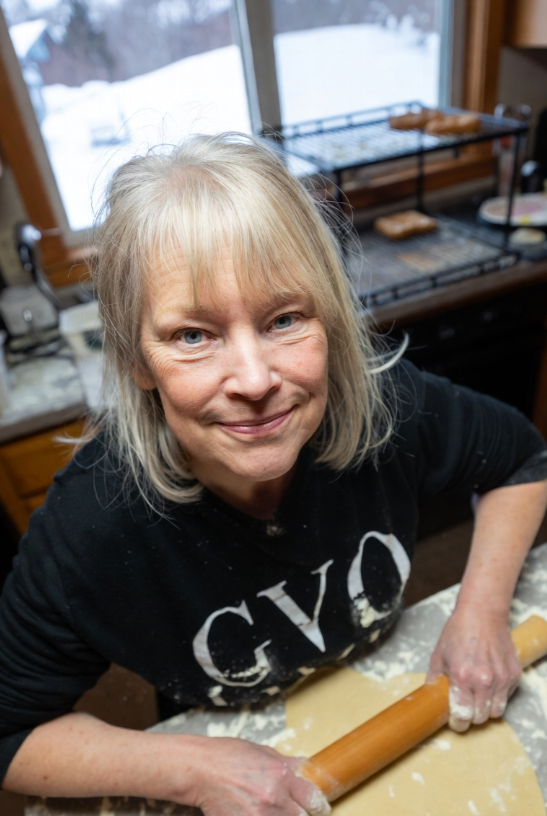
About the cook who shared this
Linda Johansson
Week 6 of Linda’s 30-year story
· Duluth, Minnesota
Linda is a sixty-three-year-old retired nurse from Duluth, Minnesota, living alone in the house where she raised her children and said goodbye to her husband. She lost Paul to ALS in 2020 after two years of watching the kindest man she'd ever known lose everything but his dignity. She cooks Scandinavian comfort food and Minnesota hotdish and the pot roast Paul loved, and she sets two places at the table out of habit because it makes her feel less alone. Every recipe she writes is a person she's loved.
