
 By
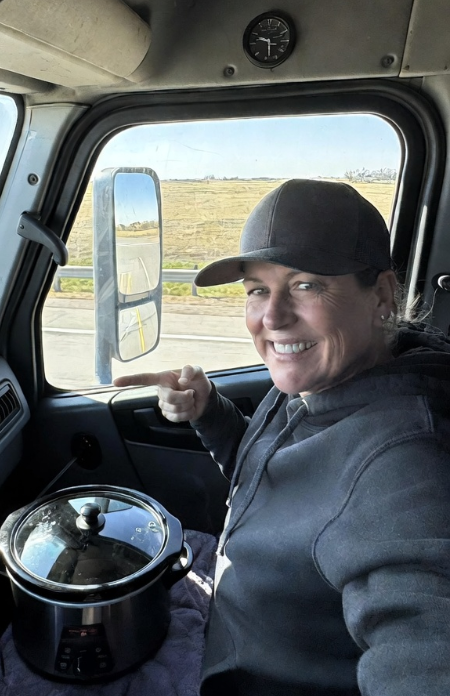
By I got home Tuesday night at 9:47 p.m. I know the exact time because Josie was still awake and she’s not supposed to be awake past nine on school nights, and when I walked in and saw the light under her door I looked at my watch and made a mental note. Not to get onto her — I’d been gone four days and the girl was six years old and probably just needed to hear the front door open. I knocked softly and she said “Mom?” in that half-asleep voice that does something to your chest you can’t really describe, and I sat on the edge of her bed for twenty minutes until she was out again. Then I went to the kitchen and stood in the dark for a while.
Dave had done a good job. The dishes were done. There was a permission slip on the counter with a sticky note that said need this signed by Thursday. Tyler had apparently broken the towel bar off the wall in the upstairs bathroom, which Dave had fixed and also told me about via text, though I hadn’t had a chance to read that one until I was pulling into the driveway. The house was in one piece. The kids were alive and in their beds. That’s the bar when I’m on the road. Everything else is bonus.
But I stood in that kitchen for a while anyway, the way you do when you’ve been living out of a truck cab for four days and suddenly you’re surrounded by your own walls and your own refrigerator hum and the permission slip your husband left you on the counter. There’s always a re-entry period. The road is its own world, with its own rhythms, and home is its own world, and sliding from one into the other takes a minute. Some nights it takes longer.
I had about an hour left in me before I was going to be completely useless, so I did the only thing that made sense: I got the chicken out of the freezer, moved it to the fridge to start thawing, and went to bed.
Wednesday is my day to decompress. I don’t have a run scheduled, Dave’s at the shop, the kids are at school. I make coffee. I call Gayle. I do laundry. I try to remember what it feels like to be a person who is not moving at seventy miles an hour. It doesn’t always take, but I try.
Gayle sounded good on the phone. She’d been over to the church for some kind of Wednesday morning thing they do — I never remember what it’s called, some women’s group — and she’d eaten a hot dish there that she described as “not too bad, though Shirley Hermanson uses cream of mushroom in everything and at some point that’s just a personality problem.” I told her I’d bring her dinner Friday. She said I didn’t need to. I said I knew that. She said she might have some leftover hot dish. I said I was bringing her dinner Friday. We do this every week. It’s not a negotiation, it’s a ritual. Neither of us would have it any other way.
I checked on Amber, too — she’s at UNK in Kearney, first semester of college, and she texts me enough that I don’t worry, but I call when I’ve been on the road because sometimes texting and calling are different things. She answered on the third ring and sounded fine. Tired but fine. She’s taking eighteen credits, which is a lot, and I’ve told her twice that it’s okay to dial it back, and she gives me the same look she gives me in person, even over the phone — you can hear it — that look that says I know, Mom, you don’t have to tell me. She’s twenty. She knows. But I tell her anyway.
Justin had football practice after school. Tyler had to be picked up from a friend’s house at five. Josie had something for art class she needed help with. By three in the afternoon I had a full schedule and a chicken that had thawed overnight and was sitting in the fridge waiting on me.
That’s when I put it in the slow cooker.
I’ve been making slow cooker whole chicken for years, but it took me a while to figure out the trick, which is that the chicken needs to be elevated off the bottom of the pot. Otherwise it braises in its own liquid and the skin goes soft and gray and sad, and sad chicken skin is a tragedy I am not willing to accept in my own kitchen. The fix is simple: you make a little bed out of foil balls, or you use a few thick slices of onion, and you set the bird on top. The heat circulates underneath. The skin doesn’t suffer. It’s one of those solutions that feels obvious once someone tells you, and you think, why did I not figure this out myself.
I seasoned it the way I always season it — butter under the skin, salt and pepper everywhere, garlic powder, onion powder, a little smoked paprika for color and depth. Tied the legs. Put it on high. Set the timer and went to get Tyler.
Four hours later, I lifted the lid and the kitchen smelled like something Gayle would have made on a Sunday, and Dave was standing in the doorway from the garage still holding a socket wrench, and Josie was next to him, and both of them were looking at me with the expression that means that smells good and when is it ready.
That is the expression I cook for. I have been away four days. I am tired. My back hurts from the seat. The road was long and flat and I have driven approximately the distance from here to the moon and back over the course of my career, and none of that matters when someone looks at you like that. Like they’re glad you’re home. Like the house smells right again.
I let it rest for ten minutes, carved it at the table, and we ate it with mashed potatoes and green beans from a can, because I had been on the road for four days and there are limits to what I will do on a Wednesday. Nobody complained about the canned beans. Nobody was going to.
Justin ate three portions. Tyler ate two. Dave looked at me over the table with that look he gets when something is exactly right, and he didn’t say anything because Dave never says anything, he just looks at you and that’s the whole sentence.
Josie asked if we could have it every week.
I told her probably not every week, but a lot of weeks. That seemed fair to both of us.
The leftover carcass went into a pot with water and onion and a couple of celery stalks before I went to bed, because I’m not wasting a bone that has that much left in it. By morning I had stock. That stock is going to be soup by the weekend. Nothing from a five-pound bird is going in the trash if I can help it.
Dave asked me how the run was, later, when the kids were in their rooms and we were in the kitchen doing the last of the cleanup. I told him it was fine — the roads were good, the loads came in on time, no weather to speak of. He nodded. He knows the difference between a fine run and a hard run, and this one was fine. Not every trip is a story. Some trips are just miles.
He asked if I was tired. I said yes. He said he figured. We finished the dishes in the comfortable quiet of two people who have been married long enough to know when talking is necessary and when it isn’t.
I was home. The chicken was good. The kids were fed. Gayle was doing her Wednesday church thing with the cream-of-mushroom women. Amber was in Kearney with eighteen credits and her whole life ahead of her. Justin made it through practice without getting hurt, which at seventeen playing linebacker is a genuine accomplishment.
Some weeks are just that. You get home, you put on the chicken, you sit down together. It’s not dramatic. It’s not remarkable. It’s a Wednesday in October in Nebraska and everyone is where they’re supposed to be, and if you’ve ever had a Wednesday where that wasn’t true — and I have — you know what that’s worth.
Here’s the chicken.
A slow cooker whole chicken is exactly the right Wednesday meal — you set it before you leave in the morning, and by the time you’re walking through the door tired and grateful and just wanting everyone to be where they’re supposed to be, the work is already done. That’s the whole point. Here’s how I make it.
Slow Cooker Whole Chicken — Five Minutes of Work, Four Hours of Patience, and a Bird That Falls Off the Bone
Prep Time: 10 minutes | Cook Time: 4 hours | Total Time: 4 hours 10 minutes | Servings: 6Ingredients
- 1 whole chicken, 4–5 pounds, giblets removed
- 2 tablespoons butter, softened
- 1 teaspoon salt
- 1/2 teaspoon black pepper
- 1 teaspoon garlic powder
- 1 teaspoon onion powder
- 1/2 teaspoon smoked paprika
- 1/2 teaspoon dried thyme (optional but good)
- 1 large onion, cut into thick slices (for the base)
- 4 garlic cloves, smashed
Instructions
- Make your base. Lay the thick onion slices in a single layer on the bottom of your slow cooker. Scatter the smashed garlic cloves on top. This lifts the chicken off the bottom so the heat can circulate and the skin doesn’t sit in liquid and go gray. If you don’t have an onion, crumple three or four balls of aluminum foil and use those instead. Either works.
- Season the bird. Pat the chicken dry with paper towels — this matters, wet skin steams instead of crisps. Mix the salt, pepper, garlic powder, onion powder, smoked paprika, and thyme together in a small bowl. Rub the softened butter under the skin of the breast, working your fingers in carefully so the skin doesn’t tear. Then rub the spice mixture all over the outside of the chicken, including under the skin if you can get it there.
- Tie it up. Tuck the wing tips behind the back of the bird and tie the legs together with kitchen twine. This isn’t mandatory but it helps the bird hold its shape and cook more evenly. If you don’t have twine, don’t worry about it.
- Set it in the pot. Place the seasoned chicken breast-side up on top of the onion base. Do not add water or broth — the chicken will make its own liquid as it cooks. Put the lid on.
- Cook on high for 4 hours or low for 6–7 hours. The chicken is done when the leg pulls away from the body easily and the juices run clear. If you have an instant-read thermometer, you want 165°F in the thickest part of the thigh, not touching the bone.
- Rest it before you carve. Lift the chicken out carefully — it will be very tender and wants to fall apart on you. Let it rest on a cutting board for 10 minutes before carving. This is not the time to be impatient. The resting is what keeps the juice in the meat instead of on your cutting board.
- Don’t throw away the liquid. You’ll have a cup or two of flavorful cooking liquid in the bottom of the pot. Pour it through a strainer and save it. Use it to make gravy, add it to mashed potatoes, or refrigerate it for soup stock later in the week. It’s too good to pour down the drain.
- Make stock from the carcass. When dinner is done and the meat is gone, put the carcass in a pot with enough cold water to cover it, a halved onion, a couple celery stalks, a carrot if you have one, a bay leaf, salt and pepper. Simmer for two hours. Strain it. Refrigerate or freeze. That’s chicken stock, and it cost you nothing because you already bought the chicken.
Nutrition (per serving)
Calories: 310 | Protein: 38g | Fat: 16g | Carbs: 2g | Fiber: 0g | Sodium: 480mg