
 By
By Five hours of daylight. I timed it — sunrise at 9:23 AM, sunset at 4:18 PM. Five hours and fifty-five minutes of light, and the light itself is thin, angled, apologetic, as if the sun knows it's not doing enough but can't be bothered to try harder. This is mid-November in Anchorage. This is the slide into winter that every Alaskan knows and nobody fully prepares for, because you can't prepare for the feeling of driving home from work at 5 PM in absolute darkness and knowing it will be darker tomorrow, and darker the day after, and darker still until the solstice in December resets the clock.
The light box is my morning companion now. Thirty minutes with fake sunlight while I eat breakfast and drink coffee and pretend my body isn't confused about why dawn is an artificial rectangle on my kitchen table. Dr. Reeves says it helps with melatonin regulation. I say it helps with the feeling of being swallowed. Both are true.
I've been cooking heavier food — the body knows what it needs in the dark, and what it needs is fat and warmth and the kind of dishes that take hours and heat the apartment as a side effect. This week I made beef mechado — Filipino beef stew braised in tomato sauce with potatoes, soy sauce, and lemon. It's comfort food in the truest sense: food designed to comfort, to warm, to fill the spaces that the darkness empties.
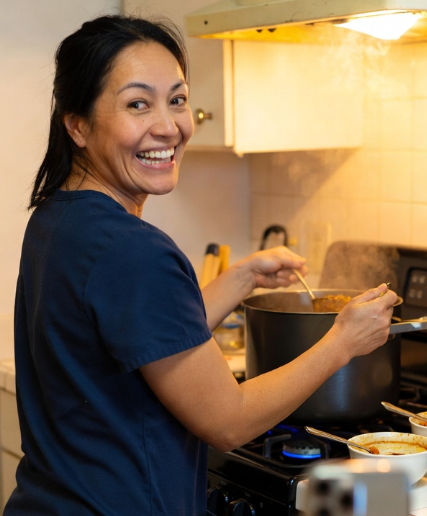
The beef simmered for three hours on low heat. The apartment fogged with steam and the windows dripped with condensation and the kitchen felt like a small, warm country inside a cold, dark one, which is what every Filipino kitchen in Alaska is — a warm country. A portable Philippines. A place where the temperature is always right and the garlic is always frying and the darkness outside is just weather, not a metaphor.
I packed portions for the week — Monday through Friday, lunch at the hospital, mechado reheated in the break room microwave. My colleagues have started requesting specific dishes. "Santos, when's the adobo coming back?" "Santos, can you make that soup again — the sour one?" The ER has adopted my cooking the way the ER adopts everything — hungrily, gratefully, with the desperate appreciation of people who survive on vending machine food and need, occasionally, to be reminded that meals can be acts of kindness.
I like feeding them. I like it more than I expected. The feeding feels like nursing in reverse — instead of taking care of the sick, I'm taking care of the caregivers. Instead of holding hands, I'm filling stomachs. The love is the same. The vessel is different. Mechado instead of morphine. Garlic instead of gauze.
The mechado that got my colleagues hooked — the one they keep asking me to bring back — isn’t a complicated recipe, but it’s one that rewards patience, which felt right for a season when patience was the only thing I had in abundance. I wanted something that could cook while I slept, that would fill the apartment with that smell of garlic and tomato so that waking up felt like an arrival. This slow cooker version takes everything I love about the original — the tender beef, the thick savory sauce — and lets time do the heavy lifting.
Slow Cooker Swiss Steak (Beef Mechado-Style)
Prep Time: 20 minutes | Cook Time: 7 hours | Total Time: 7 hours 20 minutes | Servings: 6
Ingredients
- 2 lbs beef chuck or bottom round, cut into 2-inch cubes
- 3 tablespoons vegetable oil, divided
- 1 teaspoon kosher salt
- 1/2 teaspoon ground black pepper
- 3 tablespoons all-purpose flour
- 1 medium yellow onion, sliced
- 6 cloves garlic, minced
- 1 can (14.5 oz) crushed tomatoes
- 1/2 cup beef broth
- 3 tablespoons soy sauce
- 2 tablespoons fresh lemon juice (about 1 lemon)
- 1 tablespoon tomato paste
- 1 teaspoon sugar
- 2 medium Yukon Gold potatoes, peeled and cut into 1-inch chunks
- 1 large carrot, sliced into 1/2-inch rounds
- 1 bay leaf
- Cooked white rice, for serving
Instructions
- Season and dredge the beef. Pat the beef cubes dry with paper towels. Season all over with salt and pepper, then toss lightly in flour, shaking off any excess.
- Sear in batches. Heat 2 tablespoons oil in a heavy skillet over medium-high heat. Working in batches, sear the beef on all sides until deeply browned, about 2–3 minutes per side. Transfer seared pieces to the slow cooker insert.
- Sauté aromatics. Reduce heat to medium. Add the remaining 1 tablespoon oil to the skillet. Cook the sliced onion for 3 minutes until softened, then add the garlic and cook 1 minute more until fragrant.
- Build the braising liquid. Stir in the tomato paste and cook for 1 minute. Add the crushed tomatoes, beef broth, soy sauce, lemon juice, and sugar. Scrape up any browned bits from the bottom of the pan and bring the mixture to a brief simmer.
- Load the slow cooker. Pour the tomato mixture over the beef. Nestle the potato chunks, carrot rounds, and bay leaf into the liquid. The vegetables should be mostly submerged.
- Cook low and slow. Cover and cook on LOW for 7 hours (or HIGH for 4 hours), until the beef is fork-tender and the potatoes are fully cooked through. Discard the bay leaf.
- Adjust and serve. Taste the sauce and adjust salt, lemon juice, or soy sauce as needed. Serve over steamed white rice. The stew keeps refrigerated for up to 5 days and reheats beautifully.
Nutrition (per serving)
Calories: 410 | Protein: 34g | Fat: 16g | Carbs: 28g | Fiber: 3g | Sodium: 780mg