
 By
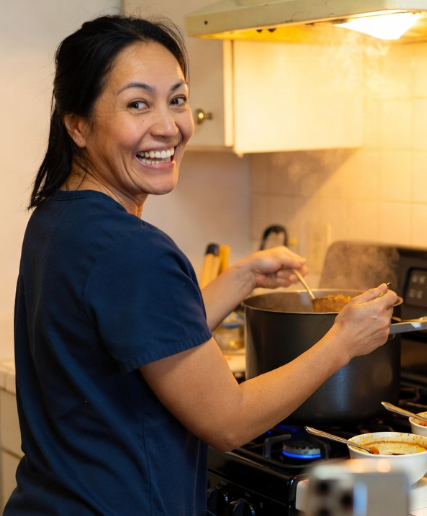
I wrote a blog post that I'm nervous about. "The Kitchen Floor: What Happened Before I Started Cooking." It's the story. The whole story — the breakdown, the floor, the three hours, Angela finding me, the PTSD diagnosis, the therapy, the medication, the cooking that brought me back. I've been writing around it for two years. I've been hinting, alluding, gesturing toward the truth without touching it. This post touches it. This post sits on the floor with me and describes the cold linoleum and the inability to stand and the way the ceiling looked from down there and the way Angela's voice sounded from the doorway.
I published it on a Thursday. I closed the laptop. I made adobo. I waited.
The response was — I don't have the word. Overwhelming is close but too clean. The response was a flood. Comments. Emails. Messages. People saying: "Me too." People saying: "I've been on that floor." People saying: "I'm on that floor right now." Nurses, paramedics, doctors, social workers, teachers, parents — people whose jobs require them to hold everyone else, and who one day discovered that the holding had emptied them completely, and who ended up on their own versions of the floor.
I read every email. Every one. Some I answered. Some I couldn't answer because the words wouldn't come, because the response to "I'm on the floor right now" is not words but presence, and I can't be present through a screen. But I tried. I sent recipes. I sent the therapy helpline. I sent the sentence Dr. Reeves gave me that I've carried for three years: "The floor saved your life. You stopped."
Angela read the post. She called me. She was crying. "You wrote about it," she said. I said, "I had to." She said, "I know." We were quiet on the phone for a long time, the kind of quiet that only sisters who share a floor can hold. Then she said, "The cooking saved you." I said, "The cooking and you." She said, "That's the same thing." It is. The cooking and the sister. The garlic and the hands that drove me to therapy. The vinegar and the voice that said, "Get up." The same thing. Always the same thing.
Adobo was the dish I made that Thursday, and it’s the dish I still reach for when I need to feel like the floor is behind me and not beneath me — the vinegar, the garlic, the low slow heat that asks nothing of you except that you wait. This Slow-Cooked Chicken Marbella isn’t adobo, but it speaks the same language: tangy brine, tender meat, time doing the work you can’t do yourself. When you’ve spent three hours on the kitchen floor, there’s something sacred about a pot that just keeps going — that doesn’t need you to stand over it, doesn’t need you to hold it together. You just start it, and it finishes itself, and by the time it’s done, you usually are too.
Slow-Cooked Chicken Marbella
Prep Time: 20 minutes | Cook Time: 6 hours (low) | Total Time: 6 hours 20 minutes | Servings: 6
Ingredients
- 3 lbs bone-in, skin-on chicken thighs and drumsticks
- 1/2 cup pitted green olives, halved
- 1/2 cup pitted prunes (dried plums), roughly chopped
- 3 tablespoons capers, drained
- 6 cloves garlic, minced
- 1/4 cup red wine vinegar
- 1/4 cup dry white wine
- 2 tablespoons olive oil
- 2 tablespoons brown sugar
- 1 teaspoon dried oregano
- 2 bay leaves
- 3/4 teaspoon kosher salt
- 1/2 teaspoon black pepper
- 2 tablespoons fresh flat-leaf parsley, chopped (for serving)
Instructions
- Make the marinade. In a large bowl or zip-top bag, combine garlic, red wine vinegar, white wine, olive oil, brown sugar, oregano, salt, and pepper. Add the chicken pieces and toss well to coat. If time allows, refrigerate and marinate for at least 1 hour or overnight — this deepens the flavor considerably.
- Layer the slow cooker. Scatter the olives, prunes, and capers across the bottom of a 6-quart slow cooker. Arrange the marinated chicken pieces on top in a single layer as best you can, then pour all of the marinade over everything. Nestle in the bay leaves.
- Cook low and slow. Cover and cook on LOW for 5 to 6 hours, until the chicken is very tender and pulls easily from the bone. Resist lifting the lid before the 5-hour mark — the steam is doing its work.
- Rest and skim. Once done, use a spoon to skim any excess fat from the surface of the braising liquid. Taste and adjust salt if needed. Discard the bay leaves.
- Serve. Transfer chicken to a serving platter and spoon the olives, prunes, capers, and braising juices generously over the top. Scatter fresh parsley over everything. Serve over white rice, egg noodles, or crusty bread to soak up the brine.
Nutrition (per serving)
Calories: 390 | Protein: 34g | Fat: 21g | Carbs: 14g | Fiber: 1g | Sodium: 620mg