Peter called on Thursday night. Ten-thirty PM. He was not drunk this time — or if he was, he was holding it together — but his voice had the cracked quality of a man who has been carrying something heavy and has just put it down.
"Things aren't good, Mom." That's what he said. Not "things aren't good with work" or "things aren't good with the house." Just: things aren't good. And in the space where details should have been, there was a silence that told me everything.
I listened. I didn't fill the silence because I've been a nurse for thirty-two years and I know that silence is where people find the courage to say what they need to say. Peter found it. "She's — we're not — it's been bad for a while, Mom." His wife. His marriage. The thing I've been sensing in his flat voice and late-night calls and one-word texts for a year.
I said, "I'm sorry, honey." I didn't say "I knew" or "I could tell" or "I never liked her" because the first two are unhelpful and the third is unkind, even if it's partially true. I said, "What do you need?" He said, "I don't know." I said, "That's okay. You don't have to know yet."
We talked for forty minutes. The longest call we've had in two years. He didn't give details and I didn't ask for them because the details aren't the point — the point is that he called, that he told me, that the door opened wider than four minutes and stayed open. He said, "Don't tell Anna or Elsa." I said, "I won't." I will keep his confidence the way I keep Mamma's recipes — carefully, completely, without shortcuts.
I didn't sleep well. I lay in bed next to Paul — Paul who is sleeping, Paul whose hand is clumsy, Paul who has a neurology appointment in December — and I thought about Peter alone in Chicago and I thought about the Johansson men and how they carry pain. Pappa carried it in silence and whiskey. Lars didn't get to carry it at all. Erik carries it in his hands, in the work, in the woodworking shop where he goes when the world is too much. Peter — what does Peter carry it in? I don't know. That's what frightens me.
I made comfort food the next day — for myself, not for Peter, because Peter is in Chicago and I can't feed him from here, which is the most frustrating limitation of motherhood: distance. I made Mamma's yellow pea soup, thick and golden, and I ate it at the kitchen table at noon and I called Peter and he didn't answer and I left a voicemail that said, "I love you. Call when you can." The same words. Always the same words. The line stays open.
Paul noticed I was quiet. He said, "Everything okay?" I said, "Peter called." Paul waited. I said, "Things are difficult in Chicago." Paul nodded. He didn't ask for more because Paul understands the economy of information in this family — you give what's offered, you don't demand what's held back. He said, "He'll be okay, Linda." I said, "I know." Neither of us was sure.
I couldn’t send Peter a bowl of Mamma’s yellow pea soup from here — that’s the cruelty of distance — but I could feed myself, and sometimes that’s what you do when your hands need something to do and your heart is in Chicago. This simple orzo pilaf is what I made the second day, when the pea soup was gone and the quiet in the house was still too loud: warm, golden, uncomplicated, the kind of food that doesn’t ask anything of you. I ate it at the same kitchen table, and I left the same voicemail, and I let it be enough for that afternoon.
Simple Orzo Pilaf
Prep Time: 10 min | Cook Time: 20 min | Total Time: 30 min | Servings: 4
Ingredients
- 1 1/2 cups orzo pasta
- 2 tablespoons unsalted butter
- 1 small yellow onion, finely diced
- 2 cloves garlic, minced
- 2 1/4 cups low-sodium chicken or vegetable broth
- 1/4 cup dry white wine (optional; substitute more broth)
- 1/2 teaspoon fine sea salt, plus more to taste
- 1/4 teaspoon black pepper
- 1/4 teaspoon dried thyme
- 2 tablespoons fresh flat-leaf parsley, chopped
- 2 tablespoons grated Parmesan (optional)
Instructions
- Toast the orzo. Melt butter in a medium saucepan or deep skillet over medium heat. Add the orzo and stir frequently for 2–3 minutes until the pasta turns lightly golden and smells nutty. Keep the heat moderate — you want color, not burning.
- Soften the aromatics. Add the diced onion to the pan and cook with the orzo, stirring, for another 3–4 minutes until the onion softens and turns translucent. Add the garlic and thyme and cook 1 minute more.
- Deglaze and add liquid. Pour in the white wine if using and stir, letting it absorb for about 30 seconds. Add the broth, salt, and pepper. Stir to combine and bring to a gentle boil.
- Simmer until absorbed. Reduce heat to low, cover, and cook for 12–15 minutes, stirring once halfway through, until the orzo is tender and most of the liquid is absorbed. The texture should be creamy, like a loose risotto — not dry.
- Rest and finish. Remove from heat and let sit, covered, for 3 minutes. Fluff gently with a fork. Stir in the chopped parsley and Parmesan if using. Taste and adjust salt. Serve warm, in a deep bowl.
Nutrition (per serving)
Calories: 310 | Protein: 9g | Fat: 8g | Carbs: 48g | Fiber: 2g | Sodium: 390mg
About the cook who shared this
Linda Johansson
Week 79 of Linda’s 30-year story
· Duluth, Minnesota
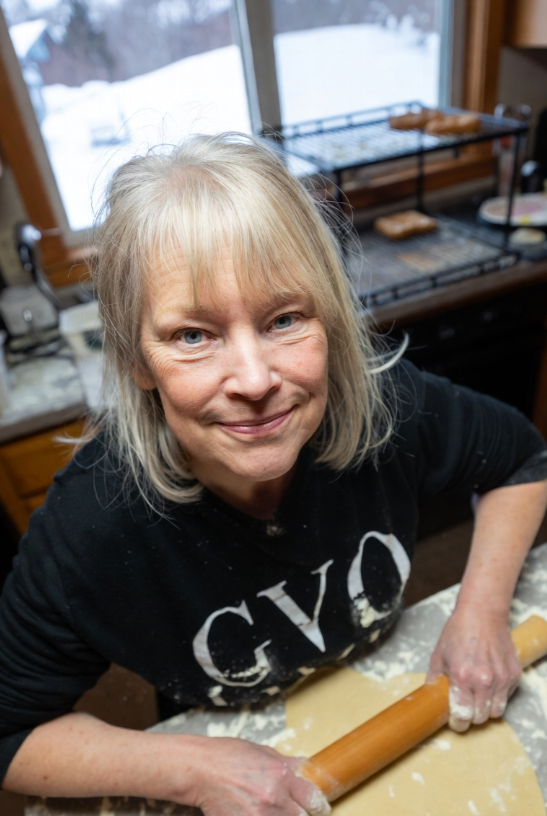
Linda is a sixty-three-year-old retired nurse from Duluth, Minnesota, living alone in the house where she raised her children and said goodbye to her husband. She lost Paul to ALS in 2020 after two years of watching the kindest man she'd ever known lose everything but his dignity. She cooks Scandinavian comfort food and Minnesota hotdish and the pot roast Paul loved, and she sets two places at the table out of habit because it makes her feel less alone. Every recipe she writes is a person she's loved.
