
 By
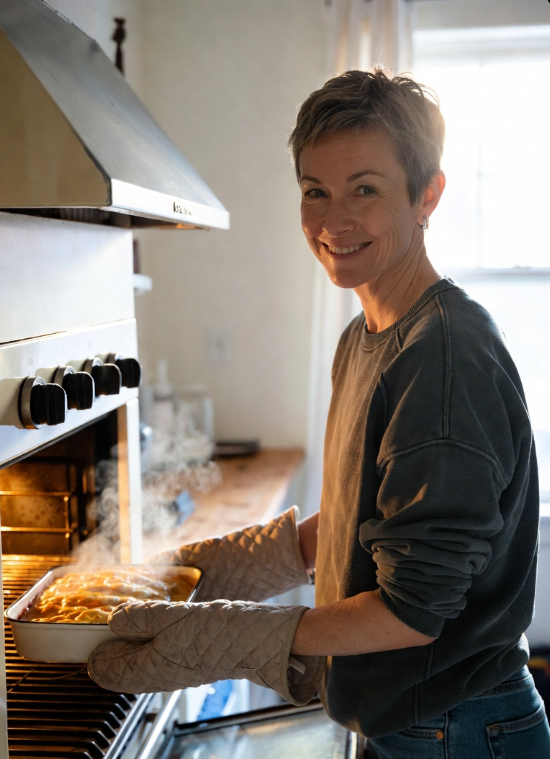
By February. The month that exists to remind you that March exists, that spring exists, that the world was green once and will be green again, but not yet, not for six more weeks, so eat your soup and wait. I have become an expert at waiting. I waited for the farm to sell. I waited for the kitchen to feel like mine. I waited for Dad's heart to heal. I am now waiting for Phyllis to — I don't know what I'm waiting for with Phyllis. For it to end? For it to get better? Neither is something you wish for. You just wait. You make soup. You wait.
I taught Jack to make scrambled eggs this week. His first cooking lesson that doesn't involve the garden. He stood on the step stool at the stove — he's tall for almost-eight but not stove-tall — and cracked the eggs into the pan with the same precision he brings to planting seeds. Low heat, butter, stir slowly. The eggs came out perfect. Soft curds, slightly creamy. He plated them with the seriousness of a chef presenting a tasting menu, set the plate in front of Kevin, and said, "I grew the chives." The eggs had garden chives from the frozen supply. He grew the garnish. Of course he did. The boy cannot cook without also growing something.
Valentine's Day is next week. Kevin and I will do what we always do: I'll cook, he'll do the dishes, we'll call it love. But this year I'm making something different — homemade pasta with a cream sauce and shrimp. The cream sauce is not Iowa. The shrimp is definitely not Iowa. But I'm in a mood to cook something that feels like an occasion, something that says "I appreciate you" in a language that isn't hotdish, because Kevin has been carrying his mother's illness in his shoulders for months and the man deserves shrimp.
I made a pot of minestrone and drove it to Dale in Newton on Saturday. He answered the door in slippers and a sweater that Phyllis knitted him in 2005. The sweater is unraveling at the cuffs. He hasn't mended it. He won't mend it. It's Phyllis's sweater and he'll wear it until it falls apart because that's what love looks like at seventy-two — you wear the unraveling sweater and you eat the soup the neighbor's daughter brings and you go to the facility every day and you introduce yourself to your wife and she says, "That's nice," and you drive home.
I ended up swapping shrimp for salmon — it’s what the store had, and honestly, it felt right. The principle is the same: creamy, a little indulgent, unmistakably not Iowa in February. Kevin has been quiet in that way he gets when worry lives in his body instead of his words, and this dish is my answer to that quiet — something warm and silky and made entirely because I wanted him to sit down at the table and feel, for thirty minutes, like someone had thought about him first.
Seared Salmon and Creamy Orzo Pasta
Prep Time: 10 min | Cook Time: 25 min | Total Time: 35 min | Servings: 2
Ingredients
- 2 salmon fillets (6 oz each), skin-on, patted dry
- 1 cup orzo pasta, uncooked
- 2 tablespoons olive oil, divided
- 1 tablespoon unsalted butter
- 3 cloves garlic, minced
- 1/2 cup dry white wine (or chicken broth)
- 1 cup chicken broth
- 3/4 cup heavy cream
- 1/2 cup freshly grated Parmesan cheese
- 1 cup baby spinach, loosely packed
- 1 teaspoon lemon zest
- 1 tablespoon fresh lemon juice
- 1/2 teaspoon crushed red pepper flakes (optional)
- Salt and freshly ground black pepper, to taste
- Fresh parsley or chives, chopped, for garnish
Instructions
- Season the salmon. Pat the salmon fillets completely dry with paper towels. Season both sides generously with salt and pepper. Dry fillets are key — they’ll sear instead of steam.
- Sear the salmon. Heat 1 tablespoon of olive oil in a large skillet over medium-high heat until shimmering. Place the salmon skin-side down and press gently for the first 10 seconds to prevent curling. Sear undisturbed for 4–5 minutes until the skin is golden and crisp. Flip and cook 2–3 minutes more for medium. Transfer to a plate and tent loosely with foil.
- Build the base. Reduce heat to medium. Add the remaining tablespoon of olive oil and the butter to the same skillet. Once the butter melts, add the garlic and red pepper flakes. Cook, stirring frequently, for about 1 minute until fragrant — don’t let it brown.
- Toast and deglaze. Add the dry orzo to the skillet and stir to coat in the garlic butter. Cook for 1–2 minutes, stirring, until the orzo smells slightly nutty. Pour in the white wine and scrape up any browned bits from the bottom of the pan. Let the wine reduce by half, about 1 minute.
- Cook the orzo. Add the chicken broth and bring to a gentle simmer. Cook uncovered, stirring every minute or two, for 10–12 minutes until the orzo is al dente and most of the liquid has been absorbed. Add a splash more broth if needed.
- Make it creamy. Reduce heat to low. Pour in the heavy cream and stir to combine. Add the Parmesan, lemon zest, and lemon juice. Stir until the cheese is fully melted and the sauce is silky. Fold in the baby spinach and let it wilt, about 1 minute. Taste and adjust salt and pepper.
- Plate and finish. Spoon the creamy orzo into shallow bowls or onto plates. Nestle a salmon fillet on top of each serving, skin-side up to keep it crisp. Garnish with fresh parsley or chives and a thin lemon slice if you have one. Serve immediately.
Nutrition (per serving)
Calories: 780 | Protein: 52g | Fat: 38g | Carbs: 48g | Fiber: 2g | Sodium: 620mg