
 By
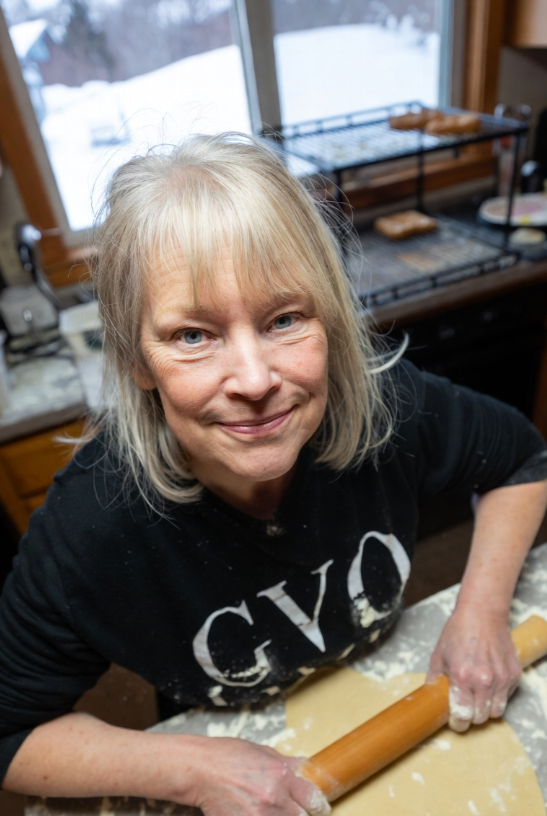
By The wind off Lake Superior tonight is the kind that finds the gaps in your coat no matter how well you’ve buttoned it. Twelve degrees. March in Duluth, which means winter is still fully in charge and spring is more of a rumor than a promise. From where I’m sitting at the kitchen table, I can hear the windows in the old part of the house ticking against the cold, and somewhere in the living room, my husband Paul is reading about men who drowned in this lake a hundred years ago, which is a perfectly normal evening in our house.
I should introduce myself. I’m Linda Johansson. I’m fifty-three years old, I’ve lived in Duluth my entire life, and I have been a registered nurse at St. Mary’s Medical Center for thirty-one years. I work in the oncology unit, which is hard in the ways you’d imagine and meaningful in the ways you might not, and I’ve learned that those two things—hard and meaningful—are almost always the same thing.
Paul teaches American history at East High School. He has a particular fixation on Lake Superior shipwreck history that I find endearing in the way you find endearing the things about your husband that would be alarming in a stranger. He reads passages aloud to me sometimes. “Linda, listen to this—nine men froze to death on the stern of the Mataafa while the entire city of Duluth watched from shore.” He says this the way other men might say “the Twins won” or “it’s supposed to snow.” Factual. Fascinated. A little bit reverent. We’ve been married twenty-eight years and I still think he’s the wisest person I know.
At my feet is Sven, our golden retriever, named after my paternal grandfather or possibly after the concept of being Swedish in general. He’s ten years old and gray around the muzzle and he follows me from room to room with a devotion I have done nothing to earn and everything to appreciate. He’s snoring right now, one paw on my foot. Paul picked him from a breeder in Two Harbors when Sven was eight weeks old and I said we didn’t need a dog and then I held the puppy and the argument was over. Some arguments are like that.
I’m writing about food because food is what I know, besides nursing. My mother, Ingrid—she died in 2013, and I still reach for the phone to call her sometimes, which is its own kind of grief—taught me to cook the way her mother taught her. You stood in the kitchen. You watched. You handed things over when asked. You stirred. You failed. You tried again. There were no recipes written down in our house. There was just Mamma, and her hands, and the particular way she held a wooden spoon like it was an extension of herself.
Ingrid was a Swedish-American woman from Duluth, which means she cooked the way Swedish-American women in Duluth cook: with heavy cream, with butter that would give a cardiologist nightmares, with flavors that are subtle and deep and built over time. Her köttbullar—Swedish meatballs—with cream gravy is the dish I have been trying to replicate for forty years and have not yet gotten entirely right. I think the secret may have died with her. I keep trying anyway.
But tonight—twelve degrees, the wind doing what it does, Paul in the next room communing with the dead—what I made was scalloped ham and potato casserole. This is not a Swedish recipe. This is squarely in the Minnesota comfort food tradition, the kind of dish that appears at church potlucks and school fundraisers and in the kitchens of anyone who has ever lived through a winter north of the 45th parallel and needed to be warm from the inside out. I have been making it since my children were small. I make it now for two, sometimes just for one when the kids are busy and Paul has papers to grade, and it is just as good at a half-full table as it ever was at a full one.
Potatoes are in my blood. This is not metaphor. The Johansson family—Swedish immigrants who came to Duluth in the late 1800s, settled along Lake Superior, went to work in the paper mills and the ore docks—ate potatoes at nearly every meal. My father Gunnar grew them in the backyard garden every summer. My mother made them seventeen different ways. Boiled with dill. Roasted with butter. Mashed until they were silk. And, on Sundays especially, sliced thin and layered in cream in a baking dish and set in the oven until the house smelled like something sacred and your stomach said thank you before the dish was even on the table.
That smell—cream and potato and something browning at the edges—is the smell of Sundays. Every Sunday of my childhood that was good, which was most of them: my father home from church without complaining about the sermon, my mother in the kitchen, the five of us kids underfoot and loud. My brothers Erik and Lars, my sisters Karin and Astrid. Five children in a small house on the West End, which sounds impossible now but which we didn’t notice because we didn’t know anything different.
Lars died when I was sixteen. He was twenty, working at the paper mill with my father. There was an accident. I won’t say more than that, because some things don’t get easier in the retelling. But I’ll say this: the night after his funeral, my mother made köttbullar, and we all sat around the table and ate without speaking, and the simple bodily fact of eating together was the only thing that made it possible to be in the world that day. I have never forgotten that. I cook because of that, I think. Because of what food does when words won’t come.
My mother wouldn’t have put ham in a potato casserole—she’d have done Jansson’s temptation, the proper Swedish version with anchovies and onions, which sounds alarming and tastes like a revelation. But this is the casserole I’ve been making for thirty years: diced ham, Yukon Gold potatoes sliced thin, a cream sauce built from butter and flour and a little dry mustard, sharp cheddar over the top. You cover it and let it go slow in the oven, and then you pull back the foil and let it finish until the cheese is brown and the potato edges are just starting to crisp and the whole house smells like every good Sunday you can remember.
Paul had two helpings. “Your mother’s recipe?” he asked, the way he always asks, and the answer as always is: sort of. It’s my recipe now, which means it started as my mother’s instincts and got filtered through thirty years of my own kitchen and my own family and my own particular way of wanting things to taste. It belongs to both of us. That’s how recipes work, I think. They’re not property. They’re more like stories—they pass through you, they change in the telling, and something of the original is always still in there.
Our kids are grown. Anna is a teacher in Minneapolis, married with little ones I don’t see nearly often enough. Peter is in Chicago, working as an engineer. Elsa is up at Voyageurs National Park, which is about as far north as you can get and still be in Minnesota. The house has gone quiet in the way houses go quiet when children leave—not empty, exactly, but roomier. I’ve thought about selling. The idea arrives sometimes, usually in February, when the cold is at its worst and the rooms feel like they’re holding their breath. And then I think about the kitchen, and I stay.
The kitchen is the part of this house I could not leave. It’s where I learned everything I know that matters outside of nursing. Where my mother stood and showed me how to make bread, her hands moving without measuring, flour on her forearms, a hymn she didn’t know she was humming low in her throat. Where I fed three children through eighteen years of breakfasts and dinners and the particular joyful chaos of a family kitchen on a school morning. Where I still stand on Sundays and make cardamom bread because the smell of it is the smell of every good thing I’ve known, and I need that smell the way some people need coffee.
That’s why I’m writing this. Not because I have particular wisdom about food, and not because Duluth needs another recipe blog. I’m writing because I am a woman who has cooked for other people her entire life—for her family, for her patients, for the people at the Damiano Center soup kitchen downtown where I volunteer on Thursdays—and somewhere along the way cooking became the way I tell the truth. Every recipe is a person. The meatballs are my mother. The pot roast is Paul. The scalloped potatoes are every cold Sunday I can remember: my father in his recliner, my kids at the table, my mother coming out of the kitchen with something hot in her hands and the whole house warm against whatever winter was doing outside.
It’s still doing it out there. Twelve degrees. The lake is out there in the dark, half a mile away, making whatever sound a lake makes when it’s mostly frozen and the wind is coming down from Canada. Paul just called out from the living room: “Did you know the Mataafa broke apart less than a mile from shore? Less than a mile.” I called back that I did know, because he’s told me approximately four hundred times. He laughed. Sven lifted his head, decided nothing important was happening, and went back to sleep.
Here is the recipe. I hope it makes your house smell like mine does tonight.
Scalloped potatoes felt like the only honest choice tonight—the dish that keeps showing up in the warmest memories I have, the one that means the house is full and the cold is staying outside where it belongs. I’ve made this version with ham for probably thirty years, and it hasn’t changed much, which is exactly the point. Here’s how I make it.
Scalloped Ham and Potato Casserole
Prep Time: 25 minutes | Cook Time: 1 hour 20 minutes | Total Time: 1 hour 45 minutes | Servings: 6
Ingredients
- 3 lbs Yukon Gold potatoes, peeled and sliced 1/8-inch thick
- 2 cups diced ham (about 3/4 lb, 1/2-inch pieces)
- 1 medium yellow onion, halved and thinly sliced
- 3 tablespoons unsalted butter
- 3 tablespoons all-purpose flour
- 2 cups whole milk, warmed
- 3/4 cup low-sodium chicken broth
- 1 teaspoon kosher salt, plus more to taste
- 1/2 teaspoon black pepper
- 1/2 teaspoon dry mustard powder
- 1/4 teaspoon garlic powder
- 1 1/2 cups shredded sharp cheddar cheese, divided
- 1 tablespoon fresh flat-leaf parsley, chopped, for serving (optional)
Instructions
- Heat the oven. Preheat your oven to 375°F. Butter a 9x13-inch baking dish and set it aside.
- Make the cream sauce. In a medium saucepan over medium heat, melt the butter. Whisk in the flour and cook, stirring constantly, for about 90 seconds—you want it to smell slightly nutty but not brown. Gradually pour in the warm milk and broth, whisking steadily to prevent lumps. Stir in the salt, pepper, dry mustard, and garlic powder. Continue cooking and stirring until the sauce thickens enough to coat the back of a spoon, about 4 to 5 minutes. Remove from heat and stir in 1 cup of the cheddar until melted and smooth. Taste and adjust salt.
- Build the first layer. Spread half the potato slices in the prepared baking dish in a single overlapping layer. Scatter half the onion slices over the potatoes, then half the diced ham. Pour half the cream sauce evenly over everything.
- Build the second layer. Repeat with the remaining potatoes, onion, and ham. Pour the remaining cream sauce over the top, spreading it to the edges so every potato has a chance at the cream.
- Cover and bake. Tent the baking dish tightly with aluminum foil and bake for 50 minutes. The foil traps the steam and lets the potatoes cook through without drying out.
- Uncover and finish. Remove the foil, scatter the remaining 1/2 cup of cheddar over the top, and return the dish to the oven uncovered. Bake for another 25 to 30 minutes, until the cheese is deep golden brown, the sauce is bubbling at the edges, and a knife slides through the potato layers without resistance.
- Rest before serving. Let the casserole sit for 10 minutes before you cut into it. This is not optional. The sauce needs time to settle or it will run everywhere, and you will be sorry. Scatter parsley over the top if you like. Serve directly from the dish.
Nutrition (per serving)
Calories: 395 | Protein: 20g | Fat: 17g | Carbs: 40g | Fiber: 3g | Sodium: 860mg