The kitchen is the room I live in. The other rooms are storage for memories — the dining room with its china cabinet, the living room with Paul's shipwreck books, the upstairs bedrooms where the kids grew up and which I have not entered (except to dust) in years. The kitchen is where the present happens. The kitchen is where the food is made and the dog is fed and the morning begins and the evening ends. The kitchen is the entire territory of my daily life now, and I find that this is enough.
Karin and I talked Sunday. Stockholm in winter is dark. Duluth in winter is dark. We compared darknesses. We laughed. Karin said: "Linda, do you remember the time Pappa drove us to Two Harbors in a blizzard because Mamma wanted lutefisk?" I said yes. The story unspooled across the phone for twenty minutes. I had forgotten half of it. Karin remembered all of it. The memory was, briefly, complete between us.
Mamma's hands shake more than they did last month. I do not point it out. I notice. I notice everything. The shake is small — barely visible when she is at rest, more visible when she lifts her coffee cup, most visible when she is trying to thread a needle. She still threads needles. She still bakes. She still calls me on Tuesdays at 10. The hands shake. The shaking does not stop the doing. The doing is what Mamma is.
Julbord prep is in full force. The list is on the fridge. The pickled herring is ordered (three varieties — mustard, dill, onion — from Russ Kendall's, delivered next week). The meatballs are scheduled (Wednesday before Christmas Eve, sixteen pounds of beef and pork, the kind of cooking marathon that requires water breaks). The kitchen is at war with December and December is losing. The kitchen has been winning this war since 1990. The kitchen will win again.
I cooked Pot roast this week. The dutch oven standard.
Thursday at the Damiano Center: I made an extra pot of pea soup, the way Mamma taught me — yellow split peas, ham hock, onion, the whole of Sunday afternoon dedicated to its slow simmer. Gerald said, "Variety. We approve." The regulars approved too. One older woman ate three bowls and asked if she could take some home. I sent her home with a quart in a glass jar. She is bringing the jar back next Thursday. We have an arrangement.
I walked to the lake on Saturday. I stood at the spot where Paul and I used to walk — the bench at the end of the lakefront trail, the one with the brass plaque about a different Paul who died in 1972. I told my Paul about the week. About the kids. About the dog. About the soup. I do not feel foolish doing this. The lake is patient. The lake has, in some real sense, become my husband by proxy. I would not have predicted this in 1988. It has turned out to be true anyway.
It is enough. It has to be. And on a morning like this, with the lake doing what the lake does and the dog at my feet and the bread on the counter and the kitchen warm enough to live in, it is. It is enough.
The pot roast came out of the dutch oven on Thursday evening and the kitchen smelled like everything that is right with December. But it was the bread pudding I kept thinking about afterward — the savory kind, built like a casserole, the kind of dish that uses up the heel of the bread loaf and makes the whole house smell occupied and purposeful. This recipe is what I made the next night, and it is exactly what a kitchen at war with December needs in its arsenal: eggs, zucchini, good cheese, and bread that has had time to think about what it wants to become. It is not Julbord. It is not Mamma’s meatballs. But it is warm, and it is mine, and it came out of this kitchen, which is enough.
Savory Zucchini Bread Pudding
Prep Time: 20 min | Cook Time: 50 min | Total Time: 1 hr 10 min | Servings: 6
Ingredients
- 6 cups day-old crusty bread, cut into 1-inch cubes
- 2 medium zucchini (about 1 lb total), halved lengthwise and sliced 1/4 inch thick
- 1 medium yellow onion, diced
- 3 cloves garlic, minced
- 2 tablespoons unsalted butter
- 1 tablespoon olive oil
- 4 large eggs
- 2 cups whole milk
- 1/2 cup heavy cream
- 1 1/2 cups shredded Gruyère or sharp white cheddar, divided
- 1/4 cup grated Parmesan
- 1 teaspoon fresh thyme leaves (or 1/2 teaspoon dried)
- 1/2 teaspoon kosher salt, plus more to taste
- 1/4 teaspoon black pepper
- Pinch of nutmeg
Instructions
- Prepare the bread. Spread bread cubes in a single layer on a baking sheet and let sit uncovered for at least 1 hour (or overnight) to dry out slightly. If pressed for time, toast in a 300°F oven for 10 minutes.
- Cook the vegetables. In a large skillet over medium heat, melt butter with olive oil. Add onion and cook, stirring occasionally, until softened and translucent, about 6 minutes. Add garlic and cook 1 minute more. Add zucchini, season with salt and pepper, and cook until just tender and any liquid has evaporated, about 8 minutes. Stir in thyme. Remove from heat and let cool slightly.
- Make the custard. In a large bowl, whisk together eggs, milk, and heavy cream until smooth. Season with 1/2 teaspoon salt, pepper, and nutmeg. Stir in 1 cup of the Gruyère and all of the Parmesan.
- Assemble. Butter a 9x13-inch baking dish (or a 5-quart dutch oven). Add bread cubes and cooked zucchini mixture and toss gently to combine. Pour custard evenly over the top, pressing down lightly so the bread begins to absorb the liquid. Let stand 15 minutes.
- Top and bake. Preheat oven to 375°F. Scatter the remaining 1/2 cup Gruyère over the top. Bake uncovered for 45—50 minutes, until the custard is set, the top is deep golden brown, and the edges are bubbling. Let rest 10 minutes before serving.
Nutrition (per serving)
Calories: 420 | Protein: 20g | Fat: 24g | Carbs: 32g | Fiber: 2g | Sodium: 610mg
About the cook who shared this
Linda Johansson
Week 352 of Linda’s 30-year story
· Duluth, Minnesota
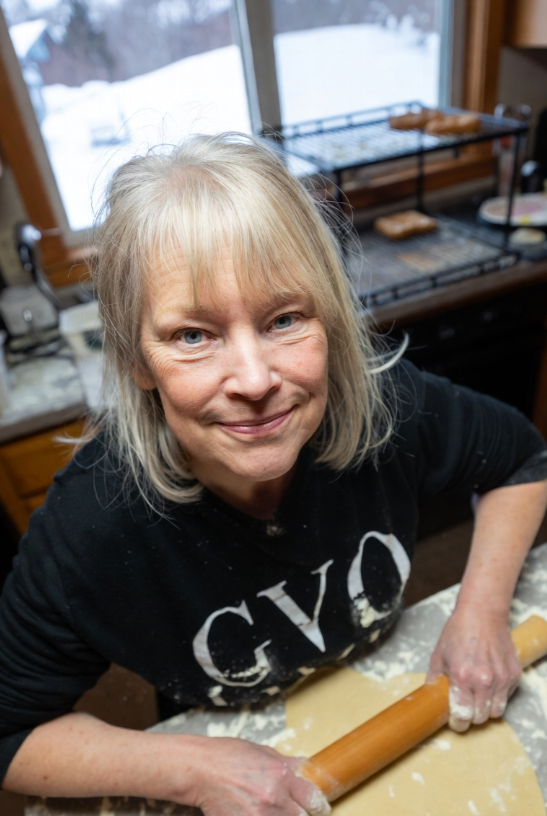
Linda is a sixty-three-year-old retired nurse from Duluth, Minnesota, living alone in the house where she raised her children and said goodbye to her husband. She lost Paul to ALS in 2020 after two years of watching the kindest man she'd ever known lose everything but his dignity. She cooks Scandinavian comfort food and Minnesota hotdish and the pot roast Paul loved, and she sets two places at the table out of habit because it makes her feel less alone. Every recipe she writes is a person she's loved.
