
 By
By New Year's. Ozoni. Fumiko's recipe. The dashi from scratch. The mochi soft from broth. The chipped bowl. The ritual holds.
Miya, 9, can shape onigiri without falling apart. She uses wet hands. She knows the order without being told.
Kabocha simmered in dashi and soy. The squash sweet. The broth thick. The bowl warm.
Tomi home soon. The kitchen quiet.
The cat was the cat. Mochi at fifteen sleeps most of the day. She still eats with enthusiasm. She still sits at the kitchen window watching the back garden.
Tomi watered the garden Saturday morning. The shiso was head-high. The shishito peppers were producing. The kabocha was running on the fence.
I read for an hour Sunday night. A book of essays by a Korean-American writer about food and grief. I underlined a paragraph that said exactly what I had been trying to say in the newsletter for months.
Made dashi at five-thirty AM. Ten minutes in the kitchen alone with the kombu and the bonito flakes. The day's first prayer.
The neighbor's dog barked at nothing for twenty minutes Sunday afternoon. The neighbor apologized. I told him I had been writing through it and the white noise was helpful. He laughed.
Yoga Tuesday morning. The studio in Sellwood. Eight students. The class was the class.
Therapy Tuesday. We talked about the wedding. We talked about Barbara. We talked about Fumiko. The hour passed. The work continues.
I texted Miya a photo of the shiso. She texted back a heart and a single word: home.
I wrote at the kitchen table from six to eight. The newsletter was forming. The opening sentence was the hard sentence — they always are. I rewrote it five times. The fifth time was the right time.
Coffee with a friend Saturday morning. We talked about books, about kids, about the way our forties became our fifties. The talking is the thing.
Miya is in elementary school. The Saturday Japanese school continues. She still complains. She is still going.
A panic flicker Tuesday evening, brief, manageable. I breathed. I drank water. I went outside and walked around the block. The flicker passed. The body did its work.
The rain in long sheets Tuesday afternoon. I made tea. I watched it from the porch. The cottonwoods on the next block were silver in the wet.
I drove to Uwajimaya Wednesday. Kombu, bonito flakes, white miso, a small bag of mochiko for tomorrow's project. The store smells like home.
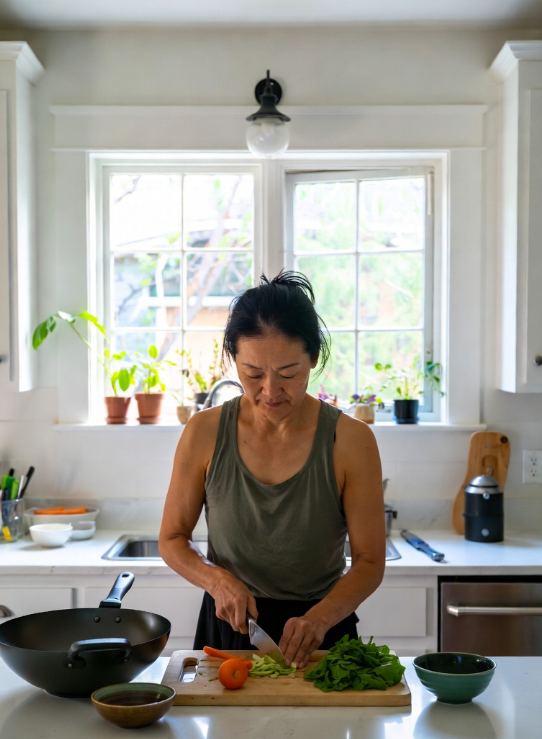
I cleaned the kitchen Sunday afternoon. Wiped the counters. Reorganized the drawer where the chopsticks live. Sharpened the knife. The reset was the reset.
Sunday farmers market in the rain. The vendors knew me. The Hood River apple stand had honeycrisps. I bought four pounds.
I made onigiri for tomorrow's lunch. Three triangles. Salted plum in the center. Wrapped in nori. The cling wrap. The drawer where I keep them. The system.
A reader sent me a handwritten card this week. Her grandmother had cooked Japanese food in 1970s Boise. She had felt alone in it. The newsletter, she wrote, made her feel less alone. I taped the card to the wall above my desk.
Miya's old room is now my office. The desk is by the window. The shiso outside. The newsletter in progress. The afternoons are quiet.
The kabocha was already done — that’s the recipe that lives in my bones — but on the nights when Tomi is still in transit and Miya is away and the kitchen belongs to no one in particular, I reach for something that simmers without supervision. This saucy ranch pork and potatoes has become that dinner for me: browned quickly, left to do its work, ready when the house needs to feel like someone has been tending it. It is not Fumiko’s recipe. It is not ceremonial. It is just warm, and on some nights that is the whole point.
Saucy Ranch Pork and Potatoes
Prep Time: 10 minutes | Cook Time: 35 minutes | Total Time: 45 minutes | Servings: 4
Ingredients
- 4 bone-in pork chops (about 3/4 inch thick)
- 1 1/2 lbs baby Yukon Gold potatoes, halved
- 1 packet (1 oz) ranch seasoning mix
- 1 can (10.5 oz) condensed cream of mushroom soup
- 3/4 cup low-sodium chicken broth
- 1/2 medium yellow onion, thinly sliced
- 2 cloves garlic, minced
- 1 tablespoon olive oil
- 1/2 teaspoon black pepper
- 1/4 teaspoon kosher salt
- 2 tablespoons fresh flat-leaf parsley, chopped (for serving)
Instructions
- Season the pork. Pat the pork chops dry with paper towels. Sprinkle both sides lightly with salt, pepper, and about 1 teaspoon of the ranch seasoning mix. Set the remainder of the packet aside.
- Sear the chops. Heat olive oil in a large, deep skillet or Dutch oven over medium-high heat. Add the pork chops and sear for 3 minutes per side until golden. Transfer to a plate — they do not need to be cooked through at this stage.
- Soften the aromatics. Reduce heat to medium. Add the sliced onion to the same pan and cook, stirring occasionally, for 3–4 minutes until softened. Add the garlic and cook 1 minute more.
- Build the sauce. Whisk together the condensed soup, chicken broth, and remaining ranch seasoning until smooth. Pour the mixture into the skillet with the onions and stir to combine, scraping up any browned bits from the bottom of the pan.
- Add the potatoes. Nestle the halved potatoes into the sauce, cut side down. Stir gently to coat.
- Return the pork and simmer. Place the seared pork chops on top of the potatoes. Cover the skillet, reduce heat to medium-low, and simmer for 20–25 minutes, until the potatoes are fork-tender and the pork registers 145°F at the thickest part.
- Rest and serve. Remove from heat and let rest, covered, for 5 minutes. Spoon the sauce generously over the top and scatter with fresh parsley before serving.
Nutrition (per serving)
Calories: 420 | Protein: 34g | Fat: 16g | Carbs: 34g | Fiber: 3g | Sodium: 820mg