
 By
By Training camp 2026. Eleventh season. I ran camp this year with the particular efficiency of someone who has done the thing enough times that the process is internalized — I'm adjusting at the margin rather than building from scratch, which means the adjustments are more precise and the time is more productively allocated. The first-year coach in me learned the system. The eleventh-year coach in me improves it by fractions that accumulate into significant difference.
Jeremiah Cole is a senior this year. He started last season and finished with 1,200 yards and the state record for receiving yards by a running back. He's a mature, complete player now — and he leads the backfield with Diego-level attention to the whole offense. I told him on the first day of camp that he was going to run the program to standard and he said he understood. He does. This is what the culture produces: players who internalize the expectation so completely that they would hold it themselves even if I stepped off the field.
Diego is a junior in college. He's been on a conference all-freshman and all-sophomore team and he is now a pre-season conference player of the year candidate as a junior. His college coach has called me three times since spring. Each conversation starts with football and ends with the kind of reflection that coaches do about what makes a player exceptional beyond the measurables. He always says the same thing: Diego's football intelligence is the rarest thing he coaches. I know. I watched it develop. I had a front row seat to the formation of a football mind that will be doing this for the next two decades.
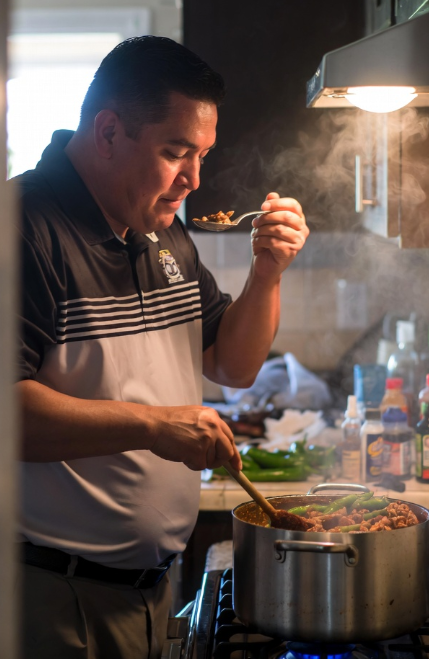
Green chile pork tamales for camp week. Pastor Tuesday and Tamale Wednesday. The coaches have named the days of the week after what I bring.
Tamale Wednesday didn’t happen by accident — it started with a trip to Santa Fe years ago, before I even hit my fifth season, when I first understood what green chile actually meant to people who grew up with it. That city rewired my palate and, eventually, my camp week calendar. If you want to understand why the coaches named the days after what I bring, the Santa Fe food scene is where that story begins — and this guide is the closest I can get to sending you there yourself.
Santa Fe Food Travel Guide
Prep Time: N/A | Cook Time: N/A | Total Time: N/A | Servings: All hungry travelers
Ingredients
- 1 trip to Santa Fe, New Mexico
- At least 3 days (more is better)
- 1 strong appetite for green chile in every form
- A willingness to ask locals “red or green?” and always answer “Christmas” (both)
- Walking shoes — the Plaza district is best explored on foot
- A cooler for bringing home Hatch green chile, frozen tamales, and posole
- Reservations at at least one sit-down restaurant on Canyon Road
- Cash for the farmers’ market at the Railyard
Instructions
- Start at the Plaza. Drop your bags and walk directly to the historic Santa Fe Plaza. The energy here sets the tone for the whole trip — adobe architecture, street vendors, and the smell of roasting chiles in the fall season. Grab a breakfast burrito smothered in green chile from a nearby counter spot before you do anything else.
- Hit the Railyard Farmers’ Market. Open Saturday mornings, this market is where local producers bring Hatch green chile, blue corn masa, hand-rolled tamales, and heritage pork. Buy more than you think you need — it all travels well and it will all become the foundation of something great when you get home.
- Eat your way down Canyon Road. This stretch of galleries and restaurants is Santa Fe at its most iconic. Stop for a proper New Mexican lunch: red or green chile enchiladas, posole, or a bowl of caldillo. Order the green chile stew if it’s on the menu. It always should be.
- Find a local tortilleria or tamale shop. Ask your hotel concierge or any local where they buy their tamales. The best spots are rarely the most visible. Watch how the masa is worked, how the chiles are layered with pork, how the corn husks are folded. Take mental notes. These are the techniques that will follow you home.
- Take a green chile cooking class if available. Several Santa Fe culinary operations offer half-day classes focused on New Mexican staples. Even an hour of hands-on masa work with a local instructor is worth more than any cookbook. This is where the muscle memory starts.
- Shop before you leave. Stock up on dried Hatch red and green chiles, blue corn masa harina, and if the season is right, bags of freshly roasted whole green chiles vacuum-sealed for the flight home. These are the building blocks of everything that will eventually earn your cooking a day of the week.
Nutrition (per serving)
Calories: Immeasurable | Protein: Deep cultural knowledge | Fat: None — pure inspiration | Carbs: Blue corn and green chile, the good kind | Fiber: A lifelong habit | Sodium: Just enough chile heat to keep things interesting