I walk to the cemetery on Saturdays now. Pappa in the older section, then Lars beside him, then Paul a few rows over, now Mamma in the spot she chose herself in 2019 ("next to your father, I have already been beside him for sixty years, why should the cemetery be different"). I stand at each headstone and I report. I report on the kids. On the great-grandchildren. On the soup at Damiano. On the lake. The reporting is the visit. The visit is the love.
Anna drove up Saturday with the kids. They cleaned my kitchen without asking. They folded my laundry. Anna said: "Mom, we're going to do this every other weekend until it stops feeling necessary." I let her. I did not protest. The protest had been used up on Mamma's death. I do not have any protest left. I let my children take care of me. It is a strange thing. It is also, I think, the right thing for this season.
Peter is calling more. The crisis has shaken him. He hears the math: Pappa, then Mamma, then me, eventually. He calls daily now. He sounds steady — not great, not happy, but steady. The grief made him show up. The grief unlocked the part of him that had gone silent. I do not say this to him. I just take the calls. I will take any number of calls. I have been waiting for these calls for years.
I cooked Tomato basil salad this week. Garden tomatoes, finally, after the long wait. Sliced thick, salted, layered with basil and mozzarella, drizzled with olive oil and balsamic. The reward for waiting.
Damiano Thursday: soup. The crowd was the usual size — about a hundred and twenty plates served between five and seven. Gerald and I worked side by side without talking. The not-talking was the friendship. The work has its own rhythm: ladle, hand, smile, ladle, hand, smile. The rhythm carries us through.
I sat in the kitchen at 11 PM with a glass of wine and Paul's photograph. I did not cry. I just sat. The not-crying is its own form of being with him. We did not need to talk all the time when he was alive. We do not need to talk all the time now. The companionable silence has carried over.
It is enough. Paul is not here. Mamma is not here. Pappa is not here. Erik is not here. They are all here in the kitchen, in the smell, in the taste, in the wooden spoon and the bread pans and the marble slab. The dead are not where the body went. The dead are in the kitchen.
Paul used to say that the difference between a place and a home was that a home was a place where you knew, from any room, what was happening in any other room. I knew, from the kitchen, when he was reading in the living room. I knew, from the bedroom, when he was getting coffee in the kitchen. The Kenwood house is still that kind of home. From the kitchen I know that Sven is asleep on his bed in the dining room (the small specific snore). From the kitchen I know what time the radio in the living room is set to come on. The home is the body of knowledge of itself. I still live inside that body of knowledge, even though Paul is not the one creating most of the data anymore.
I keep a small notebook on the kitchen counter — green spiral-bound, from the drugstore. I write in it most days. The notebook holds the things I do not want to forget — Erik's stories about Pappa, Karin's notes about Mormor, Sophie's first words about her babies, the recipes I have changed slightly and want to remember in their changed form. The notebook is a small museum. The museum will go to Anna eventually, and then to Sophie, and then to Sophie's daughter Ingrid, and then onward.
It is enough.
The tomatoes had been coming in slow all summer, and I had been patient with them the way you learn to be patient with things you cannot rush. When they were finally ready — heavy, warm from the vine, the kind of red that means it — I did not want to do anything complicated. I sliced them thick, the way Mamma always did, and let the salt and the basil and the oil do the rest. It was not a recipe so much as a return. Below is the version I made that week, written down the way I write things in the green notebook: simply, so I remember it in its changed form.
Salads Recipe Guide: Garden Tomato Basil Salad
Prep Time: 10 min | Cook Time: 0 min | Total Time: 25 min (includes 15 min resting) | Servings: 4
Ingredients
- 4 large ripe garden tomatoes, sliced 1/2 inch thick
- 8 oz fresh mozzarella, sliced 1/4 inch thick
- 1/2 cup loosely packed fresh basil leaves
- 3 tablespoons extra-virgin olive oil
- 1 tablespoon good balsamic vinegar
- 1/2 teaspoon flaky sea salt, plus more to taste
- 1/4 teaspoon freshly ground black pepper
Instructions
- Salt the tomatoes. Arrange the tomato slices in a single layer on a large plate or shallow platter. Sprinkle evenly with 1/2 teaspoon sea salt and let them sit for 10–15 minutes. The salt will draw out a little juice — this is what you want.
- Layer. Alternate the tomato slices and mozzarella slices across the platter, overlapping slightly. Tuck the basil leaves in between and on top, tearing any larger leaves by hand.
- Dress. Drizzle the olive oil evenly over the entire platter, then follow with the balsamic vinegar. Do not toss — just let it settle into the layers.
- Rest and serve. Let the salad sit at room temperature for 5 minutes before serving. Taste and add a little more salt and pepper if needed. Serve with good bread to catch the oil and tomato juice on the plate.
Nutrition (per serving)
Calories: 215 | Protein: 10g | Fat: 16g | Carbs: 8g | Fiber: 2g | Sodium: 340mg
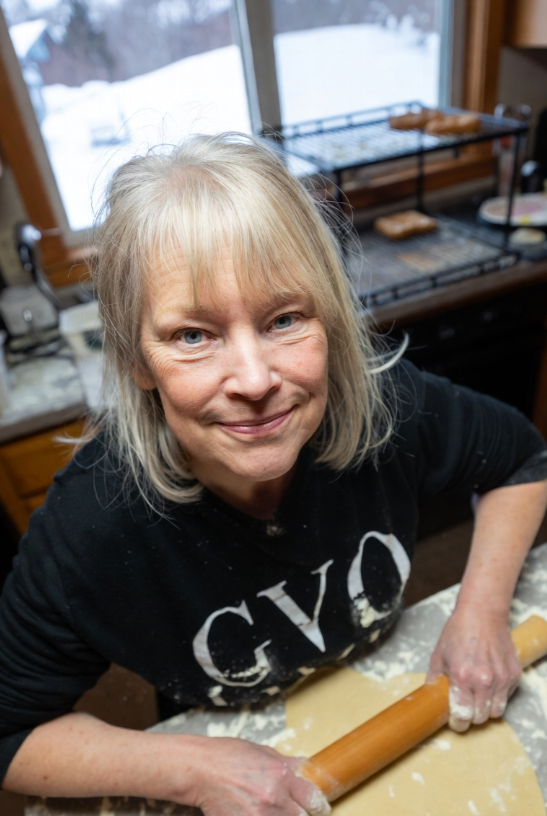
About the cook who shared this
Linda Johansson
Week 491 of Linda’s 30-year story
· Duluth, Minnesota
Linda is a sixty-three-year-old retired nurse from Duluth, Minnesota, living alone in the house where she raised her children and said goodbye to her husband. She lost Paul to ALS in 2020 after two years of watching the kindest man she'd ever known lose everything but his dignity. She cooks Scandinavian comfort food and Minnesota hotdish and the pot roast Paul loved, and she sets two places at the table out of habit because it makes her feel less alone. Every recipe she writes is a person she's loved.
