
 By
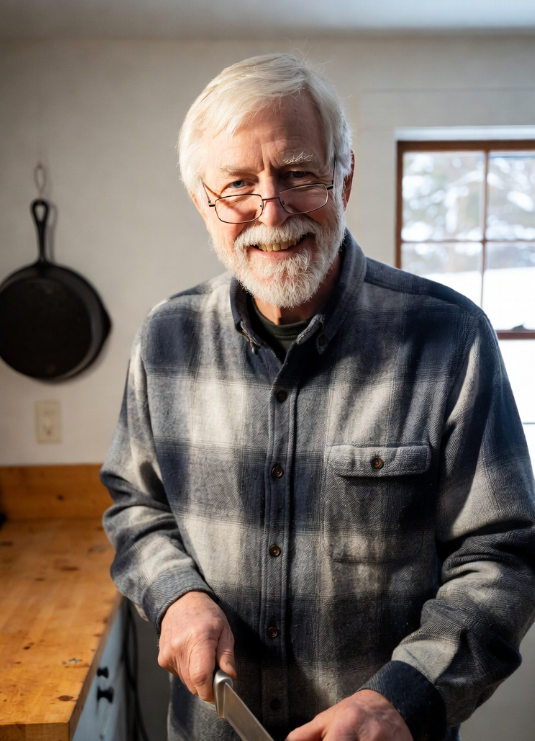
By The cold has arrived. Real cold, Vermont cold, the kind that makes the house creak at night and the windows frost on the inside and the dog refuse to go out until his bladder overrules his judgment. Minus five on Wednesday morning. I added logs at midnight and again at three and the woodstove held the line and the house stayed warm because that's what this house does — it's been holding the line against Vermont winters for over a hundred years and it's not about to stop now.
I made beef barley soup. The cold-weather workhorse — chuck beef, browned and braised with pearl barley, carrots, onion, thyme. The barley thickens the broth into something that's not quite soup and not quite stew but exists in the warm, hearty territory between the two where the best winter food lives. You eat it with bread — my bread, baked this morning, the crust crackling as I cut it — and the combination of hot soup and warm bread is the culinary equivalent of a furnace. You're warm from the inside out. The cold outside is irrelevant. The soup has rendered it irrelevant.
Helen is reading her way through December. Two novels a week, minimum. She sits by the window with a blanket and a cup of tea and she reads with the concentration of someone who's been waiting all year for this — the dark evenings, the long nights, the excuse to sit still and disappear into someone else's story. I don't disturb her. You don't disturb a reader. That was lesson one, day one, year one of my teaching career. It still applies.
The Christmas tree is up. A seven-footer from Kemp's lot, balsam fir, the angel on top tilting slightly because the tree's crown isn't perfectly straight, and perfect crowns are for people without character. The ornaments span thirty-seven years. Each one a year. Each year a life. The tree tells our story in glass and tinsel and a clothespin reindeer from 1999 and my father's wooden star at the summit, smooth and simple and presiding over all of it the way he presided over this family: quietly, steadily, without asking for credit.
David called to say Teddy wants a book for Christmas. Not a toy. A book. He wants the complete Narnia series, which he's heard about from a classmate. David asked if that was okay. I said, "David. He wants seven books for Christmas. This is the best possible outcome." I may have been a little emotional about it. Helen noticed. She smiled. She's been married to an English teacher long enough to know that a grandchild requesting books is the highest compliment a family can receive.
Cold. Soup. Tree. Books. The house is warm. December glows. We're ready.
The soup gets the credit, but the bread does the work. When it’s minus five and the woodstove is holding the line and the barley has thickened the broth into something that warms you from the sternum out, it’s the bread you reach for — torn, not sliced, the crust crackling under your hands, the rosemary rising up in that first warm breath of steam. This is the loaf I baked that morning, and the beautiful thing is it practically makes itself in the crock pot while you tend to the soup, the fire, and the life happening around you.
Rosemary Olive Oil Crock Pot Bread
Prep Time: 15 minutes | Cook Time: 2 hours | Total Time: 3 hours 45 minutes (includes rising) | Servings: 8
Ingredients
- 3 cups all-purpose flour
- 1 packet (2 1/4 teaspoons) active dry yeast
- 1 teaspoon salt
- 1 teaspoon granulated sugar
- 1 1/4 cups warm water (110°F)
- 3 tablespoons extra virgin olive oil, plus more for brushing
- 2 tablespoons fresh rosemary, chopped
- 1/2 teaspoon flaky sea salt, for topping
Instructions
- Activate the yeast. In a small bowl, combine the warm water, sugar, and yeast. Let stand for 5–10 minutes until foamy.
- Mix the dough. In a large bowl, whisk together the flour and salt. Pour in the yeast mixture and 2 tablespoons of olive oil. Stir with a wooden spoon until a shaggy dough forms. Fold in the chopped rosemary.
- Let it rise. Cover the bowl with a clean towel and let the dough rise in a warm spot for about 1 hour, or until roughly doubled in size.
- Prepare the crock pot. Line the bottom and sides of a 6-quart slow cooker with parchment paper. Drizzle with the remaining 1 tablespoon of olive oil.
- Shape and transfer. Gently punch down the dough and shape it into a round loaf. Place it on the parchment in the slow cooker. Brush the top with a little extra olive oil and sprinkle with flaky sea salt and a pinch more rosemary if desired.
- Let it rise again. Cover and let rest in the slow cooker (heat off) for 20–30 minutes for a short second rise.
- Cook. Place a clean kitchen towel or a few layers of paper towel under the lid to catch condensation. Cook on high for 2 to 2 1/2 hours, until the bread is set, the top is firm, and the internal temperature reaches 190°F.
- Crisp the crust. Carefully lift the loaf out using the parchment. For a crackly crust, place the loaf on a baking sheet under the broiler for 2–3 minutes, watching closely, until golden brown on top.
- Cool and serve. Let the bread cool on a wire rack for at least 10 minutes before slicing. Serve warm alongside soup, or with olive oil and herbs for dipping.
Nutrition (per serving)
Calories: 210 | Protein: 5g | Fat: 6g | Carbs: 34g | Fiber: 1g | Sodium: 390mg